 listicle
Anlternatives to Traditional Wasp Sprays: 2026 Guide
Table of Contents
- Why Traditional Wasp Sprays Fall Short
- Natural and DIY Wasp Spray Alternatives
- Safety Risks of DIY Wasp Removal
- Why DIY Pest Control Fails Repeatedly
- When to Call Professional Pest Control
- Professional Wasp Removal: What to Expect
- Frequently Asked Questions
Last Updated: September 26, 2026
Why Traditional Wasp Sprays Fall Short
Traditional wasp sprays are contact killers, and that is their core weakness. They knock down the wasps you can see while leaving the nest, the queen and the larvae untouched. Within days, the colony rebuilds and you are back where you started, aerosol can in hand.
There is a second problem. Most shop-bought sprays reach a few metres at best, which puts you directly under the flight path of an insect that stings repeatedly when threatened. A wasp nest can hold thousands of workers, and disturbing one without protective equipment is how most DIY injuries happen.
That is why so many people search for alternatives to traditional wasp sprays. The demand is not about avoiding chemicals for its own sake. It is about finding a method that actually ends the problem instead of pausing it.
This guide covers the natural options worth trying, the safety risks most guides skip, and the point at which professional help becomes the sensible decision. Below, we break down exactly what works, what does not, and why.
Natural and DIY Wasp Spray Alternatives
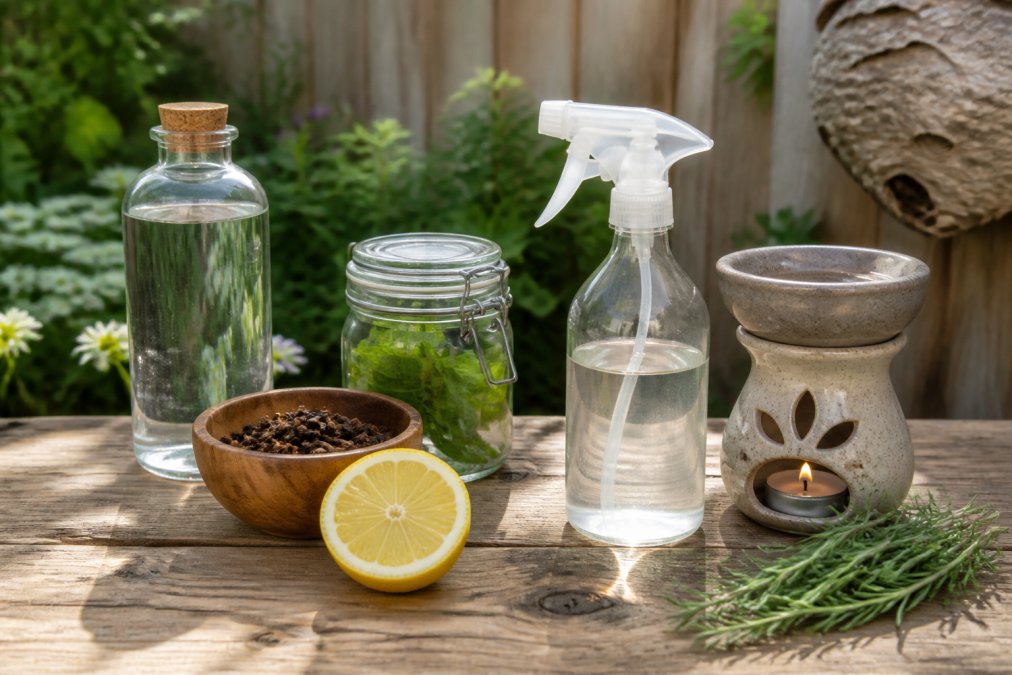
Natural alternatives work on individual wasps rather than whole nests. They are worth keeping for a single insect in a kitchen, not for a nest above a bedroom window.
Two mixtures come up again and again, and both are cheap to make from items already in most cupboards.
Dish Soap and Peppermint Oil Solution
Dish soap and peppermint oil solution is a homemade mix of soap, peppermint oil and water that coats a wasp and disrupts its breathing. The soap breaks the surface tension on the insect's body, and the peppermint oil adds a strong scent that wasps avoid.
Typical ratios people use:
- Around 60 to 80 ml of washing-up liquid
- 11 to 12 drops of peppermint oil
- Topped up with water in a standard spray bottle
Shake before each use and spray directly onto a single wasp. Expect it to work only on contact, and only at close range. On a nest of any size, it will not reach far enough to matter.
Lemon Extract Spray
Lemon extract spray is a simple deterrent made from concentrated lemon extract and water. Mix roughly three tablespoons of extract with a cup of water, then apply the same way as the soap mix.
The appeal is the smell, which is far more pleasant than a chemical aerosol. The limitation is the same: it needs direct contact, and it does nothing to a nest you cannot safely reach.
| Alternative | Best For | Key Limitation |
|---|---|---|
| Dish soap and peppermint oil | Single wasps indoors | No effect on established nests |
| Lemon extract spray | Light deterrent around doors | Requires direct contact |
| Sealed traps | Monitoring wasp activity | Attracts more wasps first |
| Professional removal | Any active nest | Requires booking |
Safety Risks of DIY Wasp Removal
The safety risks of DIY wasp removal are the part most online guides gloss over. A wasp can sting more than once, and a disturbed colony releases a pheromone that signals every other wasp in the nest to attack.
People with known allergies face a genuine emergency, not an inconvenience. Even without an allergy, multiple stings can cause swelling, nausea and, in rare cases, a serious reaction requiring hospital treatment.
Ladders are the other quiet danger. Most nests sit under eaves, in lofts or in garden sheds, which means working at height with one hand on a spray and one on a ladder. Falls from height remain one of the most common causes of serious injury in and around the home, as the Health and Safety Executive guidance on working at height makes clear.
Add poor visibility, dark loft spaces and no protective clothing, and the odds stack against you quickly.
Why DIY Pest Control Fails Repeatedly
DIY pest control fails repeatedly because it treats the symptom, not the source. Spraying visible wasps removes workers, but the queen stays inside laying eggs, and the colony recovers.
There is a pattern to it. A nest is treated, activity drops for a few days, and then wasps reappear from a slightly different direction. That is not a new nest. It is the same colony finding another entrance.
Three things go wrong again and again:
- The nest is never located, so no treatment reaches the colony
- The wrong product is used for the species, and some wasps ignore bait entirely
- The entry point is sealed without treating the nest first, pushing insects deeper into the building
That last mistake is the most expensive. A nest pushed into a wall cavity can mean cutting into plasterboard to reach it.
When to Call Professional Pest Control
Call professional pest control when you cannot see the nest, when it sits above head height, or when anyone in the property has a known sting allergy. Those three situations turn a DIY job into a risk you should not take.
Other clear signals:
- The nest is larger than a tennis ball
- Wasps are appearing inside the building, not just outside
- You have tried a DIY method and activity returned within a fortnight
- The nest is near a school, café, care home or other public space
For landlords, the calculation is simpler. A recurring problem between tenancies costs more in callouts, complaints and lost goodwill than one proper visit. An NHS guide to insect bites and stings is worth reading before treating any sting at home, particularly where swelling spreads.
Professional Wasp Removal: What to Expect
Professional wasp removal starts with identification, not spraying. A qualified technician confirms the species, locates the nest entrance and checks whether the colony is in a position that can be treated safely from the ground.
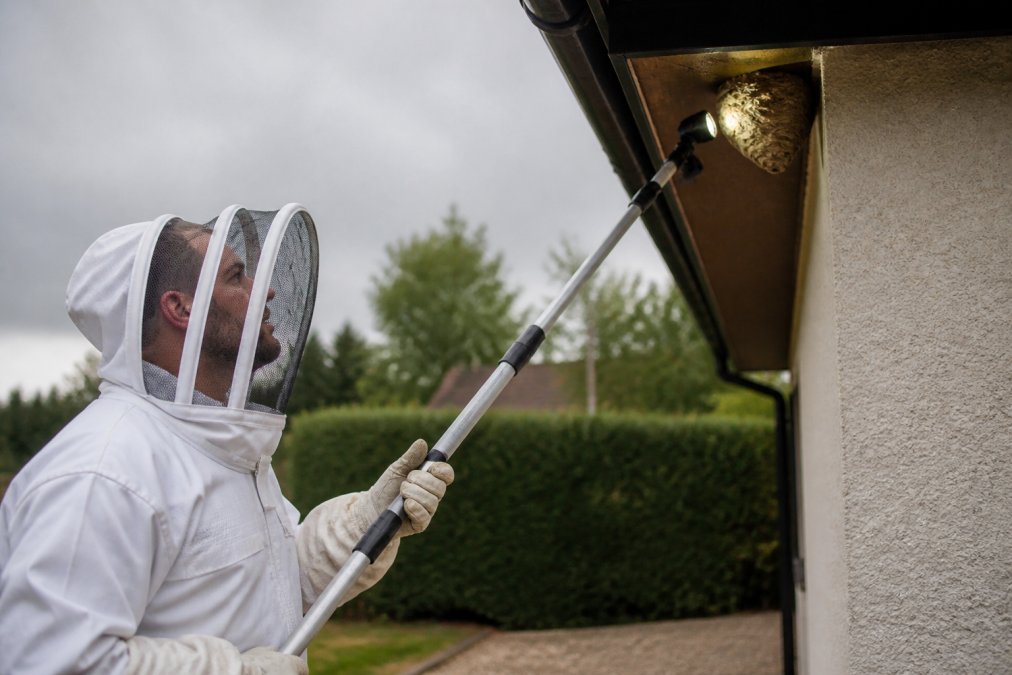
The visit itself is usually short. Treatment is applied directly to the nest, often in the evening when most of the colony is inside. You will be asked to keep windows closed and pets indoors for a short period afterwards.
At ProPest Oxford Ltd, technicians hold a minimum RSPH Level 2 qualification, and the team is associated with NPTA and BASIS PROMPT. Appointments are available seven days a week, with same-day or next-day slots for urgent cases. The focus is on finding the source of the infestation rather than just the wasps you can see, which helps prevent the problem from returning.
For anyone comparing providers, the British Pest Control Association guidance on choosing a pest controller is a useful checklist of the credentials to ask about before booking.
Wasp nests rarely solve themselves, and the longer one sits above a doorway or in a loft, the larger and more aggressive the colony becomes. If you have tried the natural options and the wasps keep coming back, the sensible next step is a proper assessment rather than another spray bottle. ProPest Oxford Ltd offers same-day or next-day appointments, RSPH Level 2 qualified technicians, seven-day availability and a source-first approach that targets the nest rather than the symptoms. Get started with ProPest Oxford Ltd and put the problem behind you.
Frequently Asked Questions
Anre natural wasp repellents effective for large nests?
Natural repellents like peppermint oil or lemon extract can deter individual wasps, but they are not effective for large, established nests. These solutions require direct contact with wasps and cannot reach deep inside a nest. For a nest larger than a tennis ball, professional removal is safer and more reliable.
What is the safest way to remove a wasp nest without chemicals?
The safest non-chemical method is to call a professional pest controller. They use protective equipment and specialised tools to remove the nest. If you must act, wait until after dark when wasps are less active, wear thick clothing, and use a sealed bag to encase the nest. Never attempt removal if you are allergic to stings.
Why do DIY wasp control methods often fail?
DIY methods often fail because they only target visible wasps, not the nest's core. Wasps may rebuild nearby if the queen survives. Many homemade sprays also lack the range or potency to eliminate a colony, leading to recurring problems. Without addressing the source, infestations can return.
When should you call a professional for wasp nest removal?
Call a professional if the nest is larger than a fist, located near entry points or high traffic areas, or if anyone in the household is allergic to stings. Anlso seek help if you have tried DIY methods without success. Professionals have the training and equipment to remove nests safely and help prevent future infestations.
Anre essential oils effective at repelling wasps?
Essential oils like peppermint, clove, and lemongrass can repel wasps temporarily, but their effect fades quickly. They work best as a deterrent in small areas, not for eliminating an active nest. For persistent wasp activity, combining repellents with professional removal can be more effective.