 listicle
7 Signs of Rat Infestation in House: 2026 Guide
Table of Contents
- 7 Signs of Rat Infestation in House
- 1. Rat Droppings and Urine
- 2. Scratching and Scampering Noises
- 3. Grease Marks and Runways
- 4. Gnaw Marks on Wood, Plastic, and Cables
- 5. Unusual Pet Behaviour
- 6. Nests and Shredded Materials
- 7. Smear Marks and Unusual Odours
- Signs of Rats in Loft: What to Check Upstairs
- How to Proof a House Against Rats
- How to Get Rid of Rats Permanently
- When to Call Professional Pest Control
- Frequently Asked Questions
Last Updated: September 24, 2026
7 Signs of Rat Infestation in House
A rat infestation in the house rarely announces itself with a dramatic moment. It builds quietly, behind walls and under floorboards, until the evidence becomes impossible to ignore. Rats are creatures of habit, and their habits leave traces. Learning to read those traces early can mean the difference between a quick fix and months of disruption. Below, we break down the seven most reliable signs, what each one tells you, and what to do when you find them.
1. Rat Droppings and Urine
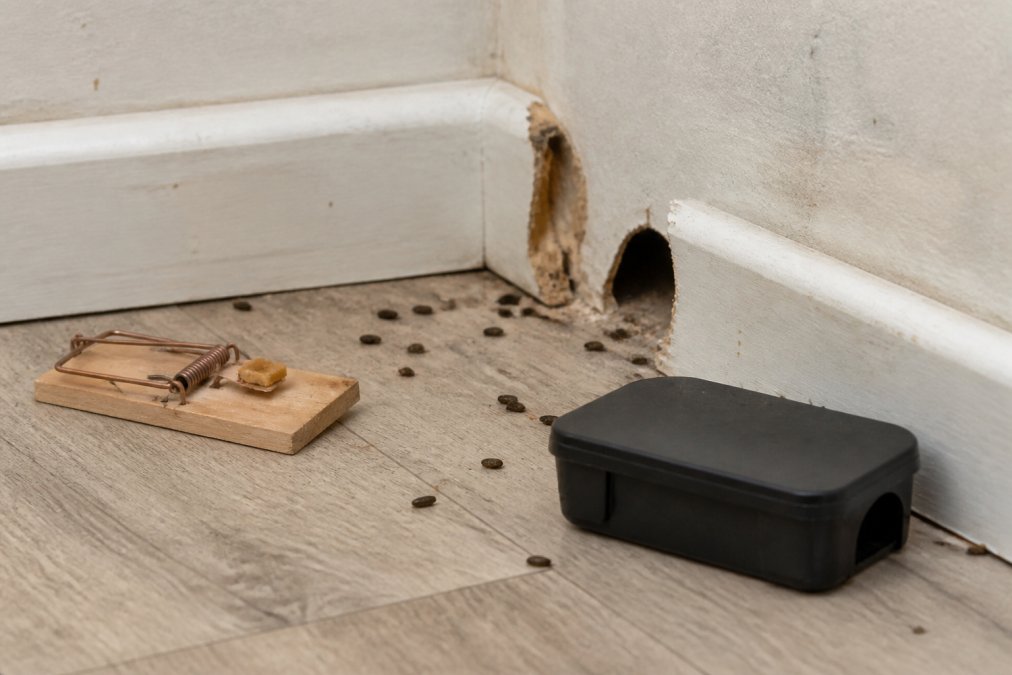
Rat droppings are the single most common indicator of an active infestation. Fresh droppings are dark, moist, and roughly the size and shape of a grain of rice, though larger. They appear along walls, behind appliances, and in loft spaces where rats travel.
Older droppings turn grey and brittle. If you find both fresh and old droppings together, the infestation has been active for some time. Urine is harder to spot but leaves a distinctive ammonia smell in enclosed spaces. Dark staining along skirting boards often marks regular urination points.
2. Scratching and Scampering Noises
Noises in the walls or ceiling at night usually mean rodents are moving through voids. Rats are nocturnal, so scratching, scurrying, and light thumping sounds typically start after dark and quieten by dawn.
The sound quality matters. Mice produce lighter, faster scratching. Rats create heavier, slower movement with occasional thuds as they land from height. If you hear sounds in the loft, between floors, or inside cavity walls, assume rodents until proven otherwise.
3. Grease Marks and Runways
Rats follow the same routes repeatedly, and their fur leaves dark grease marks along walls and skirting boards. These smears are most visible on light-coloured paint or wallpaper at low level, roughly 5-10 centimetres from the floor.
Outdoors, you may notice worn paths through grass or soil along fences and walls. Indoors, runways often run behind furniture and appliances where rats feel secure. These marks confirm regular activity, not just a one-off visitor.
4. Gnaw Marks on Wood, Plastic, and Cables
Gnaw marks are one of the most destructive signs of rat infestation in house. Rats gnaw constantly to wear down their teeth, which grow continuously. You'll find jagged edges on timber, chewed plastic pipes, and stripped cable insulation.
The damage isn't just cosmetic. Gnawed electrical cables create a serious fire risk. Chewed water pipes cause leaks. Structural timber weakens over time. If you find fresh gnaw marks, the problem is active right now.
5. Unusual Pet Behaviour
Dogs and cats often detect rats before humans do. Your pet may stare at walls, scratch at skirting boards, or become restless at night. Some animals become anxious or refuse to enter certain rooms.
This sign is easy to dismiss, especially in older properties with settling noises. But if your pet's behaviour changes suddenly and focuses on a specific area, investigate. Their hearing and sense of smell are far sharper than ours.
6. Nests and Shredded Materials
Rats build nests from whatever soft material they can find. Look for shredded paper, insulation, fabric, and plant matter tucked into quiet corners. Lofts, under floorboards, and behind appliances are common nesting sites.
A single nest can indicate a small family group. Finding multiple nests suggests a well-established colony. Nests are often close to food sources and warm areas, such as near boiler cupboards or hot water tanks.
7. Smear Marks and Unusual Odours
A persistent musty or ammonia-like smell in a room with no obvious cause often points to rats. The odour comes from urine and the natural musk rats produce. It's strongest in enclosed spaces with poor ventilation.
Smear marks differ from grease marks. They're darker and more concentrated, often found at entry points and along regular runways. Combined with odour, they confirm an established infestation rather than a casual visitor.
| Sign | What It Looks Like | What It Means |
|---|---|---|
| Droppings and urine | Rice-sized dark pellets, ammonia smell | Active infestation, possibly long-standing |
| Scratching noises | Night-time sounds in walls or loft | Rats moving through voids |
| Grease marks | Dark smears along walls at low level | Regular travel routes |
| Gnaw marks | Jagged edges on wood, plastic, cables | Ongoing activity, structural risk |
| Pet behaviour | Staring, scratching at walls, anxiety | Rats detected by animals first |
| Nests | Shredded material in quiet corners | Breeding colony present |
| Smear marks and odour | Musty smell, dark marks at entry points | Established infestation |
Signs of Rats in Loft: What to Check Upstairs
Lofts are prime rat territory because they're warm, quiet, and rarely disturbed. Check for droppings along roof timbers and on top of insulation rolls. Look for gnaw marks on cables and pipework, and listen for scratching after dark.
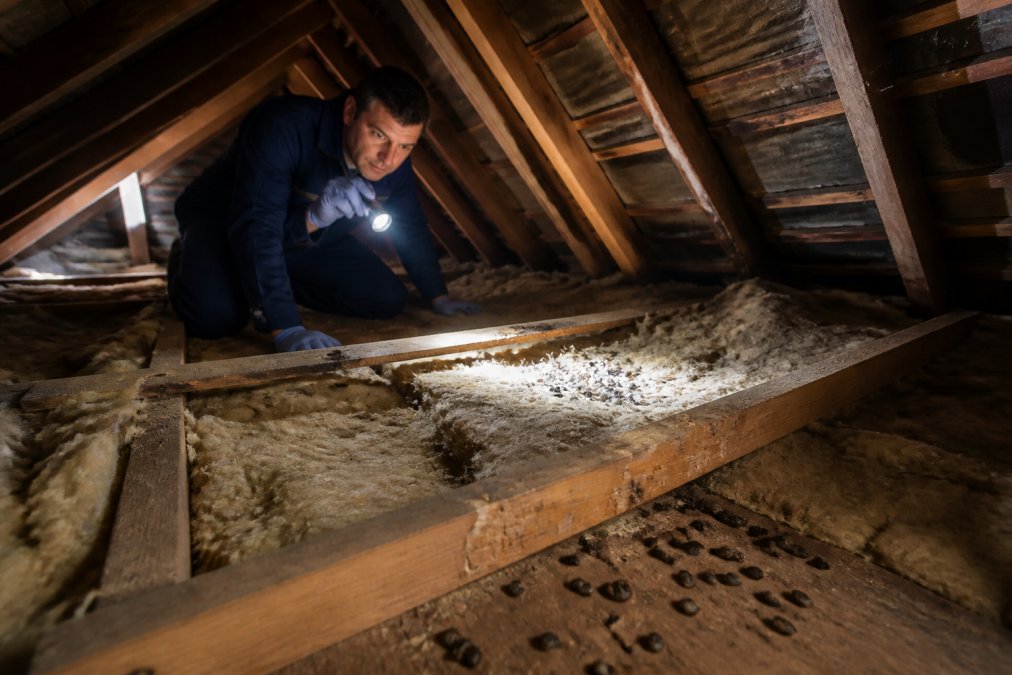
Pay attention to the eaves and any gaps around pipes or cables entering the loft. Rats squeeze through openings as small as a pencil width. If you find evidence, avoid disturbing it before professional inspection, as this can scatter the infestation.
How to Proof a House Against Rats
Proofing is about blocking access, not just removing current rats. Walk the exterior of your property and seal any gap larger than a pencil width. Pay attention to areas where pipes, cables, and vents enter the building.
Use materials rats cannot chew through: stainless steel mesh, wire wool, and metal flashing. Expanding foam alone won't work, as rats gnaw straight through it. Check air bricks, drain covers, and gaps under doors. For persistent problems, professional proofing ensures no entry point is missed.
How to Get Rid of Rats Permanently
Permanent removal requires addressing both the rats and the conditions that attract them. Trapping and baiting can reduce numbers, but without proofing and hygiene changes, reinfestation is almost certain.
- Remove food sources: secure bins, clear pet food, store dry goods in metal or glass containers
- Eliminate water sources: fix dripping taps and leaking pipes
- Reduce harbourage: clear clutter from sheds, garages, and gardens
- Proof entry points: seal all gaps with rodent-resistant materials
- Monitor regularly: check for new signs monthly, especially in autumn and winter
DIY methods work for small, isolated problems. For established infestations or recurring issues, professional treatment is faster and more reliable. A technician can identify the source and treat the problem.
When to Call Professional Pest Control
Call a professional when you find multiple signs at once, when DIY methods have failed, or when the infestation is in a hard-to-reach area. Rats in wall cavities, lofts, and under floors are difficult to treat safely without proper equipment.
Professional pest control matters most when children, pets, or vulnerable people share the property. Rodenticides carry real risks if misused (Rodenticides). Qualified technicians apply treatments safely and know which products suit which situations.
ProPest Oxford Ltd offers same-day or next-day appointments, seven days a week. Our technicians hold a minimum RSPH Level 2 qualification and are associated with NPTA and BASIS PROMPT. We focus on finding the source of the infestation, not just treating the symptoms. For landlords and business owners who need discreet, scheduled maintenance, we work around your tenants and your opening hours.
One customer in Oxfordshire put it simply: "Very Friendly and quick to respond. Rat Blocker installed and sewer wall repaired. Excellent work and value for money. Highly recommend."
Frequently Asked Questions
What are the first signs of rats in the house?
The earliest signs are usually droppings, scratching noises at night, and a musky odour. You might also notice grease marks along skirting boards or gnaw marks on food packaging. Check lofts, under floorboards, and behind appliances. If you spot any of these signs of rat infestation in house, act quickly to prevent a larger problem.
Do rats make noise in the walls at night?
Yes, rats are nocturnal and often create scratching, scurrying, or gnawing sounds inside walls, ceilings, and lofts after dark. These noises are a common sign of rats in loft and wall cavities. If you hear persistent sounds, it is worth investigating further and considering professional help.
How do I know if I have a rat infestation?
Look for multiple signs: droppings, gnaw marks, grease marks, nests, and unusual pet behaviour. You may also smell a strong ammonia-like odour. Finding several signs together strongly suggests an active infestation. For a definitive answer, a professional survey can confirm and locate the source.
How quickly can a rat infestation spread?
Rats breed rapidly, with females producing up to six litters per year. A small problem can become a major infestation within months. They also attract more rats through scent trails. Early intervention is key to preventing a minor issue from becoming a serious health risk.
Are rat droppings dangerous to humans?
Yes, rat droppings can carry harmful bacteria and viruses, including those causing leptospirosis and salmonella. Never handle droppings without protective gloves and a mask. If you find droppings, clean the area thoroughly with disinfectant and avoid disturbing them to prevent airborne particles.
Rats don't leave on their own, and the damage they cause gets worse with time. If you've spotted any of these seven signs, act quickly. ProPest Oxford Ltd provides professional identification, eradication, and proofing across Oxfordshire and East Sussex. Our RSPH Level 2 qualified technicians identify the source, treat the problem safely, and prevent it from returning. Get started with ProPest Oxford Ltd and restore peace of mind to your property.