 how-to
Best Way to Deter Rats From a Compost Bin
Table of Contents
- Why Rats Target Compost Bins and What Attracts Them
- Signs of Rats in Compost: What to Look For
- How to Rat-Proof a Compost Bin: Step-by-Step
- What Not to Put in a Compost Bin to Keep Rats Away
- How Often to Turn Compost to Deter Rats
- When DIY Fails: Professional Rat Control for Compost Areas
- Frequently Asked Questions
Last Updated: 5 October 2026
Why Rats Target Compost Bins and What Attracts Them
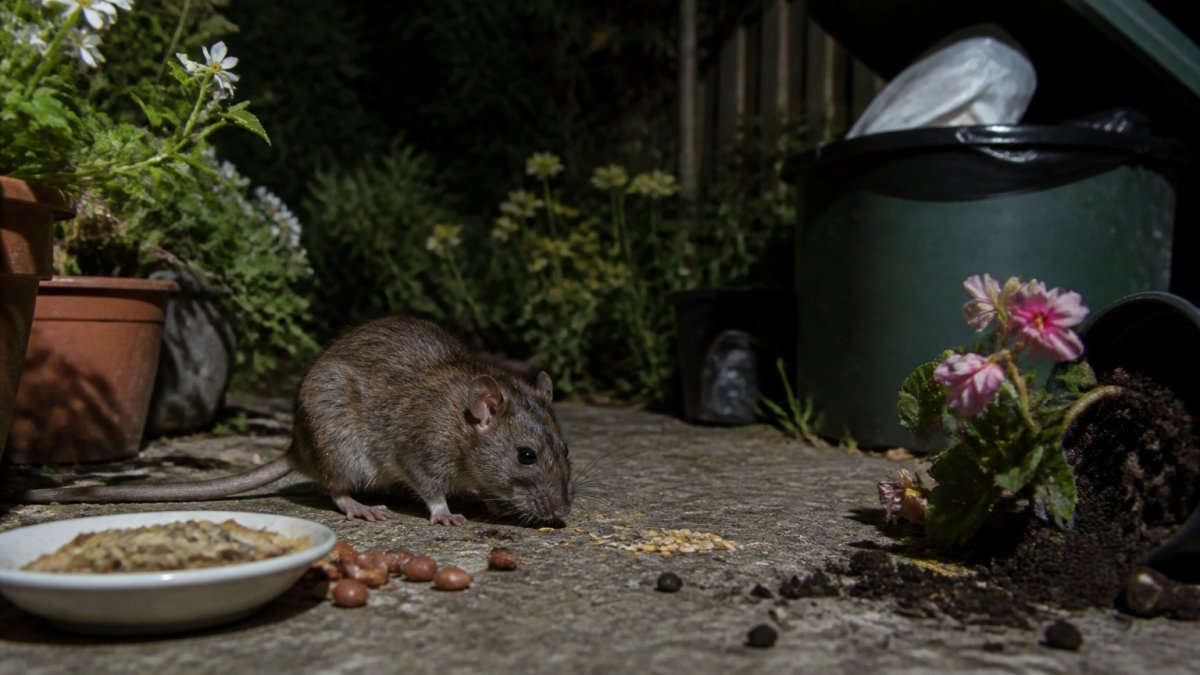
Rats see a compost bin as a free meal and a warm bed. The best way to deter rats from compost bin setups starts with understanding what draws them in: food scraps, warmth, and shelter. Compost gives rats all three.
Most bins fail for one simple reason. They offer easy access to food that rats can smell from a distance.
Rats need three things to settle in:
- Food: fruit peels, cooked scraps, grains and dairy
- Warmth: a heap that stays warm through winter
- Cover: dense, undisturbed material to nest in
Remove any one of these and the bin stops being attractive. Remove all three and rats move on. This guide from ProPest Oxford Ltd breaks down each step, from bin design to turning schedules.
Signs of Rats in Compost: What to Look For
Spotting rats early saves weeks of frustration. The clearest signs are droppings, tunnels and gnaw marks around the bin. Check your compost every time you add to it.
Look for these warning signs:
- Droppings: dark, tapered pellets about 1cm long, often near the base
- Tunnels: worn paths in grass or soil leading to the bin
- Gnaw marks: chewed plastic, wood or mesh edges
- Grease smears: dark rub marks along walls and bin rims
- Nesting material: shredded paper or plant matter packed into corners
Droppings, Tunnels and Gnaw Marks
Fresh droppings mean active rats, not an old visit. Tunnels usually run along fences and walls, because rats avoid open ground. Gnaw marks on a lid or base show where they are getting in.
A common mistake is assuming one sign means one rat. Rodents rarely travel alone. If you find fresh droppings, treat it as an active infestation and act quickly.
How to Rat-Proof a Compost Bin: Step-by-Step
Rat-proofing means blocking every entry point and removing the food that attracts them. Work through these steps in order. Most bins can be secured in an afternoon.
- Empty and inspect the bin. Look for gaps, cracks and chewed edges.
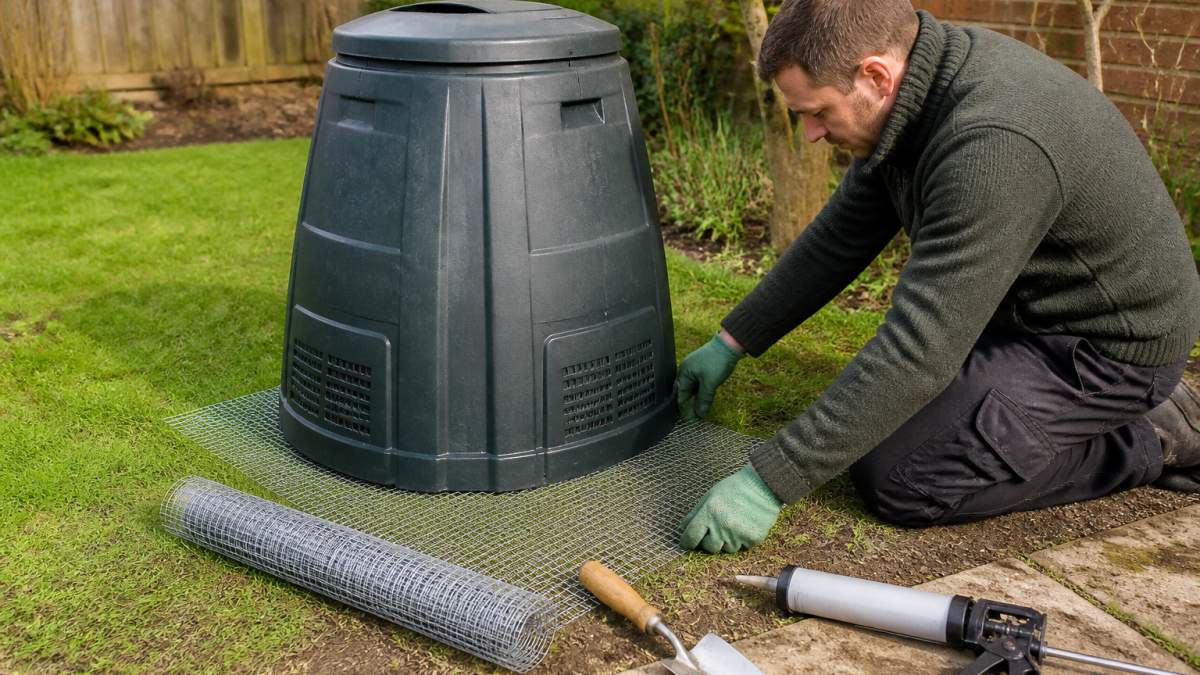
- Fit a mesh base. Use galvanised wire mesh with holes no wider than 1cm.
- Seal the lid. Add a tight-fitting rim or weighted cover so rats cannot push in.
- Cover vents and gaps. Mesh over any opening larger than a pencil.
- Turn the heap weekly. This disturbs nests and speeds up decomposition.
- Move the bin away from walls. Leave a gap so rats cannot climb across.
- Clear surrounding cover. Cut back long grass and remove nearby clutter.
Securing the Base, Lid and Vents
The base is where most bins fail. Rats burrow underneath, so a mesh floor is essential. Bury the mesh a few centimetres into the soil for a tight seal.
The lid matters just as much. Rats are strong and can lift a loose cover. A weighted lid or a locking rim stops them. Check vents too, because any gap wider than a pencil is an open door.
What Not to Put in a Compost Bin to Keep Rats Away
Certain scraps turn a compost bin into a rat buffet. Keep cooked food, meat, fish and dairy out entirely. These items smell strong and break down slowly.
Avoid adding:
- Cooked food and leftovers
- Meat, fish and bones
- Dairy products
- Greasy or oily foods
- Pet waste
- Bread and baked goods
Stick to raw fruit and vegetable peelings, grass cuttings, dry leaves and cardboard. These break down well without attracting rodents. If you must compost cooked food, use a sealed bokashi system instead.
How Often to Turn Compost to Deter Rats
Turning your compost once a week is the simplest ongoing deterrent. Regular turning disturbs nests, adds oxygen and speeds up breakdown. A hot, active heap is far less inviting to rats.
Aim for these habits:
- Turn the heap at least once a week
- Mix outer material into the centre
- Keep the heap as moist as a wrung-out sponge
- Add dry material if it turns slimy
A well-managed heap heats up and breaks down faster. Rats prefer quiet, undisturbed piles. Keep yours active and they will look elsewhere.
When DIY Fails: Professional Rat Control for Compost Areas
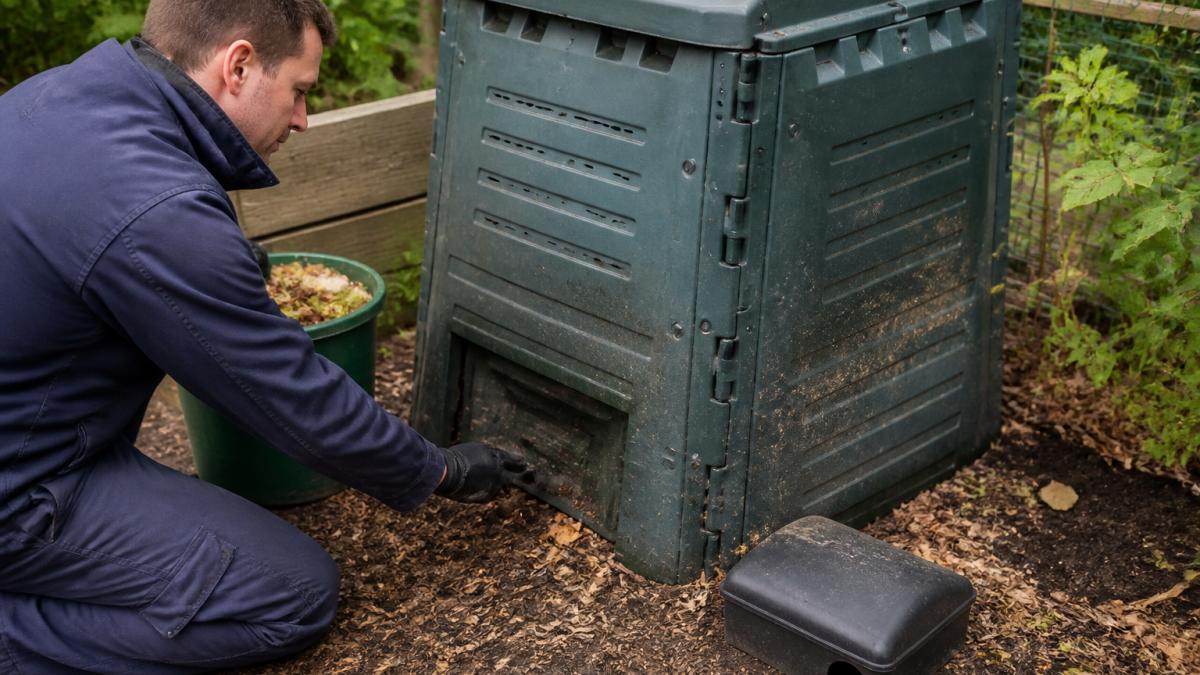
Some infestations need more than mesh and weekly turning. If rats keep returning despite your efforts, the source may sit beyond the bin itself. Burrows, drains and outbuildings often hide the real problem.
At ProPest Oxford Ltd, we focus on finding the source rather than just the symptoms. Our technicians hold a minimum RSPH Level 2 qualification, and we are NPTA members and BASIS PROMPT registered. We offer same-day or next-day appointments, seven days a week, so an active problem does not have to wait.
Here is how to tell when it is time to call in help:
| Situation | DIY Approach | Professional Help |
|---|---|---|
| Occasional droppings | Mesh base, weekly turning | Not needed yet |
| Rats return after fixing bin | Recheck entry points | Source tracing and treatment |
| Burrows near bin or outbuildings | Seal visible gaps | Full survey and proofing |
| Rats inside walls or drains | Limited options | Safe, targeted eradication |
If you are a landlord, café owner or estate manager, discreet scheduled visits keep problems from returning. We work around tenants and business hours.
Frequently Asked Questions
What is the best way to deter rats from a compost bin?
The most effective approach combines three things: securing the bin with a wire mesh base and tight-fitting lid, managing what goes in (no cooked food, meat, dairy or oily scraps), and turning the contents regularly. Rats need food, shelter and easy access. Remove any one of those and the bin stops being attractive. For persistent problems, a professional pest controller can identify the entry point and confirm whether rats are nesting nearby.
Does a compost bin need a wire mesh base to stop rats?
Yes, a wire mesh base is one of the most reliable deterrents. Rats can burrow under a bin that sits directly on soil, so fitting galvanised mesh with appropriately sized holes across the base prevents them tunnelling up from below. Bury the mesh edges at least 10cm into the ground and secure it to the bin walls. Check the mesh every few months for rust or gaps, since rats will exploit any weakness.
Can rats chew through a plastic compost bin?
Rats can chew through thin or brittle plastic, especially if the bin has cracks, weak seams or ventilation slots they can widen. Thick-walled bins are harder to breach, but no plastic is entirely rat-proof. Inspect your bin regularly for gnaw marks, holes or chewed edges. If you find damage, patch it immediately with metal mesh or replace the panel. Persistent chewing usually means rats are already nesting close by.
How often should you check a compost bin for signs of rats?
Check your compost bin every two to four weeks, and more often in autumn and winter when rats seek warm shelter. Look for droppings around the base, gnaw marks on the lid or sides, tunnels in nearby soil, and disturbed compost. Early detection makes removal far easier. If you spot multiple signs, contact a pest control professional rather than waiting, because a small problem can become an established infestation within weeks.
Rats around a compost bin are frustrating, but they rarely mean you have to give up composting. Fix the entry points, watch what you add, and keep the heap turned. When the problem keeps coming back, the source is usually bigger than the bin. ProPest Oxford Ltd offers expert identification, source tracing and safe treatment, backed by RSPH Level 2 qualified technicians, NPTA membership and full insurance. Book a service with ProPest Oxford Ltd and get your compost, and your peace of mind, back.