 How-to
7 Signs of a Mouse Infestation at Home to Check Tonight
Last Updated: November 22, 2026
Quick Summary
The signs of a mouse infestation at home are droppings, gnaw marks, scratching noises, urine smells, nests, footprints and live sightings. Any single sign is worth investigating, and two or more means you almost certainly have an active mouse infestation. Check the kitchen first, then the loft, then the rest of the house.
- House mouse droppings are around 3-6 mm long, dark, and tapered at both ends like a grain of rice.
- Fresh droppings are soft, dark and shiny, while old ones are hard, grey and crumbly.
- Note and clean droppings while wearing gloves, then re-check the same spot after 24 hours.
- Never dry-sweep or vacuum droppings, as this lifts dust and germs into the air.
- Seal gaps around pipes and cables with wire wool and filler to help prevent mice entering.
Table of Contents
- Why a Mouse Infestation Is Easier to Catch Early
- The 7 Signs of Mice in the Home
- Mouse Droppings Identification: Telling Mouse Evidence From Lookalikes
- Mouse Noises in Walls: What Scratching and Scurrying Tell You
- A Room-by-Room Inspection Checklist for Mouse Activity
- How to Judge Freshness and Severity of Infestation Evidence
- Safe Cleaning of Droppings and Protecting Children and Pets
- How to Prevent Mice Entering Your Home
- Frequently Asked Questions
Why a Mouse Infestation Is Easier to Catch Early
A mouse infestation at home is a colony of house mice living, feeding and breeding inside your property, and it is far easier to stop in its first weeks than its third month.
Why the urgency? Mice breed quickly, and their teeth never stop growing. That means constant gnawing on food packaging, cardboard boxes and electrical wiring.
A patient's report of rodent activity in the home is a strong predictor of high mouse allergen levels, according to research published in PubMed Central. In plain terms: if you suspect mice, take it seriously.
Below, we show you exactly what to check tonight, room by room, and how to tell fresh evidence from old.
The 7 Signs of Mice in the Home
The seven signs of mice in a home are droppings, gnaw marks, scratching noises, urine smells, nests, footprints and live sightings. Any single sign is worth investigating; two or more means you almost certainly have an active mouse infestation.
Here is the quick checklist:
- Droppings the size and shape of a grain of rice
- Gnaw marks on food packaging, cardboard or cables
- Scratching or scurrying sounds, usually at night
- A strong ammonia-like odour in cupboards or lofts
- Nests made from shredded paper or fabric
- Footprints or smear marks on dusty surfaces
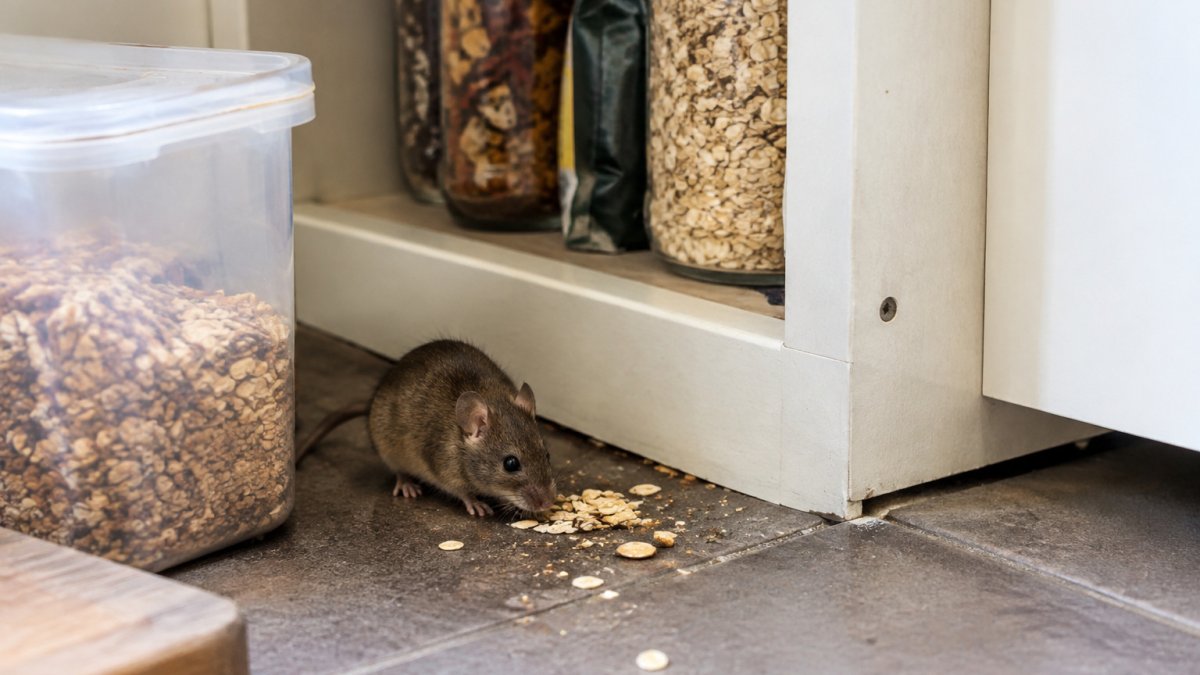
- A live mouse, often spotted darting along a skirting board
Droppings, Gnaw Marks, Noises, Smells, Nests, Tracks and Sightings
Each sign tells you something different about where the mice are and how long they have been there.
Droppings and urine point to active runways. Gnaw marks show feeding and nesting behaviour. Noises reveal wall cavities and loft routes. Tracks in dust show regular paths.
Watch out: a single dropping is easy to mistake for a bit of dirt. Check the same spot again in 24 hours. Fresh droppings appear where there were none.
Mouse Droppings Identification: Telling Mouse Evidence From Lookalikes
Mouse droppings identification comes down to three things: size, shape and position. House mouse droppings are typically around 3-6 mm long, dark brown to black, and pointed or tapered at both ends, roughly the shape and size of a grain of rice. They sit scattered along skirting boards, behind appliances and inside cupboards, often in loose clusters rather than a single pile.
Lookalikes to rule out:
- Rat droppings are noticeably larger, usually 10-20 mm long and thicker, with blunter, sausage-like ends; finding both sizes together suggests more than one rodent species is present
- Bat droppings crumble to powder when pressed and often cluster below a roost, such as under eaves or a loft beam
- Cockroach droppings are much smaller, blunt-ended and resemble ground pepper or coffee grounds
- Soil or grit does not taper at the ends and feels gritty rather than smooth
- Cocoa or coffee granules smell of food, not ammonia, and soften or smear when damp
Position matters as much as appearance. Droppings in a line along a wall suggest a runway, a classic sign of mouse activity. Droppings concentrated behind a fridge or under a sink often mark a feeding or nesting area.
A practical confirmation method is to note the exact position and count of droppings, clean the area while wearing gloves, then re-check the same spot after 24 hours. New droppings appearing where there were none confirm active activity rather than old evidence. Photograph the area before cleaning so you can compare later.
Watch out: pressing or crumbling droppings to test them can release dust and bacteria, so do not handle them bare-handed or dry-sweep the area.
Mouse Noises in Walls: What Scratching and Scurrying Tell You
Mouse noises in walls usually mean mice are using the cavity as a highway between the loft, kitchen and outside. Scratching, scurrying and light squeaking are most common after dark, because house mice are nocturnal.
Listen for the pattern:
- Fast scrabbling suggests movement along a route
- Persistent scratching in one spot may mean a nest
- Squeaking often points to young mice
If you want a deeper guide to what wall sounds mean, read our breakdown of signs of rodent infestation in walls.
A Room-by-Room Inspection Checklist for Mouse Activity
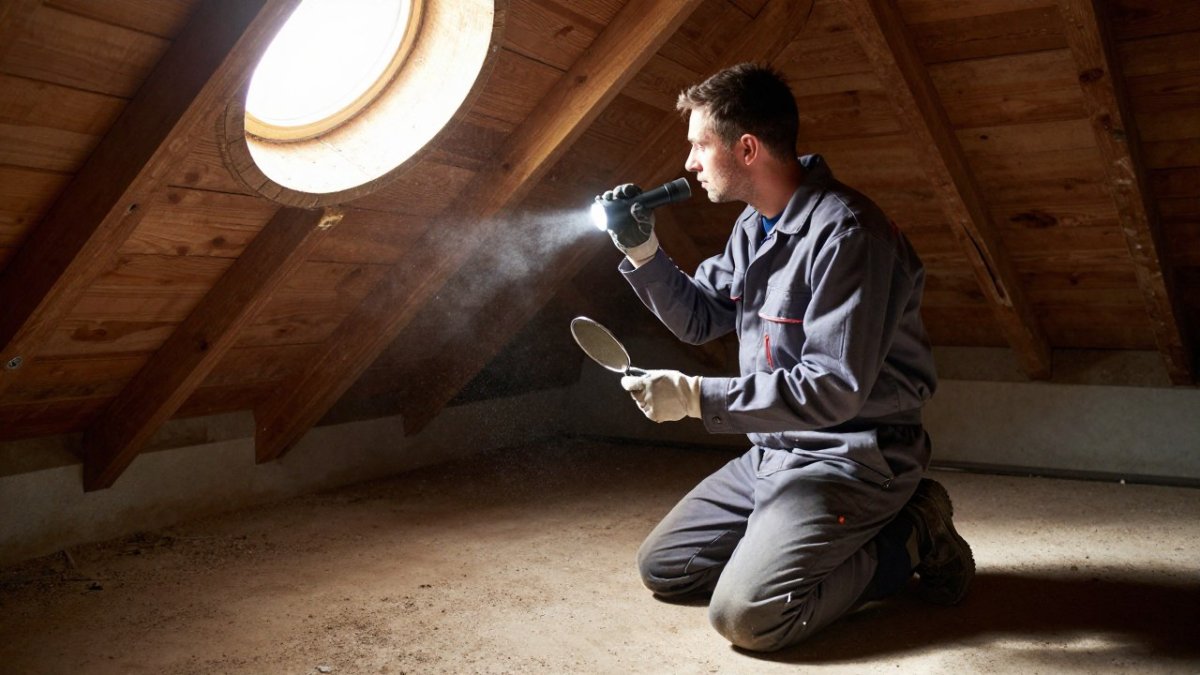
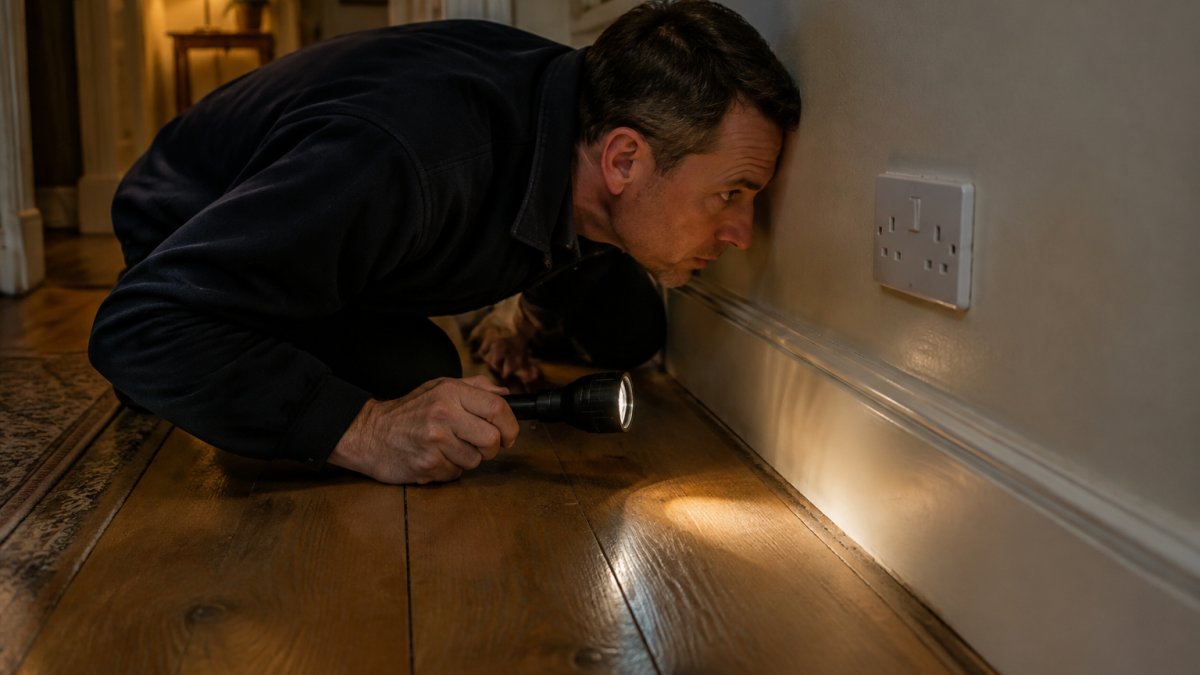
Inspect the kitchen first, then the loft, then the rest of the house, working from the most likely room to the least. Use a torch, gloves and a notepad, and check the same spots twice, 24 hours apart. Record what you find and where, because a written log makes it far easier to judge whether activity is ongoing.
- Kitchen: behind the cooker and fridge, under the sink, inside low cupboards, along the gap between units and the wall
- Pantry: food packaging, cardboard boxes, grain and cereal stores, the back of shelves
- Loft: insulation, stored boxes, shredded paper, droppings, chewed loft insulation
- Utility room: behind the washing machine, pipe gaps, the floor beneath appliances
- Garage and outbuildings: cardboard, bird seed, old furniture, stored pet food
- Skirting boards throughout: gaps, droppings, smear marks, chewed cable
- Exterior walls: air bricks, pipe entries, gaps under doors, vents
For each location, note four things: what you found, roughly how much, whether it looked fresh, and the date. This turns a one-off check into a repeatable inspection you can compare over time.
A common pattern is that evidence in one cupboard with no fresh signs after cleaning points to a small, recent problem, while fresh droppings in several rooms plus nests or noises suggest an established colony. If you find fresh evidence in more than one room, or fresh droppings reappear after cleaning, that is the point to arrange a professional assessment via our booking page at https://propestoxford.com/book-online/.
Watch out: checking lofts and voids without a torch and gloves risks contact with droppings, nesting material or exposed wiring, so prepare before you climb.
How to Judge Freshness and Severity of Infestation Evidence
Fresh droppings are soft, dark and shiny; old ones are hard, grey and crumbly. Freshness tells you whether the mouse infestation is active now or was dealt with before.
Use this simple guide:
| Evidence | Fresh | Old |
|---|---|---|
| Droppings | Soft, dark, shiny | Hard, grey, crumbly |
| Gnaw marks | Pale, sharp edges | Darkened, rounded |
| Smell | Strong ammonia | Faint or gone |
| Tracks | Clear in dust | Faded or filled |
Severity is about spread, not count. Droppings in one cupboard suggest a small problem. Droppings plus nests plus noises across several rooms point to an established colony.
If the evidence spans multiple rooms or you keep finding fresh droppings after cleaning, that is the point to call in help. Our guide to finding rodent control near you explains what a professional visit involves.
Safe Cleaning of Droppings and Protecting Children and Pets
Never dry-sweep or vacuum droppings, because that lifts dust and germs into the air. Wear gloves and a mask, dampen the area, wipe with a disinfectant, then wash your hands thoroughly.
Keep children and pets out of the room while you clean. Store baits and traps well out of reach, and never place them where a child or pet could find them.
Rodent activity carries real health risks, from allergens to bacteria, as set out in our guide to the health risks of rodent infestations. For households with young children or animals, our page on safe pest control around children and pets explains what to look for in a treatment plan.
Watch out: never use poison in a home with free-roaming pets or toddlers without professional advice.
How to Prevent Mice Entering Your Home
Prevention means sealing the routes mice already use. Mice can squeeze through gaps far smaller than most people expect, so check pipe entries, air bricks and door edges.
- Seal gaps around pipes and cables with wire wool and filler
- Fit bristle strips to the bottom of doors
- Repair damaged air bricks with mesh
- Store food in sealed containers, not cardboard
- Clear clutter from garages and lofts
- Trim vegetation back from exterior walls
For a step-by-step walkthrough, see our guide to identifying rodent entry points in your home.
A mouse infestation rarely stays small. If tonight's check turns up droppings, gnaw marks or noises you cannot trace, ProPest Oxford Ltd can help. Our technicians hold a minimum RSPH Level 2 qualification, we offer same-day or next-day appointments, and we are available seven days a week. We focus on finding the source of the infestation rather than just the symptoms. Get started with ProPest Oxford Ltd and book a service to secure your home.
Frequently Asked Questions
What are the first signs of a mouse infestation at home?
Droppings are usually the first clue, appearing along skirting boards, behind appliances and inside cupboards. You may also notice a musky, ammonia-like smell, gnaw marks on food packaging, or scratching sounds at night. Check the kitchen and loft first, as these are the most common places for mouse activity.
How can you tell if mouse droppings are fresh?
Fresh mouse droppings are dark, soft and shiny, and they darken to a dull grey-brown as they dry out over a few days. Mouse droppings are typically the size and shape of a grain of rice with pointed ends, which helps distinguish them from other pests. Wear gloves and avoid sweeping dry droppings, as this can release dust. If you keep finding fresh droppings after cleaning, mice are still active and a professional inspection is the safest next step.
Can you hear mice moving in walls or ceilings?
Yes. Mouse noises in walls usually sound like light scratching, scurrying or squeaking, and they are most noticeable at night because mice are nocturnal. The sounds often come from wall cavities, lofts or under floorboards. Light scratching in a wall is a strong indicator that mice are using it as a runway between nesting and feeding areas. If the noises are loud and heavy, it may be rats rather than mice, so a professional identification visit is worth arranging.
When should you contact a pest control professional about mice?
Contact a professional if you find fresh droppings repeatedly, hear scratching in walls, or spot gnaw marks near electrical wiring, as mice gnawing cables creates a fire risk. DIY traps can reduce numbers but often fail to find the source, which is why infestations return. A qualified technician can identify entry points and nesting sites rather than just treating the symptoms. ProPest Oxford Ltd offers same-day or next-day appointments with RSPH Level 2 qualified technicians, so you can book online and get a proper assessment quickly.