 how-to
Signs of Rodent Infestation in Walls: 7 Warning Signs
Table of Contents
- What You'll Need to Check for Signs of Rodent Infestation
- Noises in Walls at Night: What You're Actually Hearing
- Physical Signs of Rodent Infestation in Walls
- Rodent Entry Points in Homes: How They Get Inside
- How to Get Rid of Rats in Wall Cavities
- Common Mistakes When Dealing With Rodents in Walls
- When to Call a Professional Pest Control Service
- Frequently Asked Questions
Last Updated: September 19, 2026
What You'll Need to Check for Signs of Rodent Infestation
Spotting a rodent infestation early saves you money, stress, and a lot of disrupted sleep. Most homeowners miss the first clues because they simply don't know where to look. This guide walks you through the seven warning signs that matter most.
Before you start your inspection, gather a few basic tools. You don't need anything specialist.
- A bright torch for checking dark corners and cavities
- Disposable gloves for handling any droppings or debris
- A notepad or phone camera to record what you find
- A small mirror to see behind appliances and pipework
- A dust mask if you're checking dusty loft spaces
Work through each room methodically. Start in the kitchen and utility areas, then move to lofts, basements, and outbuildings. Rodents follow food, warmth, and shelter, so these spots attract them first.
Noises in Walls at Night: What You're Actually Hearing
Noises in walls at night are one of the clearest early warnings of rodents living inside your wall cavities. The sounds are usually loudest after dark because rodents are nocturnal and become active when the house is quiet.
If you hear sounds during the day, that can point to a larger or more established problem. Listen carefully and note the timing, location, and type of sound.
Scratching, Scurrying, and Gnawing: Telling Them Apart
Each sound tells you something different about what's happening behind your walls.
- Scratching: claws on plasterboard or timber, often a rodent moving through a cavity
- Scurrying: fast, light footsteps across a surface, usually several animals
- Gnawing: a repetitive rasping sound, which means teeth on wood, cable, or pipework
- Thumping or banging: heavier movement, which can suggest a larger rodent
A common mistake is assuming one noise means one animal. Rodents rarely live alone once they've settled in.
Physical Signs of Rodent Infestation in Walls
Physical evidence is the most reliable way to confirm a rodent infestation. Unlike sounds, which can be misleading, droppings, marks, and damage give you proof you can act on.
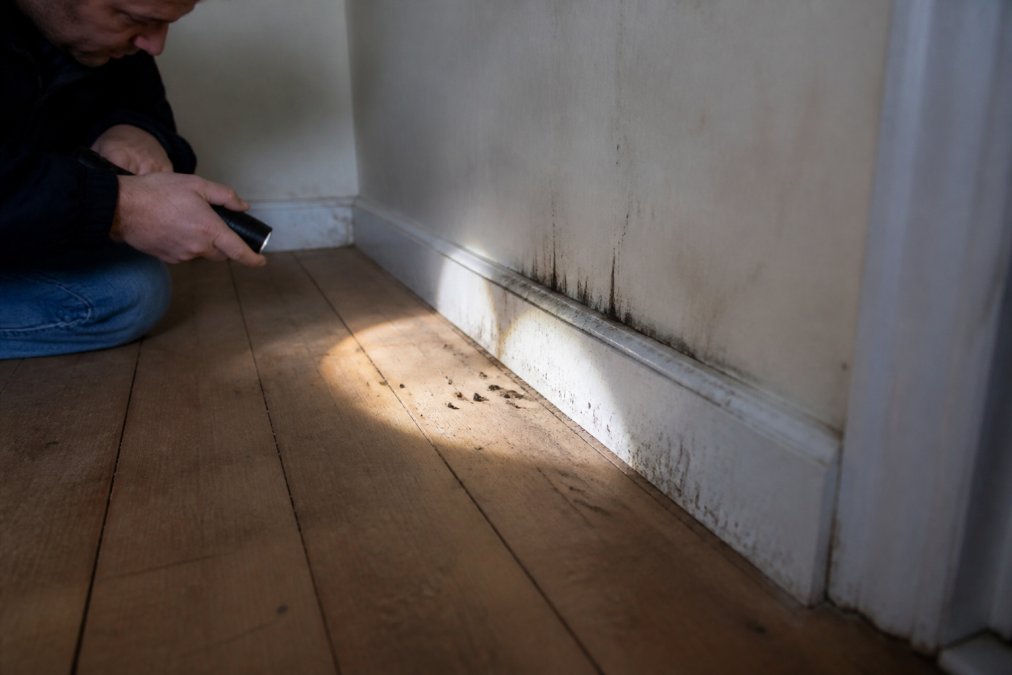
Droppings, Grease Marks, and Urine Stains
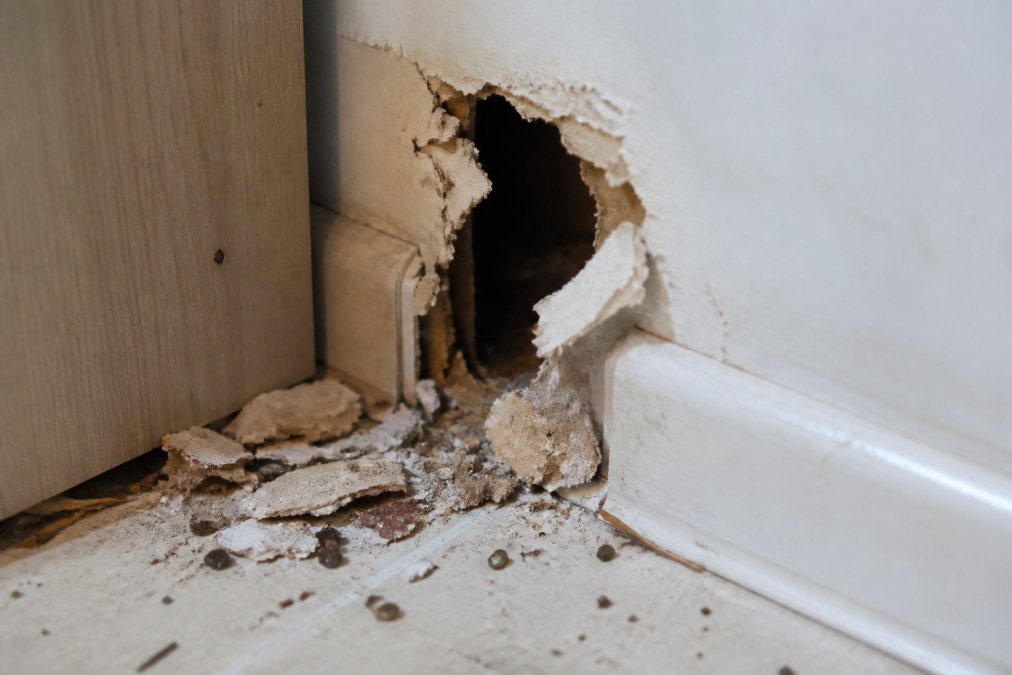
Droppings are the single most common sign. Mouse droppings are small and dark, roughly the size of a grain of rice. Rat droppings are larger and thicker.
Look for them along wall edges, inside cupboards, and behind appliances. Fresh droppings are soft and dark; older ones are dry and grey.
Grease marks appear as dark smears along walls and skirting boards. Rodents follow the same routes repeatedly, and their fur leaves a greasy trail. Urine stains show up as dark patches, often with a strong ammonia smell.
Damage to Insulation, Cables, and Pipework
Rodents gnaw constantly to keep their teeth worn down. This causes real damage inside wall cavities.
- Shredded loft insulation used as nesting material
- Chewed electrical cables, which is a genuine fire risk
- Bitten pipework, which can lead to leaks
- Gnawed timber framing and joists
Rodent Entry Points in Homes: How They Get Inside
Rodent entry points in homes are often far smaller than people expect. A mouse can squeeze through a gap the width of a pencil. Rats need only a hole the size of a large coin.
Check these common entry points around your property:
- Gaps around pipes and cables where they enter the wall
- Broken air bricks and vents
- Cracks in brickwork and around window frames
- Gaps under doors, especially external and garage doors
- Damaged roof tiles and fascia boards
- Openings around drainage and sewer connections
Sealing these gaps is one of the most effective long-term fixes. But sealing without first removing the rodents can trap them inside, which makes the problem worse.
How to Get Rid of Rats in Wall Cavities
Getting rid of rats in wall cavities takes patience because you can't reach the animals directly. The goal is to remove the rodents and then stop them returning.
Follow these steps in order:
- Confirm the infestation with droppings, marks, and noise
- Identify every entry point you can find
- Remove food and water sources nearby
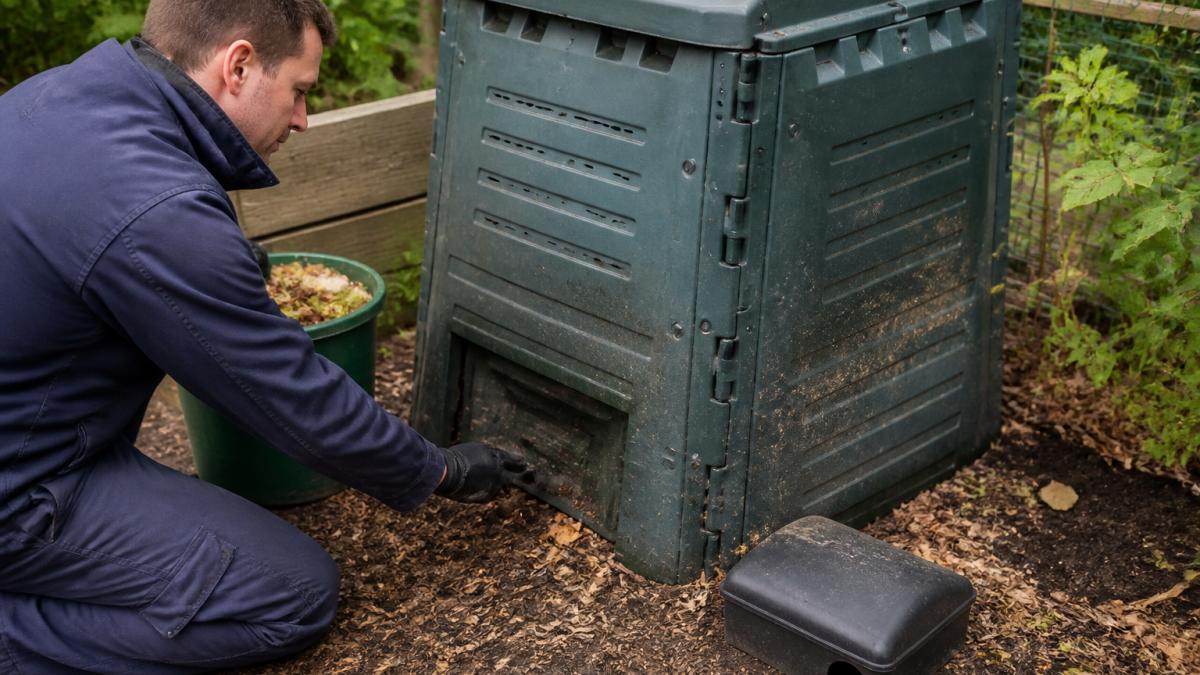
- Use safe, enclosed bait stations rather than loose poison
- Seal entry points only after the rodents are gone
- Monitor for fresh signs over the following weeks
DIY treatments often fail because people skip the sealing stage or miss entry points. That's why the problem returns.
If you've tried traps and bait without success, the infestation is likely larger than it appears. A professional survey finds the source rather than just the symptoms.
Common Mistakes When Dealing With Rodents in Walls
Most failed attempts share the same handful of errors. Avoiding them saves you time and money.
- Sealing gaps too early, which traps rodents inside
- Using too little bait, which lets the colony survive and breed
- Ignoring the source, such as an open drain or food store
- Relying on one method, when rodents adapt quickly
- Skipping the follow-up check, so a returning problem goes unnoticed
A common mistake is assuming the problem is solved once the noise stops. Rodents often go quiet when they move deeper into the cavity, not when they leave.
When to Call a Professional Pest Control Service
Call a professional when you've seen signs for more than a week, when noise continues after DIY attempts, or when you find damage to cables or pipework. These cases need a proper survey, not guesswork.
Professional help matters most when:
- The infestation keeps returning after treatment
- You have young children, pets, or a food business on site
- The rodents are in hard-to-reach cavities
- You need proof of treatment for a landlord or insurer
At ProPest Oxford Ltd, our technicians hold a minimum RSPH Level 2 qualification, and we focus on finding the source of the infestation rather than just the symptoms. We're associated with the National Pest Technicians Association and registered with BASIS PROMPT, so you can check our credentials before booking.
For landlords and business owners, discreet scheduling and clear reporting make ongoing maintenance straightforward. We offer same-day or next-day appointments and work seven days a week.
Frequently Asked Questions
What sounds do rats make in walls at night?
Rats produce scratching, scurrying, and gnawing sounds, usually loudest between dusk and dawn when they are most active. Scratching suggests movement behind plasterboard, while gnawing points to teeth wearing down on timber or cables. Mice create lighter, faster rustling. If you hear these noises in walls at night, treat it as a strong sign of rodent infestation and arrange an inspection before the problem spreads.
Are rodents in walls a health risk to my family?
Yes. Rodent droppings and urine can carry bacteria and viruses, and dried particles can become airborne in enclosed spaces. Rats and mice also bring fleas and mites into wall voids. If you notice droppings or a persistent ammonia smell, avoid disturbing the area and ventilate where possible. Professional removal, followed by disinfection, reduces the risk to children and pets.
Can I get rid of rats in wall cavities myself?
DIY options exist, but wall cavities are difficult to treat properly. Poison placed incorrectly can kill rodents behind plasterboard, leaving carcasses to decompose and attract flies. Traps are hard to position in narrow voids. Lasting results depend on sealing rodent entry points in homes, which often means lifting floors or checking roof spaces. A professional survey identifies the source rather than just the symptom.
Do rodents in walls cause structural damage to properties?
Rodents gnaw constantly to wear down their teeth, and electrical cables, pipe insulation, and timber framing are common targets. Over time this can lead to compromised wiring and water damage from chewed pipes. The damage usually builds quietly, so early detection of the signs of rodent infestation in walls limits both repair costs and safety risks.
A rodent infestation in your walls rarely fixes itself, and the damage grows quietly behind the plaster. ProPest Oxford Ltd offers same-day or next-day appointments, RSPH Level 2 qualified technicians, and a focus on finding the true source of the problem. We also provide discreet, scheduled maintenance for landlords and businesses. Get started with ProPest Oxford Ltd and restore peace of mind to your property.