 how-to
Effective Ways to Kill Wasps: A 2026 Guide
Table of Contents
- What You'll Need Before You Try to Kill Wasps
- Best Wasp Killer Spray for Home Use
- Natural Methods to Kill Wasps Without Chemicals
- How to Remove a Wasp Nest Safely
- Common Mistakes That Make Wasp Problems Worse
- When to Call Professional Pest Control for Wasps
- Frequently Asked Questions
Last Updated: 22 August 2026
What You'll Need Before You Try to Kill Wasps
Trying to kill wasps without preparation is how people end up in A&E. Before you reach for any product or approach, getting the basics right makes the difference between a resolved problem and a dangerous escalation.
This guide covers every effective method for dealing with wasps at home, from over-the-counter sprays to natural deterrents, plus clear guidance on when a problem has moved beyond DIY territory.
Start by gathering the following before you attempt anything:
- Protective clothing: Long sleeves, trousers, gloves, and ideally a hat with a veil. Wasps target exposed skin and dark hair.
- A clear escape route: Know exactly where you're retreating to before you start. Never treat a nest in a confined space without a way out.
- Timing awareness: You'll need to treat at the right time of day (covered in detail below).
- The right product for the situation: Aerosol sprays, powder insecticides, and natural methods each suit different scenarios.
Wasp killer products are widely available in garden centres and hardware shops across the UK. The most common active ingredients are permethrin and deltamethrin, both synthetic pyrethroids approved for amateur use under UK pesticide regulations. Always check that the product carries a UK pesticide registration number before purchasing.
A quick visual survey matters too. Identify whether the nest is aerial (hanging from a tree or eave), ground-level (in a lawn or bank), or cavity-based (inside a wall or roof void). Each location requires a different approach, and misidentifying the nest type leads to wasted effort and unnecessary risk.
Best Wasp Killer Spray for Home Use
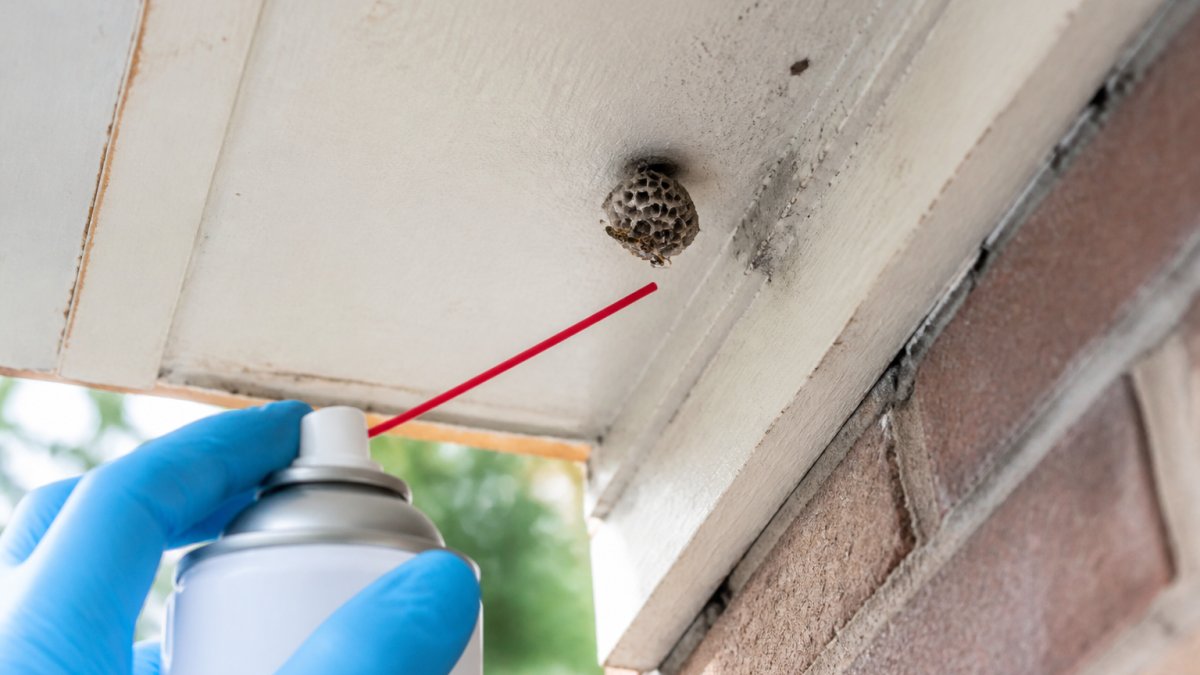
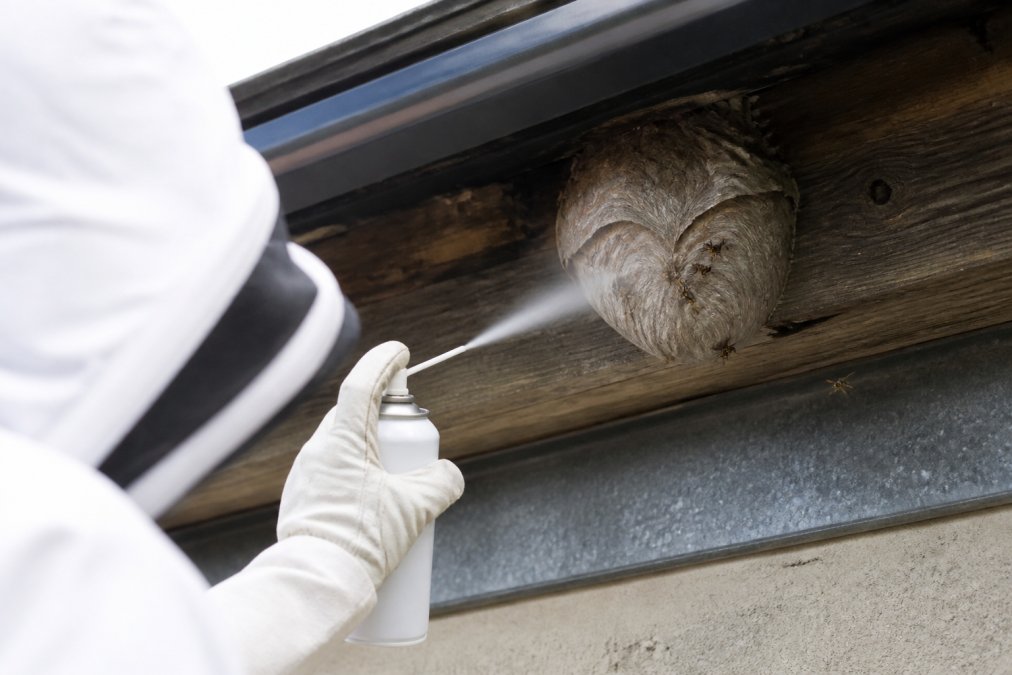
The best wasp killer spray for home use is a fast-knockdown aerosol containing either permethrin or deltamethrin, applied directly into the nest entrance at dusk. These products are designed to kill wasps on contact and leave a residual effect that eliminates returning foragers over the following 24 to 48 hours.
Many products marketed specifically for wasps also contain a propellant that delivers the insecticide at distance, typically one to three metres. This matters enormously when the nest is above head height or in an awkward location.
What most guides miss is the difference between a contact spray and a residual treatment. Contact sprays kill immediately but offer little lasting protection. Residual products, which often come as wettable powders or concentrated liquids, are better suited to nests inside roof voids or wall cavities where wasps are entering and exiting repeatedly.
For nests in open locations, a pressurised aerosol is usually sufficient. For enclosed spaces, a powder insecticide applied with a puffer bottle tends to outperform sprays because it coats the nest material and the surrounding structure more thoroughly.
| Situation | Recommended Product Type | Application Method |
|---|---|---|
| Aerial nest (eave, tree branch) | Fast-knockdown aerosol | Spray from distance at dusk |
| Ground nest (lawn, bank) | Residual powder or aerosol | Apply directly into entrance |
| Cavity nest (wall, roof void) | Puffer bottle powder | Inject through entrance point |
| Large or inaccessible nest | Professional treatment | Contact a qualified technician |
How to Apply Wasp Spray Correctly
Correct application is everything. A poorly aimed spray agitates the colony without killing it, which makes subsequent treatment far harder.
Stand at least one metre back from the nest entrance. Apply the spray in a single, sustained burst directly into the opening, then move away immediately. Do not wait to observe the reaction. Wasps will emerge aggressively within seconds.
Repeat the treatment the following evening if activity continues. Most nests require two applications to fully eliminate the colony. Once activity has stopped for 48 hours, the nest can be physically removed, though this is optional since an abandoned nest poses no ongoing risk.
According to Health and Safety Executive pesticide guidance, always read the full product label before use and store any remaining product securely away from children and pets.
Natural Methods to Kill Wasps Without Chemicals
Natural methods to kill wasps work best as a preventive measure or for dealing with small numbers of foraging wasps, rather than an established nest. The honest reality is that no natural method will eliminate a mature colony of several hundred wasps. But for early-season activity or isolated individuals, they are genuinely useful.
Traps and Decoys
Wasp traps are one of the more effective natural tools available. A basic trap can be made from a plastic bottle: cut the top third off, invert it into the bottom section, and fill with a sweet liquid such as diluted jam or flat lemonade. The wasps enter to feed and cannot find their way out.
Commercial traps work on the same principle but often include a pheromone lure that attracts a broader range of species. Position traps away from areas where people are sitting or eating, as placing them too close draws wasps towards you rather than away.
Fake wasp nests, sold as deterrents, exploit the territorial behaviour of common wasps. Wasps generally avoid establishing a new nest within a certain distance of an existing colony. Many homeowners report some success with these decoys early in the season before nests are established, though results vary.
Natural Repellents: What Actually Works
Peppermint oil is the most consistently cited natural repellent for wasps. Applied to cotton wool pads and placed around outdoor eating areas, it creates a deterrent effect that many people find genuinely useful for keeping foraging wasps at a distance.
Clove, lemongrass, and geranium essential oils are also commonly recommended. The key word here is "repellent" rather than "killer." These substances discourage wasps from settling in an area; they do not eliminate an existing nest.
Planting strong-scented herbs such as wormwood, mint, and eucalyptus near entry points to your home can reduce the likelihood of wasps nesting nearby. This is a long-term strategy rather than a quick fix.
For outdoor dining, covering food and drinks immediately, removing fallen fruit from gardens, and keeping bin lids sealed are the single most effective steps you can take. Wasps are opportunistic feeders, and removing their food source is more effective than any repellent spray.
How to Remove a Wasp Nest Safely
Removing a wasp nest safely requires treating the colony first and waiting until all activity has ceased before attempting physical removal. Never attempt to remove an active nest.
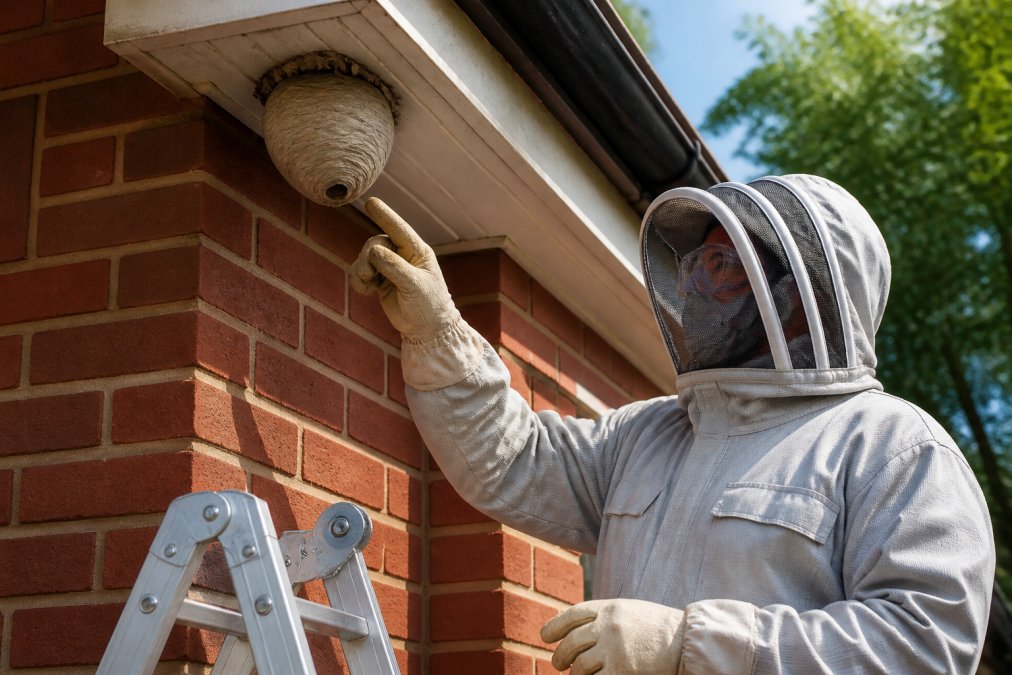
Once the nest is confirmed inactive, typically 48 to 72 hours after a successful treatment, removal is straightforward. The nest material is papery and fragile; it poses no ongoing chemical risk. The reason to remove it is primarily to prevent secondary pests such as moths or beetles from colonising the abandoned structure.
Best Time of Day to Treat a Wasp Nest
The best time of day to treat a wasp nest is between dusk and dawn, when the majority of the colony is inside the nest and activity is minimal. Treating at night dramatically reduces the number of wasps in the air and the risk of stings.
Avoid treating in bright midday sun. Wasps are most active and aggressive during warm afternoons, and a disturbed colony in full daylight is genuinely dangerous. Early morning is the second-best option if dusk is not practical.
Cold evenings in late summer and early autumn are particularly effective. Lower temperatures slow wasp movement and reduce the likelihood of a mass defensive response.
Step-by-Step Nest Treatment Process
Follow this process for a safe and effective result:
- Suit up fully. Gloves, long sleeves, trousers tucked into socks, and eye protection as a minimum.
- Wait for dusk. Confirm activity has slowed before approaching.
- Approach slowly and without a torch beam directed at the nest. Use a red-filtered light if you need visibility; wasps respond less aggressively to red wavelengths.
- Apply your chosen product directly into the nest entrance. One sustained application, then move away.
- Do not block the entrance. Allow wasps to move through the treated area, spreading the insecticide through the colony.
- Repeat the following evening if activity persists.
- Wait 48 to 72 hours after the final treatment before approaching again.
- Remove the nest if accessible. Seal it in a plastic bag and dispose of it in your general waste bin.
As the British Pest Control Association's guidance on wasp control notes, always follow product label instructions precisely and never treat a nest you cannot safely access from ground level.
Common Mistakes That Make Wasp Problems Worse
Most wasp problems escalate because of a handful of predictable errors. Recognising them is half the battle.
Treating in daylight. This is the most common mistake. Agitating a nest when the full colony is active and foragers are returning leads to mass stinging. Always treat at dusk.
Using the wrong product for the location. An aerosol spray will not penetrate a nest inside a wall cavity effectively. Using the right product type for the nest location is essential, not optional.
Incomplete treatment. One application often isn't enough. Many homeowners treat once, see reduced activity, assume the job is done, and then face a resurgent colony within days. Commit to a second treatment 24 hours later as standard.
Disturbing the nest without protective gear. Even a "small" nest can contain several hundred wasps. A single disturbed nest can produce dozens of stings in seconds.
Confusing wasps with bees. Honeybees are a protected species under UK conservation guidance, and their nests should never be treated with insecticide. If you are unsure which species you are dealing with, do not treat. A professional can identify the species correctly before any action is taken.
Ignoring a nest in a high-traffic area. A nest near a doorway, children's play area, or outdoor seating will inevitably result in stings. Early-season nests, while small, should be treated promptly before the colony grows through summer.
When to Call Professional Pest Control for Wasps
Professional pest control is the right call in several clear situations, and recognising them early saves both time and risk.
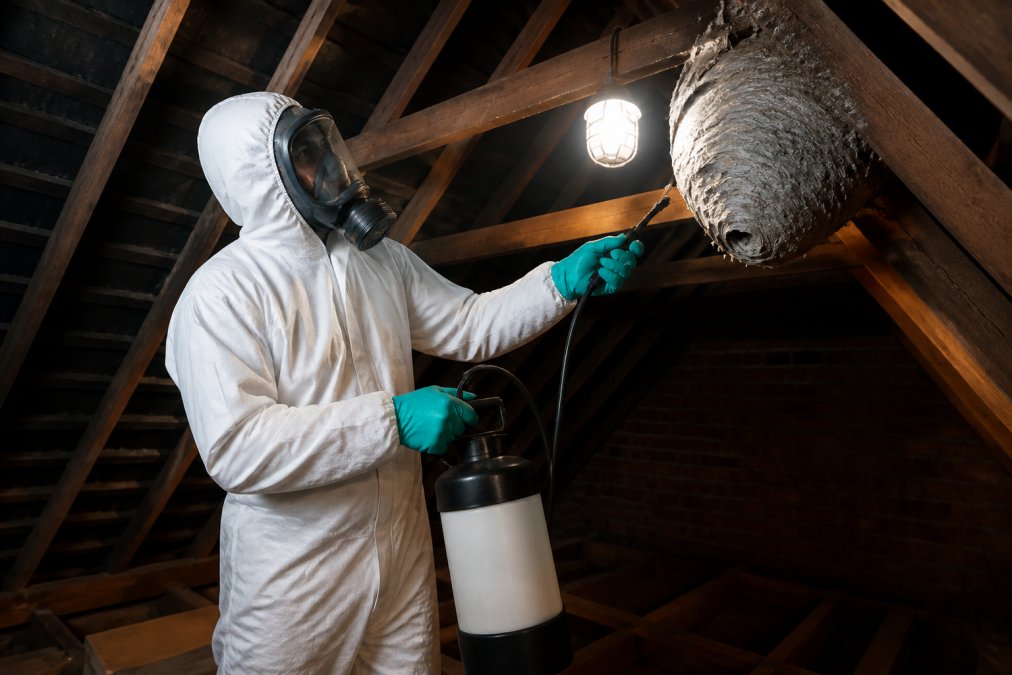
Call a professional when:
- The nest is inside a wall, ceiling, or floor void. These locations require specialist equipment and knowledge of building structures to treat safely and effectively.
- The nest is large. A nest the size of a football or larger contains a substantial colony. Amateur treatment at this scale carries significant risk.
- You or anyone in your household has a known allergy to wasp stings. Anaphylaxis is a medical emergency. The NHS guidance on anaphylaxis and insect stings recommends that anyone with a known allergy carry an adrenaline auto-injector and seek professional help for nest removal.
- Previous DIY treatment has failed. If you've treated a nest and the problem has returned, the colony may not have been fully eliminated, or a new nest may have formed nearby.
- The nest is inaccessible without ladders or working at height. Working at height introduces a separate set of risks that compound the danger of wasp treatment significantly.
ProPest Oxford Ltd handles wasp nest treatments across Oxfordshire and East Sussex, with technicians holding minimum RSPH Level 2 qualification and same-day or next-day appointments available seven days a week. The focus is always on identifying the source of the problem, not just treating the visible symptom.
A common objection is that professional treatment costs more than a can of spray from the garden centre. That's true in the short term. The calculation changes when you factor in a failed DIY treatment, a second purchase, and the time lost. For nests in roof voids or wall cavities, professional treatment is almost always the more cost-effective outcome.
Wasp problems rarely resolve themselves, and a nest left untreated through summer will grow substantially before the colony dies off in autumn. For straightforward nests in accessible locations, the methods in this guide will serve you well. For anything inside a structure, at height, or involving a large colony, the risk calculus shifts decisively towards professional help. ProPest Oxford Ltd offers NPTA-member and BASIS PROMPT-registered pest control with same-day appointments, qualified technicians, and a genuine focus on long-term resolution rather than a temporary fix. Book a service to get the problem dealt with properly the first time.
Frequently Asked Questions
Q: What is the most effective way to kill a wasp nest?
A: Treating the nest directly with an insecticidal dust or a fast-acting aerosol spray labelled for wasp control is generally the most reliable method. Dust formulations work well for nests inside cavities, as the powder spreads through the nest when returning wasps carry it inside. Aerosol sprays suit exposed nests. Always treat at dusk or dawn when wasps are least active, wear protective clothing, and stand well back. For large or hard-to-reach nests, professional treatment is considerably safer and more thorough.
Q: Is it safe to remove a wasp nest yourself?
A: Small, accessible nests treated early in the season carry the lowest risk for DIY removal. By late summer, a nest can house several thousand wasps, making self-treatment genuinely dangerous, particularly for anyone with a known allergy to stings. Even without an allergy, disturbing an active nest without proper protective equipment can trigger a mass defensive response. If the nest is inside a wall cavity, in a loft, or larger than a football, calling a qualified pest control technician is the safer choice.
Q: What attracts wasps to your garden?
A: Wasps are drawn to sweet food and drink, fallen fruit, uncovered bins, and protein-rich scraps such as meat left out during barbecues. They also seek sheltered spots to build nests, including eaves, loft spaces, dense hedgerows, and garden sheds. Reducing these attractants, keeping bins sealed, clearing fallen fruit promptly, and covering food outdoors, makes your garden less appealing. Checking for early nest-building activity in spring gives you the best chance of dealing with a colony before it grows.
Q: When is the best time of day to treat a wasp nest?
A: Dusk or just after dawn is the best time to treat a wasp nest. At these times, the temperature is lower and most foraging wasps have returned to the nest, so the treatment reaches the greatest number of the colony. Wasps are also less aggressive in cooler conditions. Avoid treating in full daylight or in warm afternoon sun, when the colony is at peak activity and wasps are far more likely to sting. Always have an escape route planned before you begin.