 how-to
How to Prevent Wasps Building Nests Under Eaves
Table of Contents
- Why Wasps Choose Eaves and When They Start Building
- Signs of a Wasp Nest in Roof Spaces (and Why Timing Matters)
- What You'll Need Before You Start Wasp-Proofing
- Step 1: Inspect and Seal Gaps Along the Eaves
- Step 2: Use Natural Wasp Repellents for Homes Around Entry Points
- Step 3: Remove Food and Water Sources That Attract Wasps
- Step 4: Know When to Call Professional Pest Control for Wasps
- Common Mistakes to Avoid When You Prevent Wasps
- Frequently Asked Questions
Last Updated: September 30, 2026
Why Wasps Choose Eaves and When They Start Building
Wasps pick eaves because they offer shelter, warmth and easy access. The overhang keeps rain off, the gap between fascia and wall is often just wide enough, and the spot sits high enough to feel safe. If you want to prevent wasps building nests under eaves, you have to think like a queen wasp looking for a home in spring.
Timing matters more than most people realise. Queen wasps wake from hibernation as temperatures rise, usually from late March through May. A single queen starts a nest from scratch. By late summer, that nest can hold thousands of workers.
The Wildlife Trusts guidance on wasp behaviour explains that only queens overwinter. That is why spring is your window. Stop the queen settling in April, and you avoid the whole colony by August.
Signs of a Wasp Nest in Roof Spaces (and Why Timing Matters)
Spotting the signs of a wasp nest in roof early saves you money and stress. A nest the size of a golf ball in May becomes a serious problem by September.
Watch for these clues:
- Steady wasp traffic near one point under the roofline
- A papery grey or tan structure visible in the loft
- A faint buzzing sound in walls or ceilings
- Wasps entering a gap and not coming back out
- Staining or chewed wood near the entry point
A common mistake is waiting for the nest to get "big enough to deal with". By then, the colony is defensive and the job is riskier.
If you spot any of these signs, act fast. Early nests are small, cheap to treat and far safer to remove.
What You'll Need Before You Start Wasp-Proofing
Before you start, gather the right kit. Most of this is cheap and easy to find.
- Ladder rated for the height you need
- Sealant or expanding foam for gaps
- Wire mesh (fine grade) for vents
- Caulking gun for precise sealing
- Protective clothing: long sleeves, gloves, eye cover
- Torch for dark loft corners
- Bin bags for clearing food waste
Safety comes first. Never block a vent completely. Airflow matters. And never seal a gap if you can see active wasp activity. If you can, call a professional.
Step 1: Inspect and Seal Gaps Along the Eaves
Walk the outside of your property and look up. Check every metre of the eaves for gaps, cracks and loose fascia. Pay close attention to corners, where two roof lines meet.
Look for:
- Gaps between the fascia board and the wall
- Loose or missing roof tiles near the edge
- Open vent holes without mesh
- Cracks in mortar along the brickwork
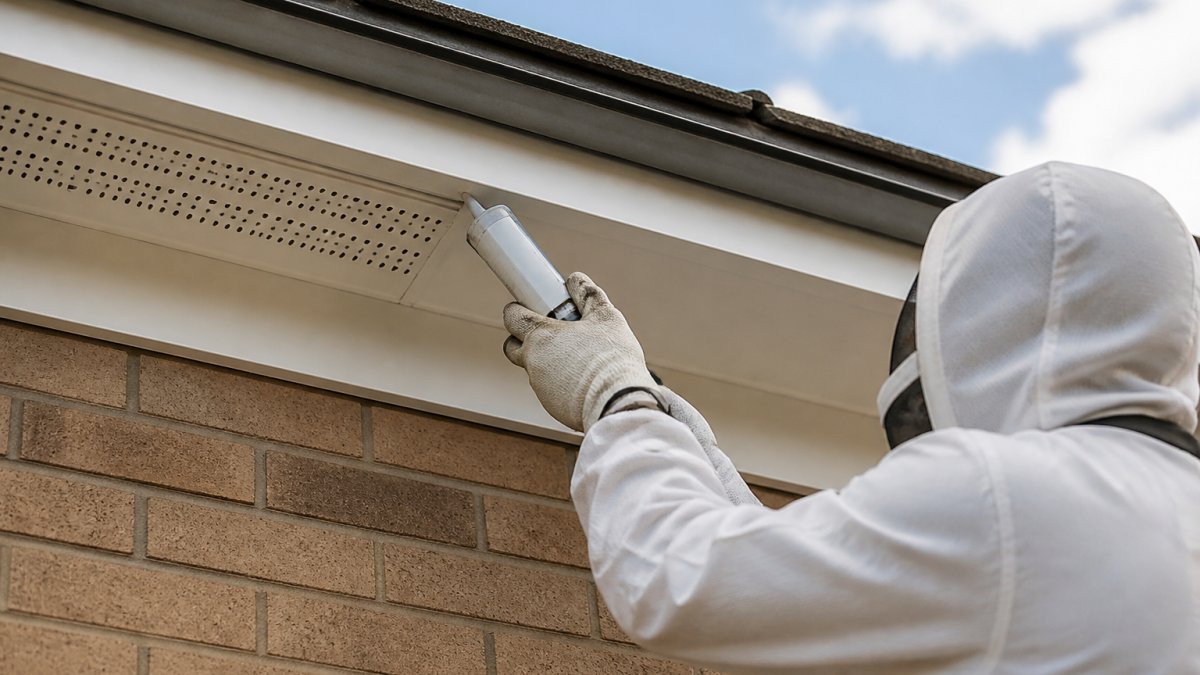
Seal small gaps with exterior-grade sealant. For larger openings, use wire mesh first, then seal around the edges. Do this in early spring, before queens start hunting for sites.
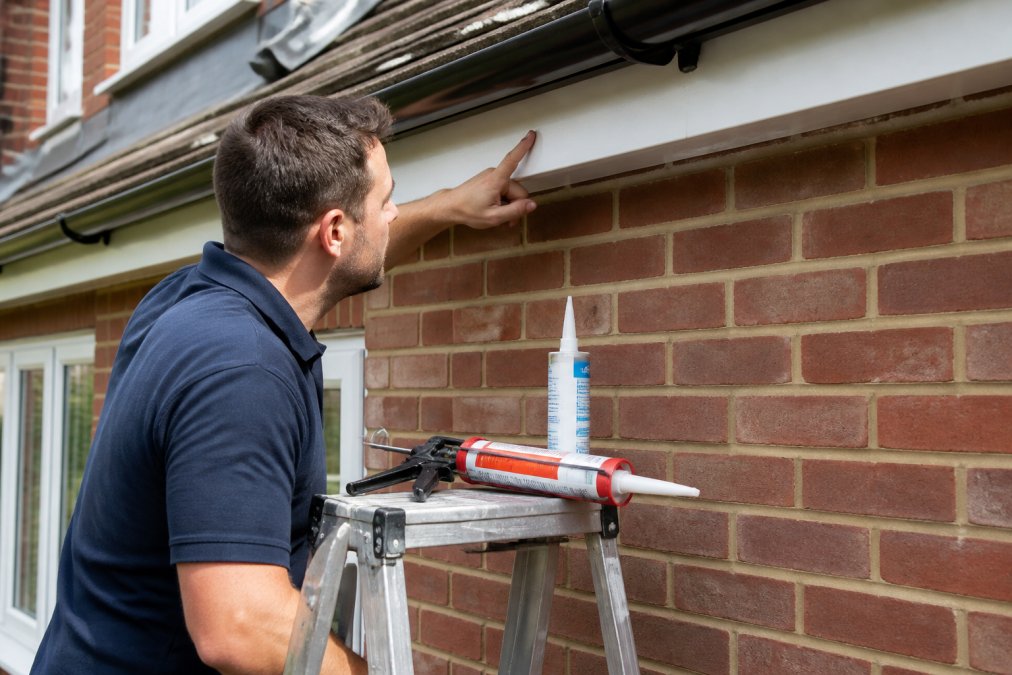
Check the loft from the inside too. Light coming through is a clear sign of a gap. Seal it from the outside where possible.
Step 2: Use Natural Wasp Repellents for Homes Around Entry Points
Natural wasp repellents for homes work best as a deterrent, not a cure. They make entry points less appealing. They will not remove an active nest.
Try these:
- Peppermint oil dabbed on cotton wool near entry points
- Clove and geranium oil mixed with water as a spray
- Citronella on rags placed near vents
- A fake wasp nest hung under the eaves
- Strong-smelling plants like wormwood or mint near doorways
Reapply oils every few weeks. Rain and sun break them down fast.
What most guides miss is that scent alone rarely stops a determined queen. Use repellents alongside sealing. On their own, they are a weak defence.
Step 3: Remove Food and Water Sources That Attract Wasps
Wasps come for shelter, but they stay for food. Cut off the supply and your eaves become far less attractive.
Do this:
- Keep bins sealed and rinsed
- Clear fallen fruit from lawns
- Cover outdoor food and drinks
- Fix dripping taps and blocked drains
- Empty pet bowls after meals
- Clean up sugary spills straight away
Late summer is when wasps turn aggressive and hunt for sugar. That is when a food source near your home pulls them in from metres away.
A tidy garden is not just about looks. It is one of the simplest ways to prevent wasps returning year after year.
Step 4: Know When to Call Professional Pest Control for Wasps
Some jobs are not DIY. Call professional pest control for wasps when the nest is large, high, or hidden in a wall cavity.
Call a pro if:
- The nest is bigger than a football
- Wasps are entering a wall or chimney
- Anyone in the home is allergic
- You cannot reach the nest safely
- You have tried DIY and failed
At ProPest Oxford Ltd, our technicians hold a minimum RSPH Level 2 qualification. We find the source, not just the symptoms. We also offer same-day or next-day appointments, seven days a week.
The Health and Safety Executive guidance on pest control is clear that pesticide use must be handled by trained people. That is not a job for a spray can from a shop.
Common Mistakes to Avoid When You Prevent Wasps
The biggest mistake is sealing a gap while wasps are still active inside. You trap them, and they chew a new exit. That new exit is often into a bedroom or kitchen.
Other common errors:
- Blocking vents completely, which causes damp and rot
- Using repellents but never sealing the actual gaps
- Ignoring small nests until they become huge
- Treating a nest at night without proper kit
- Assuming one treatment is enough forever
A common mistake is forgetting that prevention is seasonal. You need to check eaves each spring, not once.
For landlords and business owners, a yearly check is a strong defence. It helps keep tenants safe and protects your reputation. ProPest Oxford Ltd works discreetly with rental properties and hospitality sites across the region.
Wasps return to the same kind of spot year after year. Sealing gaps, cutting off food and water, and acting early in spring will keep your eaves clear. When a nest is already there, or the job feels risky, bring in the experts.
ProPest Oxford Ltd offers same-day or next-day appointments, RSPH Level 2 qualified technicians, and a focus on finding the source of the problem. We are NPTA members, BASIS PROMPT registered and fully insured, serving homeowners, landlords and businesses with safe, effective treatment for families and pets.
Get started with ProPest Oxford Ltd and work towards keeping your property free from wasps.
Frequently Asked Questions
What scent keeps wasps away from eaves?
Strong scents can discourage wasps from settling. Peppermint oil, clove oil, lemongrass and eucalyptus are common choices. Soak cotton wool in a few drops of essential oil and place them near eaves gaps, or wipe down surfaces with a diluted mix. Reapply every few weeks, especially during late spring when queens are scouting. These scents do not kill existing nests, so use them as a deterrent before wasps move in. Always test on a small area first to avoid staining brickwork or paint.
Do fake wasp nests actually work to deter them?
Fake nests can help, but results vary. Wasps are territorial, so a queen may avoid an area that appears already occupied. Hang the decoy early in spring before nest-building starts, and place it where you have seen wasp activity. However, fake nests work best alongside other methods like sealing gaps and removing food sources. If wasps are already nesting, a decoy will not solve the problem. For persistent issues, professional pest control for wasps is more reliable.
When is the best time of year to wasp-proof your home?
Early spring is ideal, typically March to April, before queen wasps emerge from hibernation and start scouting for nest sites. Sealing cracks and applying repellents during this window stops them before they settle. If you miss that window, late autumn is the next best time, after the colony dies off and before the following season. Wasps are least active in winter, making it a safe period for inspections and repairs. Consistent timing each year gives the best long-term results.
Is it safe to remove a small wasp nest myself?
Removing a small nest yourself is risky, even if it looks inactive. Wasps can become aggressive quickly, and a single sting can trigger a severe reaction in some people. If the nest is newly started and no wasps are present, you might knock it down at dusk when they are less active, wearing protective clothing. But if you see regular wasp traffic, treat it as active. For safety, contact a qualified professional who can remove it and advise on preventing wasps from returning.