 listicle
Why DIY Pest Control Fails Repeatedly
Table of Contents
- The Core Reason DIY Pest Control Fails at the Source
- Signs of a Severe Pest Infestation You Should Not Ignore
- The Dangers of Over-the-Counter Pesticides
- Five Reasons DIY Pest Control Keeps Failing
- How DIY Attempts Can Make an Infestation Worse
- Professional Pest Control Benefits: What Changes When an Expert Steps In
- When to Stop DIY and Call a Professional
- Frequently Asked Questions
Last Updated: August 21, 2026
The Core Reason DIY Pest Control Fails at the Source
DIY pest control fails because it treats visible signs rather than the underlying cause. Most homeowners spray surfaces, set traps, or block obvious gaps, see temporary results, then watch the problem return, often worse. At ProPest Oxford Ltd, we see this pattern constantly: properties where multiple rounds of shop-bought treatments have been applied, yet the root cause remains untouched.
The fundamental problem is identification. Before any treatment works, you need to know exactly what pest you're dealing with, where it's nesting, how it's entering, and what sustains it. Without that information, any product applied is guesswork. You might kill some individuals, but the colony, nest, or entry route stays intact. Within weeks, numbers recover.
Professional pest management identifies the source first, then treats it. A technician who finds the entry point, harbourage site, and food or moisture source can design a plan that actually resolves the problem. A homeowner working from a product label cannot replicate that process, no matter how carefully they follow instructions.
Signs of a Severe Pest Infestation You Should Not Ignore
Knowing when a problem has moved beyond DIY territory is the first practical decision you need to make. Many people delay because early signs seem manageable. By the time signs are unmistakable, the infestation is typically well established.
| Sign | Likely Pest | Why It Matters |
|---|---|---|
| Scratching sounds in walls at night | Rodents | Suggests active nesting inside the structure |
| Grease marks along skirting boards | Rats or mice | Indicates a regular, established run |
| Unexplained holes in food packaging | Rodents or stored-product insects | Points to active foraging inside the property |
| Live or dead insects in large numbers | Cockroaches, ants, or beetles | Suggests colony is mature and reproducing |
| Structural damage to wood or wiring | Rodents | Carries real safety and insurance implications |
| Musty or ammonia-like smell | Rodents, cockroaches | Often indicates a large, hidden population |
Rodent Activity: Beyond the Odd Dropping
A single mouse dropping is not a crisis. Dozens of droppings along multiple routes, combined with gnaw marks, smear trails, and sounds of movement in ceiling or wall cavities, indicate a different situation entirely.
Rats and mice breed rapidly. A pair of mice can produce several litters in months. By the time you find clear evidence of a run, greasy smear marks left by repeated body contact, the population is almost certainly larger than you think. Traps placed without knowledge of the run will catch some individuals but will not address the nest, entry point, or the population still moving freely through the structure.
According to the British Pest Control Association, rodent activity inside a building should always be investigated professionally because risks extend beyond the pest itself to structural damage and potential contamination of food preparation areas.
Insect Infestations That Have Taken Hold
Insect infestations are particularly easy to underestimate. A handful of ants in the kitchen can look like a nuisance. When those ants are part of an established colony nesting in a wall void or under flooring, retail sprays applied to foraging workers barely register. The colony simply reroutes.
Cockroaches exemplify this problem. They are nocturnal, fast-breeding, and capable of surviving in unexpected conditions. Seeing cockroaches during daylight hours indicates a large population, they emerge in the open when the harbourage site is overcrowded. At that stage, over-the-counter products are unlikely to resolve the problem.
The Dangers of Over-the-Counter Pesticides
Retail pest control products are formulated for general consumer use, meaning lower active ingredient concentrations, broader application instructions, and no requirement for knowledge of pest biology or resistance patterns.
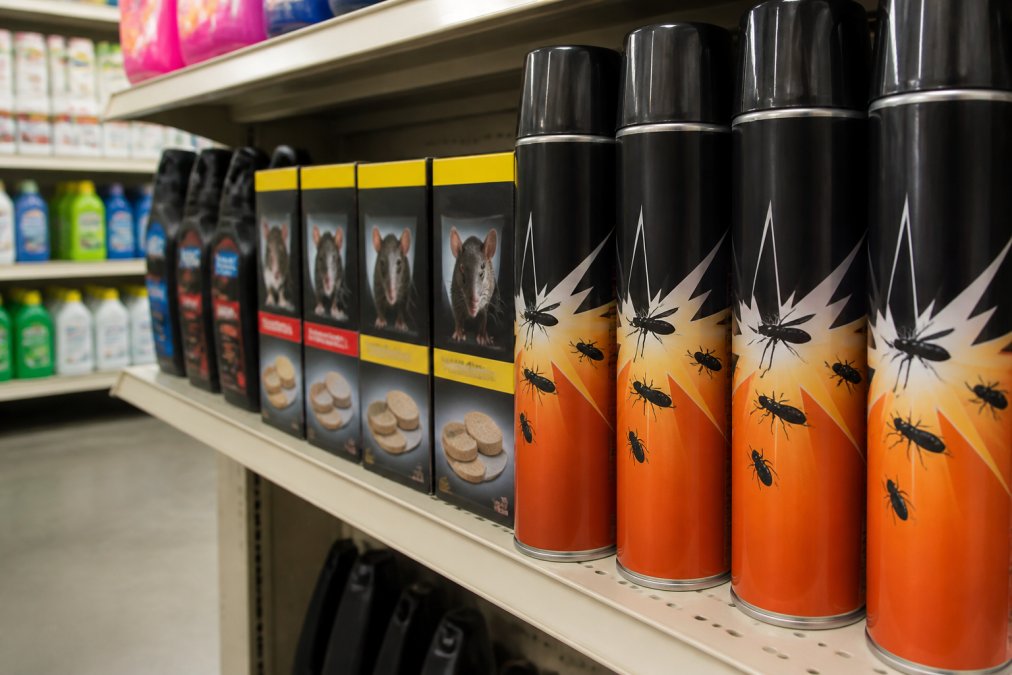
Misapplied pesticides carry genuine safety concerns for people, pets, and the environment. The Health and Safety Executive guidance on pesticide use is clear that even amateur-use products must be applied strictly in accordance with label instructions, yet most homeowners apply them without reading the full label, without appropriate protective equipment, and without understanding safe re-entry intervals.
Repeated exposure to the same active ingredient at sub-lethal concentrations selects for resistant individuals in a population. This is not theoretical, it is documented in several common pest species, including certain cockroach and rodent populations. When DIY treatments are applied repeatedly without success, they may accelerate resistance development in the local population.
Bait stations placed in the wrong location, traps set on the wrong run, or sprays applied to surfaces pests do not contact will yield no result. The product is not defective; the application is simply wrong for the pest's actual behaviour.
Five Reasons DIY Pest Control Keeps Failing
Wrong Product, Wrong Pest
The biggest mistake with DIY pest control is reaching for the nearest product without confirming the pest species. Many insects look similar to the untrained eye. Cluster flies and bluebottles require different approaches. Pharaoh ants and black garden ants respond to entirely different treatments, and using the wrong bait for Pharaoh ants can cause the colony to split and spread, making the problem significantly worse.
Correct identification is not optional. It is the foundation of any effective treatment plan.
Treating Symptoms Rather Than the Infestation
Killing visible pests does nothing about those you cannot see. A wasp nest inside a roof void, a mouse run behind kitchen units, or a cockroach harbourage under a dishwasher are the actual problems. Surface treatments address the symptom, not the source.
This is why infestations recur after DIY treatment. The visible population is typically a fraction of the total. Remove those individuals and the rest of the colony continues reproducing.
Pest Resistance to Retail-Grade Treatments
Repeated use of the same active ingredient at low concentrations drives resistance. This is particularly acute with rodenticides, where first-generation anticoagulants have shown reduced effectiveness against certain rat populations in parts of the UK. Professional pest controllers have access to a wider range of active ingredients and can rotate products to manage resistance, something retail products do not allow.
According to CRRU UK guidance on rodenticide resistance, resistance to some anticoagulant rodenticides is established in several UK regions, and professional-grade treatments are often necessary to achieve control.
Incomplete Application and Missed Entry Points
Thorough treatment covers every harbourage site, run, and entry point. Most DIY attempts cover only accessible areas the homeowner has noticed. Wall voids, roof spaces, subfloor areas, drainage runs, and gaps around utility penetrations are routinely missed, not through negligence, but because finding them requires experience and specialist equipment.
Entry point proofing is equally important. Treating an active infestation without sealing entry routes means reinfestation is almost inevitable.
No Follow-Up or Monitoring Plan
A single treatment rarely resolves a significant infestation. Professional pest management typically involves a structured programme: initial treatment, follow-up inspection to assess efficacy, further treatment if required, and ongoing monitoring to confirm resolution and detect recurrence early.
DIY pest control has no equivalent. Most homeowners treat once, see improvement, and consider the matter closed. Weeks later, numbers recover.
How DIY Attempts Can Make an Infestation Worse
Failed DIY pest control does not just leave you back at square one. In several common scenarios, it actively worsens the situation.
Disturbing a wasp or hornet nest without adequate protective equipment and correct insecticide is dangerous. Agitated colonies defend aggressively, and a partially treated nest will often rebuild in the same location.
Using bait products incorrectly can cause rodents to become bait-shy, associating the bait with illness without consuming a lethal dose. This makes subsequent professional treatment considerably more difficult. Rodents are now alert to the bait type and will avoid it.
For insect infestations, applying repellent sprays to a cockroach or ant harbourage can scatter the population into new areas of the property. What was one localised problem becomes several distributed ones. Professional technicians treat infestations in a way that concentrates rather than disperses the population, ensuring treatment reaches as many individuals as possible.
Professional Pest Control Benefits: What Changes When an Expert Steps In
Professional pest control is not simply a more powerful version of DIY. The difference is structural, not just chemical.
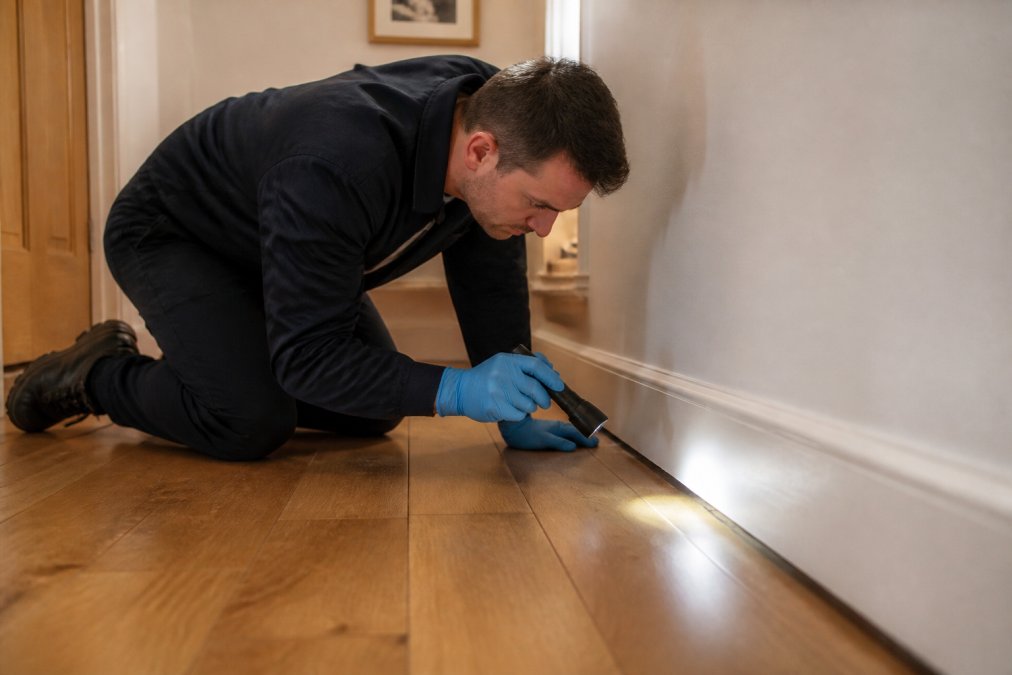
A qualified technician begins with a thorough inspection. That inspection identifies the pest species with certainty, locates the harbourage or nest, maps activity routes, identifies entry points, and assesses factors sustaining the infestation, food sources, moisture, structural gaps, or harbouring conditions. The treatment plan follows directly from that information.
Professional pest control benefits extend beyond the treatment itself. Proofing recommendations, hygiene advice, and structural repairs identified during inspection address the conditions that allowed the infestation to establish. Without that element, even successful treatment is likely followed by reinfestation.
ProPest Oxford Ltd technicians hold a minimum RSPH Level 2 qualification in pest management and are associated with both the NPTA and BASIS PROMPT, setting the standard for professional competence and ongoing training. Appointments are available seven days a week, including same-day and next-day options.
As the British Pest Control Association's guidance for consumers notes, using a member company provides assurance that technicians are trained, insured, and operating to industry standards, a level of accountability that retail products cannot offer.
When to Stop DIY and Call a Professional
The honest answer is: sooner than most people do.
Wasp or hornet nests in enclosed spaces, any suspicion of cockroach infestation, rodent activity inside wall cavities or roof voids, and any pest problem in a food business or healthcare setting all require professional intervention. The risks of mishandling these situations, to health, property, and in commercial settings to regulatory compliance, are too significant.
For less acute situations, the practical rule is this: if you have applied a retail treatment and the problem has not resolved within two weeks, or if it has recurred after initial improvement, the infestation is beyond what retail products can address. Continuing to apply the same treatment expecting a different result will not work, and may be making the situation harder to resolve.
Landlords face an additional consideration. Under the Landlord and Tenant Act 1985, landlords have a duty to keep properties fit for habitation, and persistent pest infestations can constitute a breach of that obligation. Documented professional treatment provides a record of due diligence that DIY attempts cannot.
Persistent pest problems rarely resolve themselves, and repeated DIY attempts often delay the professional intervention that would have resolved the issue more quickly and at lower total cost. ProPest Oxford Ltd offers same-day and next-day appointments, with RSPH Level 2 qualified technicians who focus on identifying the source of the infestation rather than simply treating the symptoms, backed by NPTA membership and BASIS PROMPT registration. Book a service with ProPest Oxford Ltd and get a treatment plan built around the actual cause of your pest problem, not just the signs of it.
Frequently Asked Questions
Why does my DIY pest control not work?
Most DIY pest control fails because it treats visible signs rather than the source. Retail products are formulated at lower concentrations than professional-grade treatments, and without accurate pest identification you may be using entirely the wrong product. Pests also develop behavioural resistance, avoiding bait stations or traps once disturbed. A professional will locate entry points, nesting sites, and harbourage areas that a householder is unlikely to find, then apply the correct treatment at the correct dose.
Can DIY pest control make an infestation worse?
Yes, it can. Disturbing a rodent nest without sealing entry points first often causes the colony to scatter deeper into the property or into neighbouring areas. Partial treatment of an insect infestation can split a colony, creating multiple satellite nests that are harder to eradicate. Incorrect use of over-the-counter pesticides can also cause pests to avoid treated zones while continuing to breed elsewhere, prolonging the infestation significantly.
Is professional pest control more effective than DIY?
Professional pest control delivers consistently better results because technicians are trained to identify the pest species accurately, locate the infestation source, and apply treatments that are not available to the general public. Qualified technicians, such as those holding the RSPH Level 2 Award in Pest Management, follow structured treatment plans with follow-up visits to confirm eradication. This approach addresses the root cause rather than surface activity, making recurrence far less likely than with retail products.
When should you stop DIY pest control and call a professional?
Stop DIY treatment and call a professional if you have seen pest activity for more than two weeks despite treatment, if you find structural damage such as gnawed cables or joists, if droppings or evidence of nesting are widespread across multiple rooms, or if you suspect the pest is entering through drainage or structural gaps. Commercial properties, rental homes, and any situation involving rodents near food preparation areas should go straight to a qualified professional rather than attempting DIY first.