 ultimate-guide
Discreet Pest Control for Businesses: Methods & Compliance
Table of Contents
- Why Discreet Pest Control Matters for Businesses
- Out-of-Hours Pest Management: Minimising Disruption
- Commercial Pest Control Compliance: Legal Requirements and Standards
- Pest Prevention for Restaurants and Food Businesses
- Discreet Treatment Methods and Unmarked Vehicles
- Building Long-Term Prevention: Addressing Root Causes
- Choosing a Discreet Pest Control Provider
- Frequently Asked Questions
Last Updated: 29 August 2026
Why Discreet Pest Control Matters for Businesses
Discreet pest control for businesses isn't a luxury, it's a necessity. When a restaurant, hotel, or office discovers a pest problem, the immediate concern isn't just eradication. It's containment of reputation damage. A single social media post about rodents in a food establishment can devastate customer confidence in hours. For landlords managing multiple properties, visible pest control activity can alarm tenants and trigger lease disputes. For high-profile individuals and large estates, discretion protects privacy and security. This is where discreet pest control for businesses becomes critical to your operational survival.
The stakes are higher in commercial settings than residential ones. A homeowner dealing with rats needs the problem solved. A restaurant owner needs it solved without anyone knowing there ever was a problem. That distinction shapes every decision, from how technicians arrive and dress, to when treatments happen, to how communication flows. According to the Health and Safety Executive guidance on pest control in food businesses, commercial food operations must maintain documented pest management, but the execution can be invisible to customers and staff if planned correctly.
ProPest Oxford Ltd understands this tension. Our technicians hold minimum RSPH Level 2 qualifications and work within BASIS PROMPT standards, meaning they know how to solve infestations thoroughly whilst maintaining the discretion your business requires. The goal isn't just to eliminate pests, it's to eliminate them in a way that protects your reputation, maintains normal operations, and leaves no visible trace of the problem ever existing.
Out-of-Hours Pest Management: Minimising Disruption
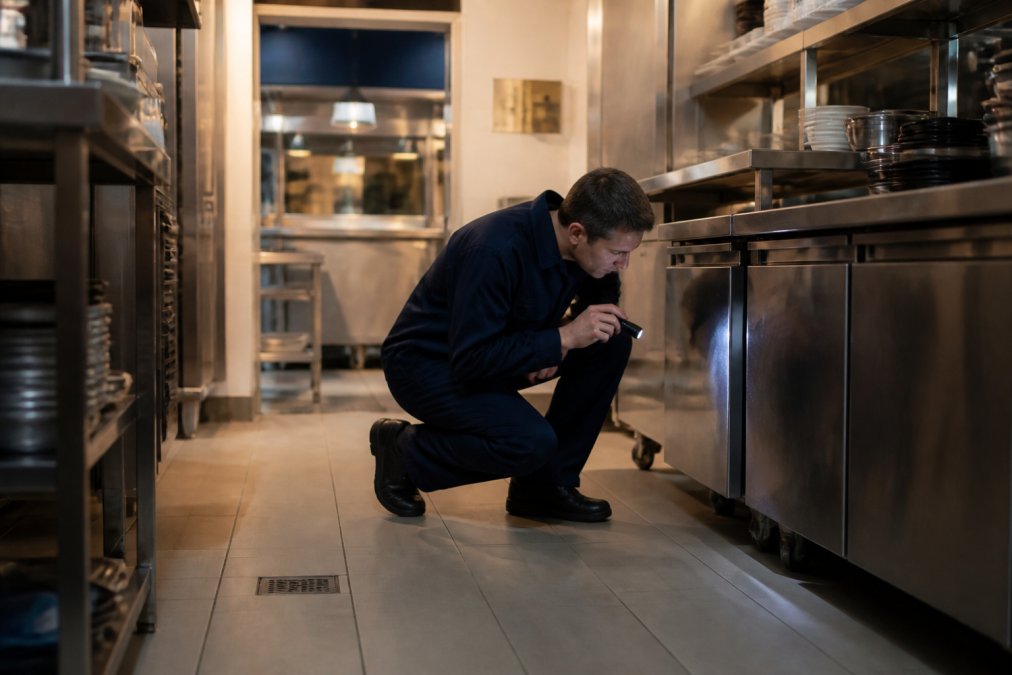
Out-of-hours pest management is the operational foundation of discreet pest control for businesses. The principle is straightforward: treat when your business isn't operating. For restaurants, this means after closing. For offices, after hours or weekends. For retail spaces, early morning before opening or late evening after customers leave. This timing removes the visibility problem entirely.
Evening and night treatments offer practical advantages beyond discretion. Pests are more active when human activity ceases, making them easier to locate and treat effectively. Technicians can work methodically without time pressure. They can access areas normally occupied by staff or customers. They can set monitoring equipment without disrupting workflows. The treatment itself, whether baiting, trapping, or targeted spraying, becomes part of your pest management cycle rather than a visible crisis response.
ProPest Oxford Ltd operates seven days a week specifically to accommodate this need. Same-day or next-day appointments mean you're not waiting weeks for treatment whilst the problem worsens. Out-of-hours scheduling is standard for our commercial clients, not an exception. Our technicians arrive in unmarked or low-profile vehicles, use minimal signage, and complete work with the least possible disruption to your property's appearance or your neighbours' awareness.
The timing also affects treatment success. Many pest species, particularly rodents and cockroaches, are nocturnal. Treating during their active hours increases the likelihood of direct contact with baits and traps. Your technician can observe actual pest behaviour, identify entry points being used at night, and position treatments where they'll be most effective. This isn't just about being discreet; it's about being thorough.
Commercial Pest Control Compliance: Legal Requirements and Standards
Discreet pest control for businesses must operate within strict legal and safety frameworks. In the United Kingdom, food businesses are governed by the Food Safety Act 1990 and related regulations (legislation.gov.uk). These require documented pest control measures, but they don't mandate visible signage or public acknowledgement of pest problems. The compliance happens behind the scenes.
Your pest control provider must be registered with BASIS PROMPT, the scheme that certifies pesticide application professionals. This isn't optional for commercial work, it's the standard that demonstrates your technician has been trained, assessed, and is subject to ongoing quality checks. ProPest Oxford Ltd's RSPH Level 2 qualified technicians meet and exceed these requirements. RSPH (Royal Society for Public Health) qualifications are the gold standard in the UK pest control industry, recognised by local authorities and environmental health officers.
Your provider should also hold membership with the NPTA (National Pest Technicians Association), which sets industry standards for ethical practice and professional conduct. This membership signals that the business operates under a code of conduct, carries proper insurance, and commits to ongoing professional development. When you're hiring someone to apply pesticides in your food preparation area or residential property, these certifications matter, they're your assurance that the work is being done to recognised standards.
Documentation is part of compliance, not the enemy of discretion. You'll receive records of treatments, dates, chemicals used, and areas treated. These records protect you legally and demonstrate due diligence to environmental health inspectors. They're confidential documents between you and your pest control provider, not public information. The fact that you have professional pest management in place is compliance. The fact that it happened discreetly is good business practice.
Pest Prevention for Restaurants and Food Businesses
For restaurants and food businesses, pest control is inseparable from food safety and reputation management. A single pest sighting reported on social media can trigger customer cancellations, negative reviews, and potential enforcement action from local authorities. Prevention is therefore not just about avoiding infestations, it's about protecting your livelihood.
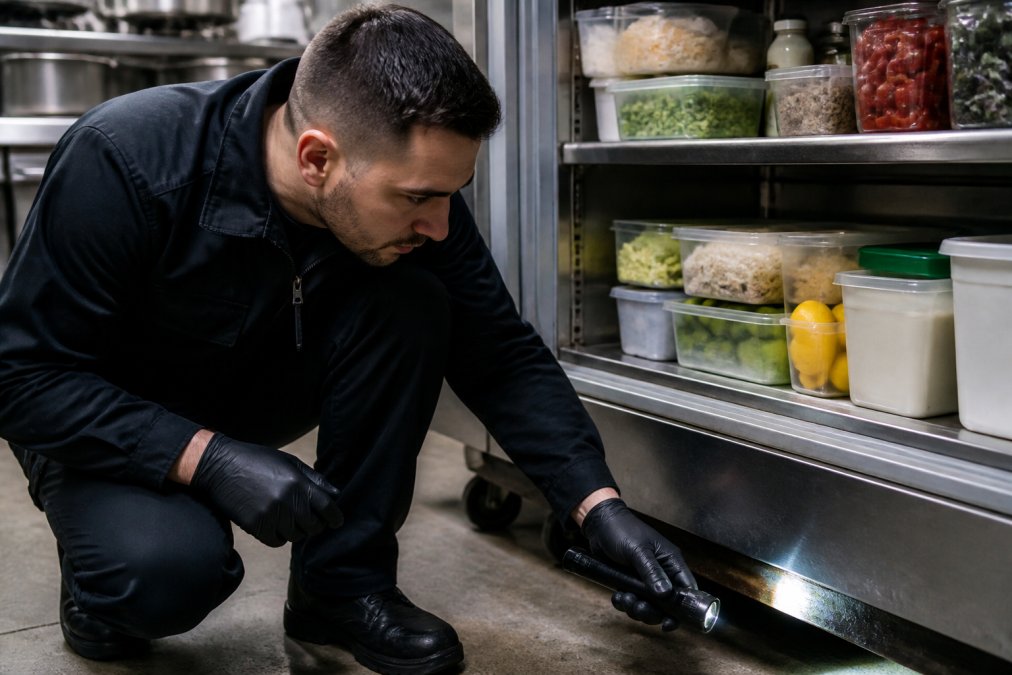
Discreet pest control for restaurants begins with prevention rather than reaction. Your technician should conduct a detailed inspection of your premises, identifying vulnerabilities: gaps around pipes, unsealed entry points, areas where food debris accumulates, water sources that attract pests. Many restaurants discover their pest problem only after it's visible to customers. By then, the damage is done. A prevention-focused approach catches vulnerabilities before they become infestations.
Key prevention measures include:
- Sealing entry points: Gaps around external doors, windows, and utility penetrations are rodent highways. Sealing these prevents entry entirely.
- Managing waste: Food waste in bins, grease traps, and composting areas attracts pests. Secure bins, frequent emptying, and professional grease trap maintenance are essential.
- Monitoring systems: Discreet monitoring devices placed in risk areas (storage rooms, behind equipment, external perimeters) allow early detection of pest activity before visible infestations develop.
- Staff training: Your team should understand basic pest awareness, reporting signs of activity, maintaining cleanliness, securing food properly, without needing to know about active pest management programmes.
Regular inspections create a baseline. Your pest control technician should visit on a scheduled basis, weekly, fortnightly, or monthly depending on your risk level, checking monitoring devices, adjusting prevention measures, and reporting findings only to you. This creates a documented prevention programme that satisfies compliance requirements whilst keeping pest management invisible to customers and staff.
Discreet Treatment Methods and Unmarked Vehicles
The physical execution of pest control can be visible or invisible depending on the methods and presentation chosen. Discreet pest control for businesses prioritises methods that work effectively whilst leaving minimal trace.
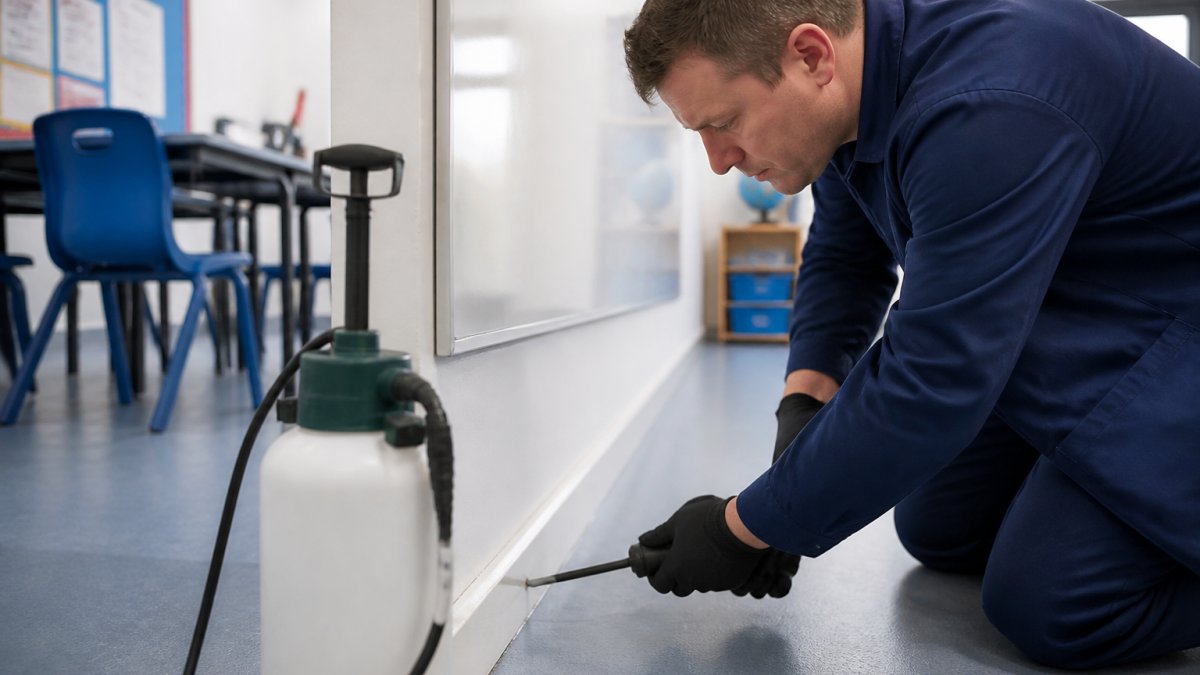
Targeted baiting systems are the foundation of discreet rodent control. Rather than broad spraying or visible traps, baits are placed in tamper-proof stations positioned along walls, behind equipment, or in external areas. These stations are discreet, lockable, and designed to be invisible to customers and staff. Rodents consume the bait and die in wall voids or external areas, removing the visibility problem. Your technician monitors these stations regularly, replacing bait and removing any deceased pests before they become visible.
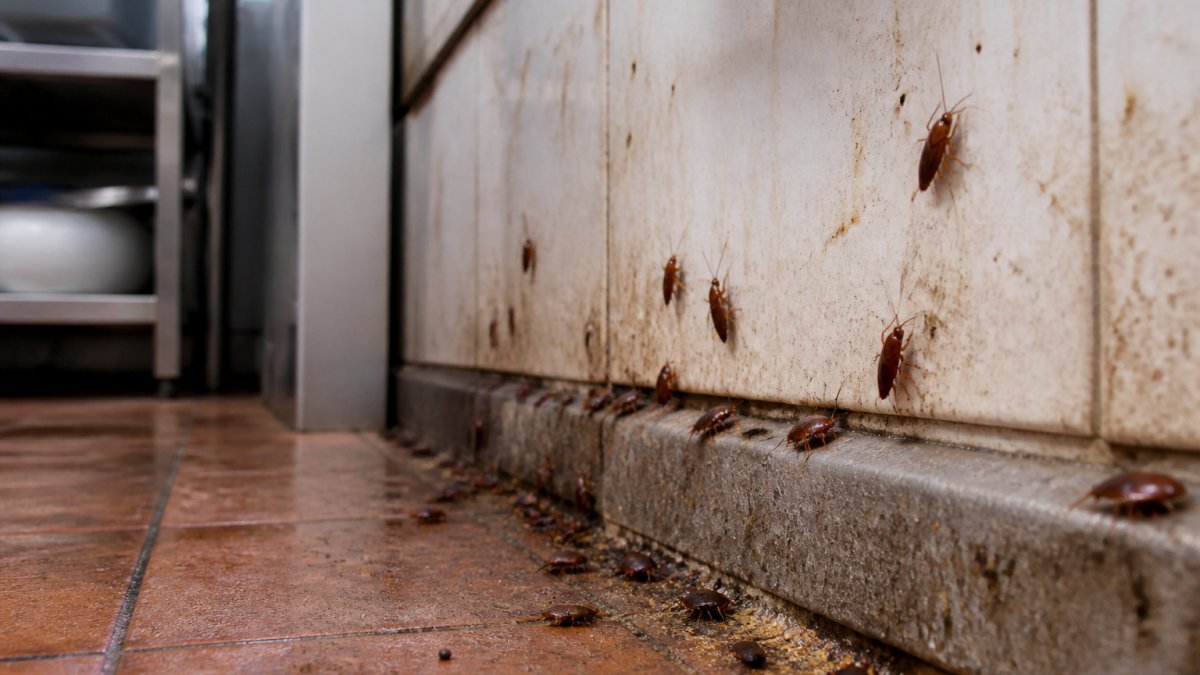
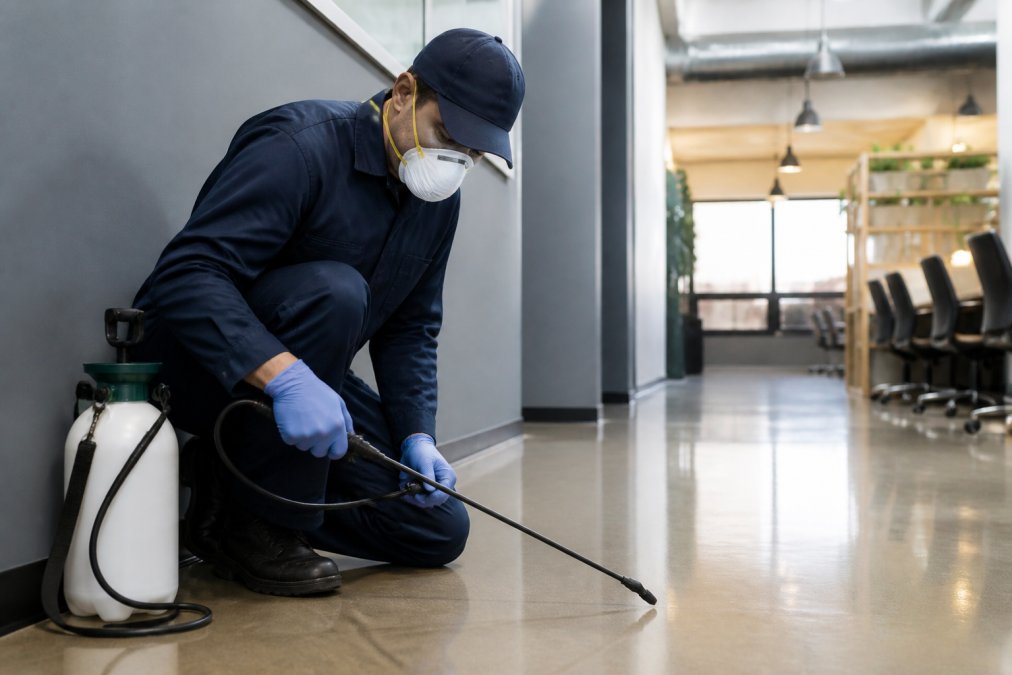
Insect monitoring and targeted treatment for cockroaches and other insects follow a similar principle. Sticky traps placed discreetly in risk areas (behind cookers, under sinks, in storage areas) allow your technician to detect activity early. If treatment is needed, it's typically targeted to specific areas rather than broad spraying, using products that dry quickly and leave no visible residue.
Exclusion work, sealing entry points, repairing damaged areas, installing door sweeps, is the most discreet form of pest control because it's preventive. Once completed, there's no ongoing visible activity. The work itself happens during off-hours, and the result is simply that your premises becomes more secure.
Unmarked or low-profile vehicles are standard for professional pest control providers serving commercial clients. ProPest Oxford Ltd's technicians arrive in vehicles that don't advertise pest control services. This prevents the visual signal to customers, staff, or neighbours that a pest problem exists. Combined with off-hours scheduling, it means your business appears to operate normally whilst pest management happens invisibly.
Professional presentation matters too. Technicians in branded uniforms or carrying visible pest control equipment send a message. Technicians in plain clothing carrying discreet tool bags send a different message, maintenance, inspection, routine service. The psychology of discretion extends to how the work is presented, not just when and how it's done.
Building Long-Term Prevention: Addressing Root Causes
Discreet pest control that lasts requires addressing why pests are present in the first place. A treatment that kills existing pests but leaves vulnerabilities in place is temporary. Within weeks or months, new pests will find the same entry points and food sources. Your business returns to square one, and you need another treatment, visible, disruptive, and expensive.
Your pest control provider should conduct a thorough inspection to identify root causes. Is there a gap in external brickwork? A damaged door seal? A water leak creating damp conditions? Grease accumulation in extraction systems? Overgrown vegetation providing shelter and access routes? These aren't just pest control issues, they're building maintenance issues that your technician should identify and recommend addressing.
Prevention addresses the environment, not just the pests. Rodents need shelter, food, and water. Remove one of these, and they move elsewhere. Cockroaches thrive in warm, damp environments with food sources. Eliminate the conditions, and the infestation doesn't return. This is why a comprehensive prevention approach, combining treatment, exclusion, and environmental management, is more effective and ultimately more discreet than reactive treatment alone.
Long-term prevention also means scheduled monitoring. Rather than waiting for a visible problem, your premises is checked regularly. Monitoring devices are reviewed, baits are refreshed, and any early signs of activity are addressed before they escalate. This creates a baseline of control that feels normal rather than crisis-driven. Your business operates with pest management in place, but it's invisible to anyone not specifically looking for it.
Choosing a Discreet Pest Control Provider
Not all pest control providers understand discreet service. Some operate on a model where they respond to infestations with visible, high-disruption treatments. Others lack the qualifications to work in sensitive environments like food businesses. Some won't commit to off-hours scheduling or unmarked vehicles. Choosing the right provider is essential to achieving true discretion.
Qualifications matter. Your provider's technicians should hold RSPH Level 2 or equivalent certification. This isn't a nice-to-have, it's the standard that demonstrates they've been trained in safe pesticide application, pest identification, and professional conduct. Ask to see evidence. Reputable providers display their certifications openly.
Insurance and membership should be verified. Your provider should carry public liability insurance and professional indemnity insurance. They should be members of the NPTA or equivalent professional body. These aren't guarantees of quality, but they're indicators that the business operates to recognised standards and is accountable if something goes wrong.
Experience with your business type matters. A provider experienced with restaurants understands food safety compliance, the sensitivity of customer-facing businesses, and the specific pest risks in hospitality. A provider experienced with offices understands different challenges. A provider experienced with large estates understands rodent management at scale. Ask about their experience. Request references from similar businesses.
Availability and responsiveness are practical considerations. Can they offer same-day or next-day appointments? Do they operate seven days a week? Can they accommodate your preferred scheduling? ProPest Oxford Ltd's commitment to same-day or next-day appointments and seven-day availability reflects the reality that pest problems don't wait for convenient times, and discreet solutions require flexibility.
Communication and confidentiality are essential. Your provider should communicate findings and recommendations to you, not to your staff, customers, or neighbours. Reports should be detailed enough for compliance purposes but confidential in nature. Discuss confidentiality expectations upfront. A professional provider will understand and respect this requirement.
Transparency on methods and costs supports trust. You should understand what treatments will be used, why they're necessary, and what the process will look like. Costs should be clear and justified. Hidden fees or vague explanations are red flags. ProPest Oxford Ltd provides transparent communication about what we'll do, why we'll do it, and how it will be executed discreetly.
Discreet pest control for businesses isn't about hiding a problem, it's about solving it professionally, thoroughly, and invisibly. Your reputation, your compliance, and your peace of mind depend on a provider who understands that discretion and effectiveness must go together. ProPest Oxford Ltd has been delivering exactly this since 2017, with RSPH Level 2 qualified technicians, BASIS PROMPT registration, and NPTA membership backing every job. When you need pest control that works without anyone knowing there was ever a problem, we're here to help. Book a service today and discover how professional discreet pest control protects your business.
Frequently Asked Questions
Q: How can businesses maintain discretion during pest control treatments?
A: Discreet pest control for businesses relies on several key practices: scheduling treatments outside operating hours, using unmarked or branded vehicles that blend into commercial environments, employing technicians in professional attire rather than high-visibility clothing, and conducting thorough inspections before any visible treatment begins. Many providers also use sealed, odourless treatment methods and remove all evidence of the visit. Communication with staff beforehand ensures no surprises, and confidentiality agreements protect your business reputation throughout the process.
Q: What are the legal requirements for pest control in food-handling businesses?
A: Food businesses must comply with the Food Safety Act 1990 and Food Hygiene Regulations 2006, which require documented pest control measures and evidence of professional treatment. Your pest control provider must hold appropriate qualifications such as RSPH Level 2 or BASIS PROMPT registration. Treatment records, inspection reports, and preventive measures must be kept on file for environmental health inspections. Businesses should ensure their provider understands food-safety-specific requirements and uses only approved, food-safe treatments in areas where contamination is a risk.
Q: Can pest control be performed outside of business hours?
A: Yes, out-of-hours pest management is one of the most effective ways to maintain discretion and avoid disruption. Many professional providers offer evening, night, and weekend appointments specifically for commercial clients. This timing allows technicians to work thoroughly without interrupting operations, reduces staff exposure to treatment chemicals, and minimises customer awareness. For hospitality and food businesses, after-hours treatment is often preferred, as it allows deep cleaning and inspection without affecting service hours or creating visible activity that might concern customers.
Q: How often should a business schedule preventive pest inspections?
A: Most businesses benefit from quarterly or bi-annual preventive inspections, though frequency depends on business type, location, and previous infestation history. Food businesses, restaurants, and healthcare facilities typically require more frequent monitoring, often monthly or quarterly, due to regulatory requirements and higher contamination risks. Regular inspections identify entry points, environmental conditions, and early signs of activity before infestations develop, reducing the need for emergency treatment and protecting your reputation long-term.