 ultimate-guide
A Landlord's Guide to Discreet Pest Control
Last Updated: November 6, 2026
Quick Summary
Discreet pest control for landlords means resolving infestations without advertising the problem to neighbours, other tenants or the wider street. It is typically handled through a single point of contact, at least 24 hours' written notice and appointments arranged around the tenant's schedule. Treatment is booked with notice, ideally offering two time slots, and proofing is scheduled alongside treatment where the entry point is clear.
- Under the Homes (Fitness for Human Habitation) Act 2018, rented homes must be fit to live in.
- Treating pests without fixing the entry point is the most common cause of repeat infestation.
- Give at least 24 hours' written notice, offer two time slots and confirm by text on the day.
- Book inspection on day one of the changeover, treatment on day two and a follow-up before the new tenancy.
- Ask contractors how many visits are included and whether proofing is quoted separately before comparing quotes.
Table of Contents
- Why Discreet Pest Control Matters for Rental Properties
- Landlord Pest Control Responsibilities Under UK Housing Law
- A Decision Tree for Assigning Responsibility
- Common Pests in Rented Properties and How They Get In
- Planning Pest Control in Rented Properties Without Alarming Tenants
- Pest Control Between Tenancies: The Changeover Window
- Your Landlord Pest Control Checklist
- What Discreet Pest Control Involves and What It Costs
- Frequently Asked Questions
Why Discreet Pest Control Matters for Rental Properties
Discreet pest control for landlords is the practice of resolving infestations without advertising the problem to neighbours, other tenants or the wider street.
Landlords and letting agents often need treatment handled quietly, on a schedule that fits tenancies, and with a paper trail that stands up if a dispute follows. Our guide to pest damage prevention for rental properties explains how to protect the property before problems become costly.
Below, we set out who is responsible for what, how to assign liability without guesswork, and how to run pest control in rented properties so tenants barely notice.
Landlord Pest Control Responsibilities Under UK Housing Law
Landlord pest control responsibilities sit mainly with the structure of the building, not the behaviour of the occupant. Under the Homes (Fitness for Human Habitation) Act 2018, rented homes must be fit to live in, and a persistent infestation linked to defects can breach that duty.
The dividing line is causation. Pests arriving through a broken air brick, a cracked drain or a gap under a sill are a repairs issue. Pests arriving because bins were left open or food was stored loose are a tenant issue.
When Disrepair Makes the Landlord Liable
A landlord is liable when an infestation traces back to a defect the landlord should have repaired. Blocked gullies, failed damp-proof courses, holes around pipework and damaged roof felt all give rodents and insects a route in.
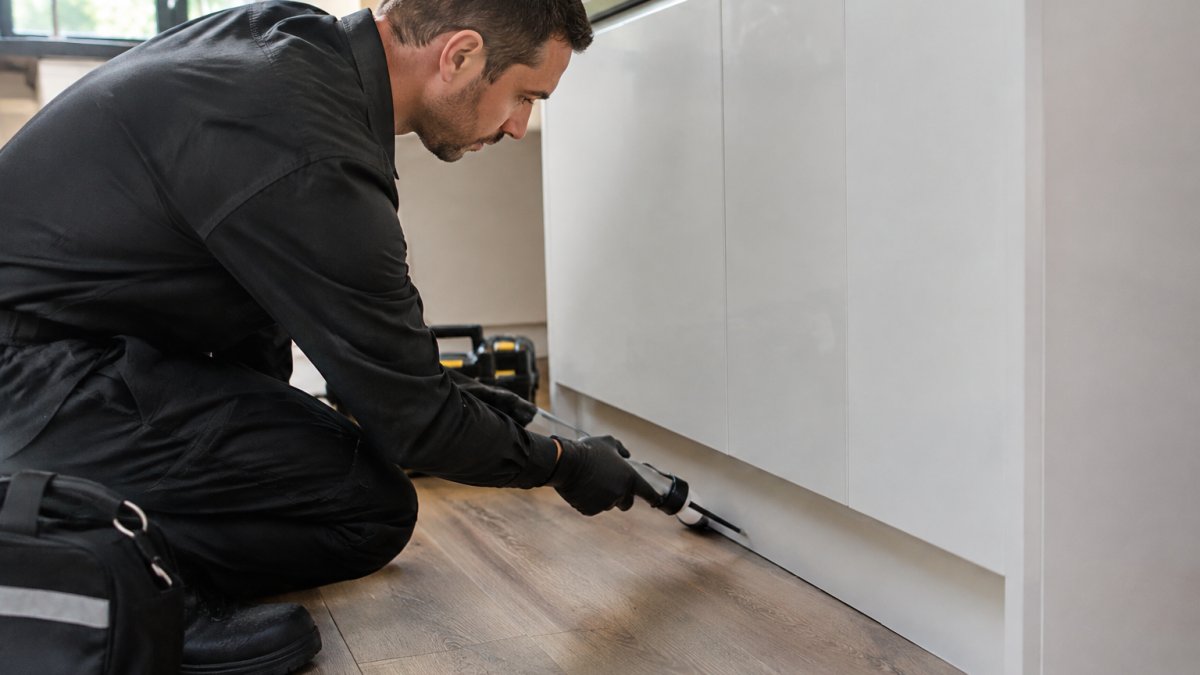
Watch out: treating pests without fixing the entry point is the most common cause of repeat infestation. The treatment works, the season turns, and the same mice return through the same gap.
What the Tenant Is Responsible For
Tenants are responsible for cleanliness and for reporting problems promptly. Shelter's guidance on repairs and pest problems is clear that tenants should report infestations to the landlord rather than ignore them, and that deliberately concealing a problem can shift costs onto the tenant.
In practice, most tenancy agreements place day-to-day housekeeping with the occupant: storing food properly, presenting bins on the right day, and not leaving pet food down overnight.
A Decision Tree for Assigning Responsibility
Use this sequence before you spend anything, to give you a documented rationale either way.
- Identify the pest. Mice, rats, cockroaches, bed bugs, wasps and ants each point to different causes. Get an identification before assigning blame; a photograph and a note of where the activity was seen are enough to start.
- Find the entry point or source. Trace the route rather than treating the sighting. Droppings along a pipe run, grease marks at a gap or live insects near a service riser tell you more than the room where the pest was seen.
- Check the repair log. Was the defect reported by the tenant and left unrepaired? If yes, the landlord pays. A gap of weeks between report and repair is the evidence that matters.
- Check the tenancy agreement. Most agreements place day-to-day housekeeping with the tenant but do not transfer structural repairs. Read the clause before you rely on it.
- Check the timeline. A tenant who reported promptly and a landlord who acted promptly both have stronger positions than one who delayed.
- Decide and record. Write down the decision and the evidence behind it, and send it to the tenant in writing. Keep photographs, the survey report, the repair order and the treatment record together in the property file.
| Situation | Likely responsible party | Action |
|---|---|---|
| Rats entering via a broken drain | Landlord | Repair drain, then treat |
| Mice in a property with unsecured food waste | Tenant | Treat, then advise on housekeeping |
| Bed bugs after a tenant bought second-hand furniture | Tenant, usually | Treat, agree cost recovery |
| Cockroaches in a block with shared service risers | Landlord or building owner | Treat the source, not just the flat |
| Wasps nest in a loft void | Landlord | Remove nest, proof the void |
A Step-by-Step Response Timeline
A decision tree assigns responsibility; a timeline stops the job drifting. Cases escalate when nobody wrote down what happened when.
- Day 0, first report. The tenant reports activity in writing. The landlord or agent acknowledges it the same day and logs the date, room and what was seen.
- Day 1 to 2, triage. Decide whether the report suggests a structural cause, a housekeeping cause or both. If in doubt, book a survey rather than a treatment.
- Day 2 to 5, inspection. A qualified technician surveys the property, identifies the species and traces the entry route, and reports what was found and recommended.
Watch out: treating before the entry point is identified is the most common reason a job reappears within a season. The treatment record should state whether proofing was done and, if not, why.
Evidence to Keep for Disputes and Compliance
A decision is only as strong as the record behind it. Keep the tenant's original report, survey findings, dated photographs of the activity and entry point, any repair order and completion note, the treatment record and the follow-up confirmation. If the case reaches a deposit dispute or council inspection, this file demonstrates the landlord acted reasonably and promptly.
Common Pests in Rented Properties and How They Get In
Rodents dominate call-outs, but the routes in are consistent across older and newer stock.
Rats are almost always a drainage story. For older buildings, our guide on how to get rid of mice in an old house covers the entry points that matter most in period stock.
Bed bugs travel, not crawl. Heat treatment is often the most reliable route, and our bed bug eradication heat treatment guide explains the process.
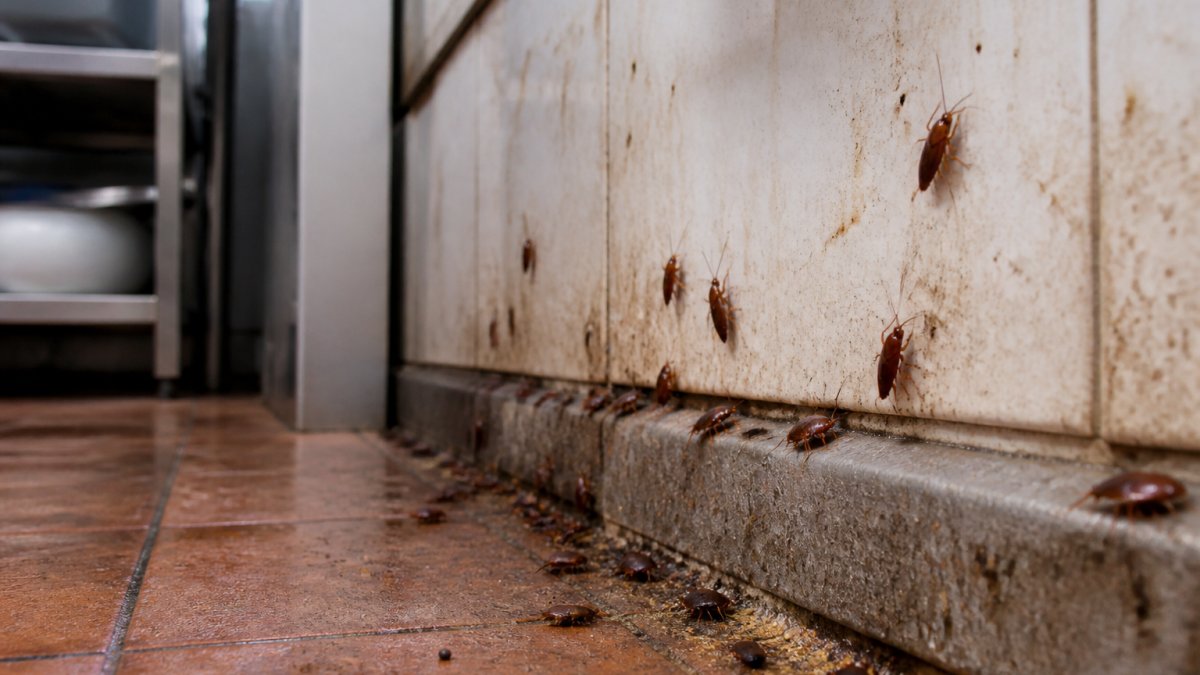
Cockroaches favour warmth and moisture: boiler cupboards, kitchen units and shared risers. Ants and wasps are seasonal and usually structural, nesting in voids and wall cavities.
Planning Pest Control in Rented Properties Without Alarming Tenants
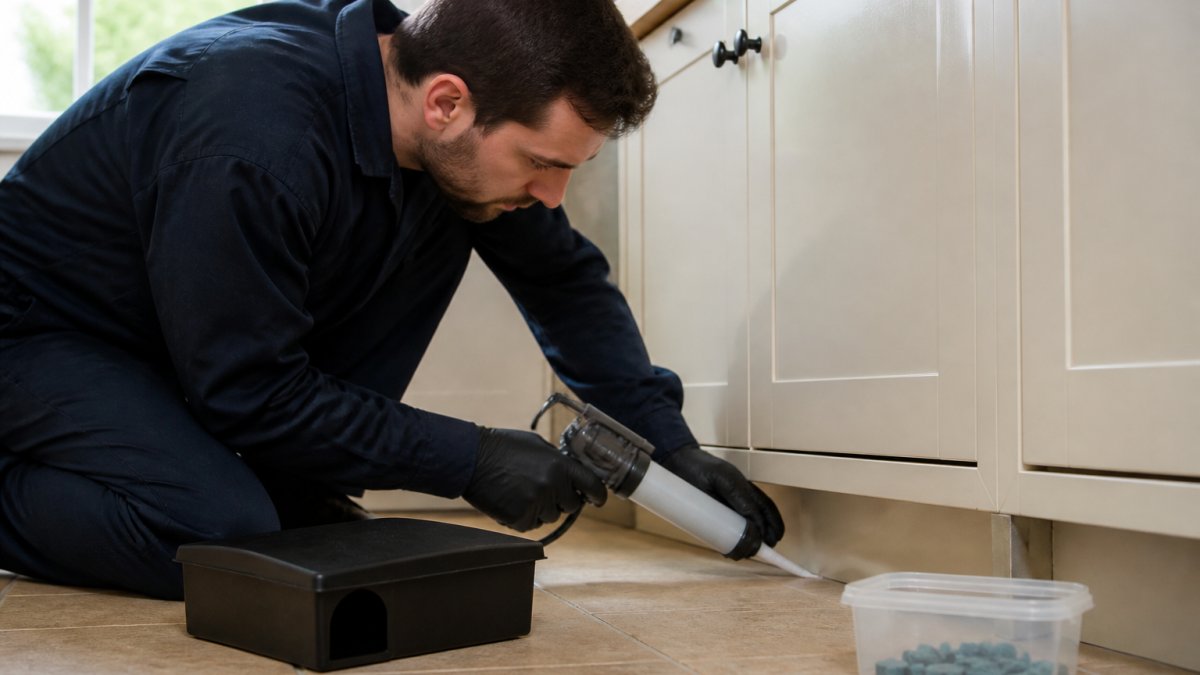
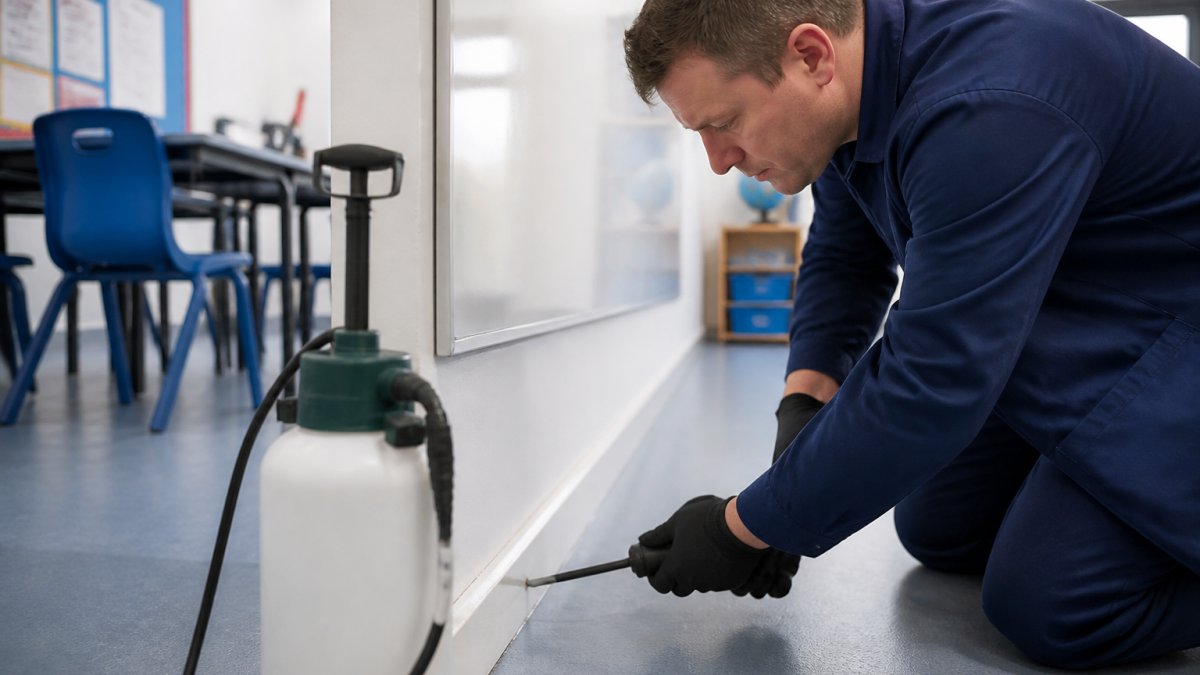
Discretion is a process, not a promise. Discretion is typically handled through a single point of contact and appointments arranged around the tenant's schedule.
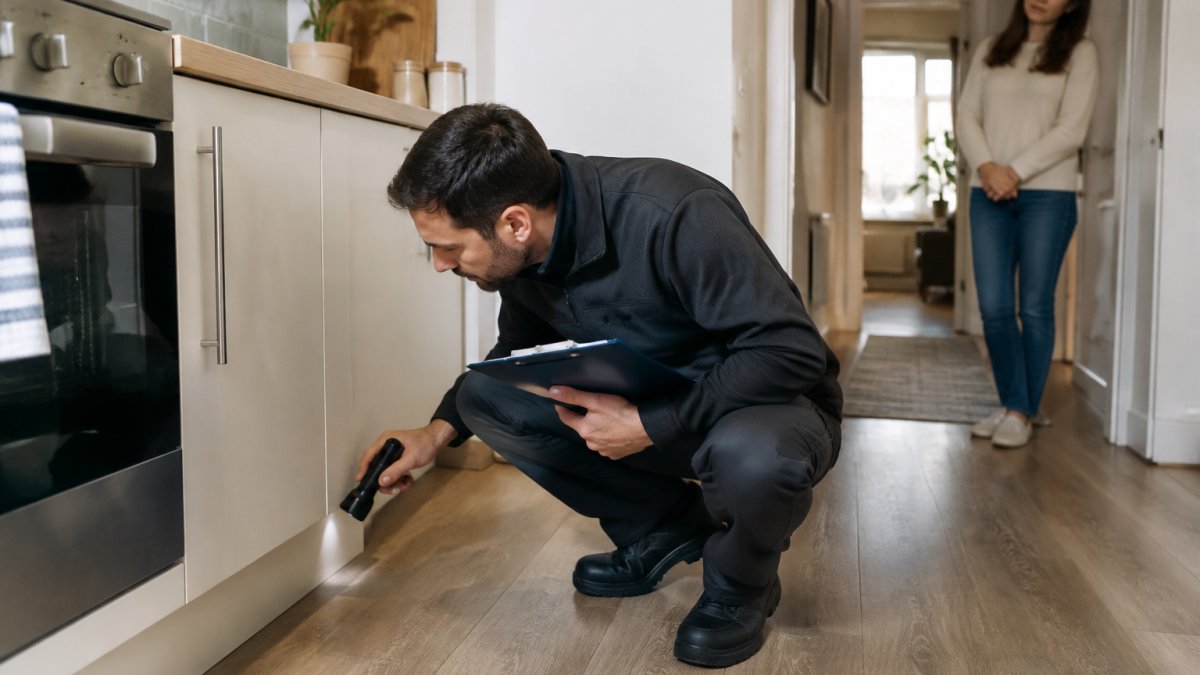
Tenants talk to neighbours, and neighbours talk to landlords. Where children or pets are present, treatment plans must account for them, and our page on safe pest control around children and pets sets out what to ask before any product is applied.
Arranging Access and Communicating With Tenants
Access is where most discreet jobs fail. Give at least 24 hours' written notice, offer two time slots, and confirm by text on the day.
A short, neutral message works better than a formal letter. Something like: "We've arranged for a contractor to visit on [date] between [time] and [time] to check the [room]. Please clear the floor and secure pets.
Pest Control Between Tenancies: The Changeover Window
The changeover window is the highest-value moment in the whole cycle.
Build a fixed step into your turnaround: inspection on day one, treatment if needed on day two, proofing and a follow-up visit before the new tenancy starts.
A common mistake is treating the changeover as a cleaning task only. Cleaning removes the evidence; it does not close the entry point.
Your Landlord Pest Control Checklist
Run this against every property at least once a year, and always at changeover.
- Inspect loft, voids, meter cupboards and service risers for droppings, grease marks and gnawing
- Check air bricks, pipework penetrations and door thresholds for gaps
- Review drainage runs and gullies for cracks or blockages
What Discreet Pest Control Involves and What It Costs
A discreet service is a professional service delivered quietly. It typically starts with identification and a source investigation, and a treatment plan may include follow-up visits.
What Drives the Cost
Pricing depends on the pest, the size and age of the property, the number of visits and whether proofing is needed. We do not publish fixed figures because a two-bed flat with mice and a period house with a drainage-linked rat issue are not the same job. For an accurate figure, book a survey and we will quote against what we find.
The main cost factors are:
- Species and severity. A single wasp nest is a short job; a widespread cockroach infestation in a block may need multiple visits and treatment of shared areas.
- Property size and construction. Period stock with voids, cellars and older drainage takes longer to survey and proof than a modern flat.
- Number of visits. A plan with a follow-up visit costs more than a single call-out but is usually cheaper than treating the same problem twice.
What a Landlord Plan Should Include
A landlord pest-control plan may cover several elements, including an initial survey, treatment visits and a follow-up visit. Check with the provider what is included.
Questions to Ask Before You Compare Quotes
- How many visits are included, and is a follow-up visit one of them?
- Is proofing included, or quoted separately?
- What is the response time for an emergency call-out?
A follow-up visit can help confirm the problem has not returned. Ask any contractor how many visits are included before comparing quotes.
Frequently Asked Questions
Who is responsible for pest control in a rented property?
It depends on the cause. Landlords are generally responsible where an infestation stems from disrepair or a structural defect, such as a broken drain, gaps around pipework or a defective roof. Tenants are usually responsible where the problem traces back to cleanliness or waste storage. The deciding factor is the source, not the pest itself, so a professional inspection that identifies how the infestation started is what settles most disputes.
Can a landlord arrange pest control without telling the tenant?
Not usually for internal treatment. Landlords must give at least 24 hours' written notice before entering a rented home, and treatment inside the property needs access to kitchens, cupboards and voids. External work such as drain surveys or proofing of outbuildings can often be arranged with less involvement from the tenant. Discreet pest control for landlords means plain vehicles, unmarked uniforms and quiet scheduling, not entering without notice.
How quickly should a landlord respond to a pest problem?
Treat reports promptly rather than waiting for a rent review or a quiet period. Rodents and insects multiply quickly, and a small problem in one flat can spread through shared walls, pipework and loft spaces to neighbouring units. A practical target is to acknowledge a report within one working day, arrange an inspection within a few days, and book treatment once the source is confirmed. Keeping a written record of each stage helps if the tenant later disputes responsibility.
Can tenants be charged for pest control?
Only where the tenancy agreement allows it and the infestation can be shown to result from the tenant's actions or neglect, such as uncollected waste or a pet-related flea problem. Charges must be reasonable and evidenced. If the cause is disrepair, the cost sits with the landlord. Deducting money from a deposit without evidence is a common route to a dispute, so document the inspection findings and the reasoning before passing on any cost.
How can landlords prevent pests between tenancies?
Use the changeover period to inspect properly. Check behind appliances, under sinks, in loft spaces and around bin stores, look for droppings, gnaw marks and grease trails, and confirm drains and pipework are intact. Sealing entry points, repairing defects and clearing food waste before a new tenant moves in removes the conditions pests need. A short inspection at every changeover costs far less than treating an established infestation later.
What does discreet pest control involve for a rental property?
Discreet pest control keeps the visit low-profile for the tenant and the neighbours. In general terms, this can mean appointments scheduled around the tenant's working hours and treatment carried out without unnecessary disruption. Written reporting and follow-up visits can help with records and confirming the problem has cleared.
Pest problems in rented property reward speed and evidence, not guesswork. If you manage a portfolio and want treatment handled quietly, on schedule, and with documentation you can rely on, ProPest Oxford Ltd can help. Our technicians hold a minimum RSPH Level 2 qualification, we are NPTA members and BASIS PROMPT registered, and we offer same-day or next-day appointments seven days a week. Get started with ProPest Oxford Ltd and keep your properties compliant, quiet and pest-free.