 ultimate-guide
Signs of Cockroach Infestation in Commercial Kitchens
Table of Contents
- The First Signs of Cockroach Infestation in a Commercial Kitchen
- Where Cockroaches Hide in a Commercial Kitchen
- How Cockroach Infestation Threatens Food Safety Regulations for Pest Control
- Safe Pest Control Methods for Restaurants
- How to Prevent Cockroaches in Commercial Kitchens
- What to Do When You Find Signs of an Infestation
- Frequently Asked Questions
Last Updated: September 28, 2026
The First Signs of Cockroach Infestation in a Commercial Kitchen
Knowing what are signs of cockroach infestation in commercial kitchen environments is the difference between a minor problem and a closed kitchen. A cockroach infestation is an established population of cockroaches living, feeding and breeding inside a food premises, and by the time staff spot live insects in daylight, that population is usually well developed.
Below, we break down the early warning signs worth checking for daily, plus the ones most kitchen teams miss entirely.
Droppings, Smears and Egg Cases
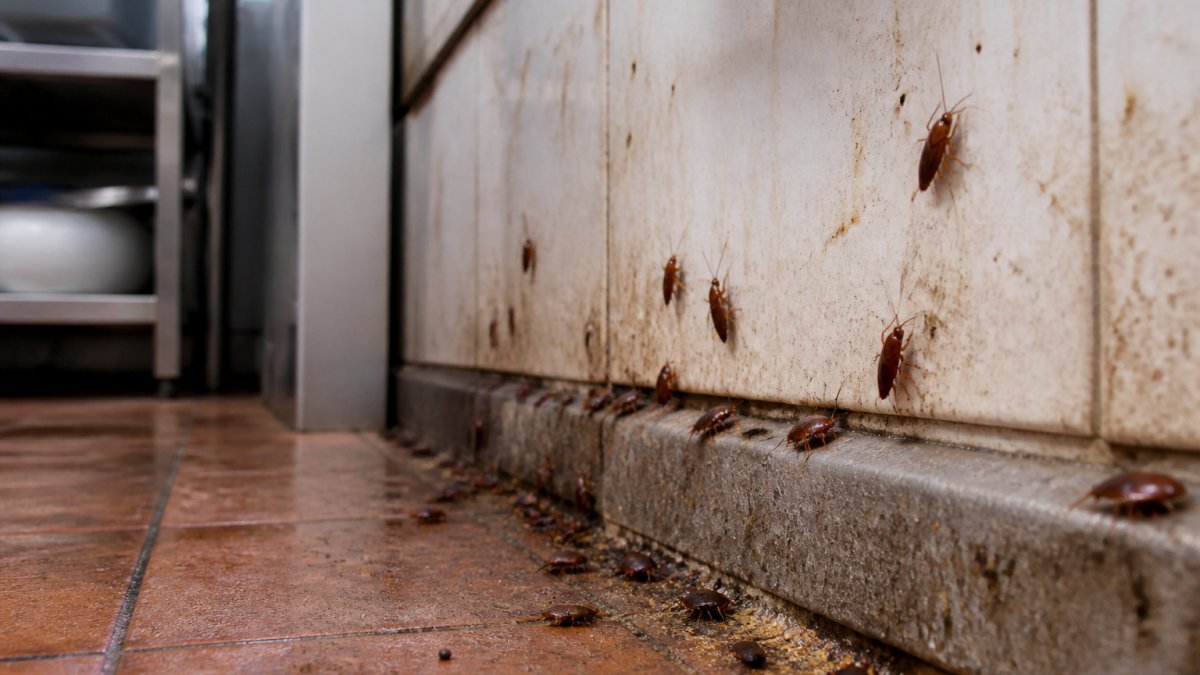
Droppings are the single most reliable early indicator. Look for small dark specks resembling ground pepper or coffee grounds, concentrated along skirting boards, shelf edges, pipework and the undersides of equipment. In larger species such as the Oriental cockroach, droppings are coarser and cylindrical; German cockroaches leave finer specks.
You may also find:
- Smear marks: brown, irregular streaks on walls and surfaces where cockroaches travel, caused by grease and debris on their bodies
- Egg cases (oothecae): brown, purse-shaped capsules roughly the size of a grain of rice, often glued to hidden surfaces behind units
- Cast skins: shed exoskeletons in the same harbourage areas
A common mistake is wiping these away during routine cleaning without recording where they were found. That location is the most useful piece of evidence you can hand a pest controller.
Live Sightings and Unusual Smells
One cockroach seen in daylight is a warning, not a coincidence. Cockroaches are thigmotactic, meaning they prefer tight, dark spaces, and they only venture into the open when harbourage is overcrowded or food is scarce.
The smell is the other giveaway. A well-established cockroach infestation produces a heavy, oily, musty odour that lingers in cupboards and behind equipment even after cleaning. Many chefs describe it as slightly sweet and stale. If your dry store smells like this and nothing has spoiled, treat it as a live lead.
Where Cockroaches Hide in a Commercial Kitchen
Cockroaches hide within a few metres of food, water and warmth. That combination exists in almost every commercial kitchen, which is why harbourage control matters more than baiting alone. The three species most commonly found in food premises are the German cockroach, the Oriental cockroach and the American cockroach, and each prefers slightly different zones.
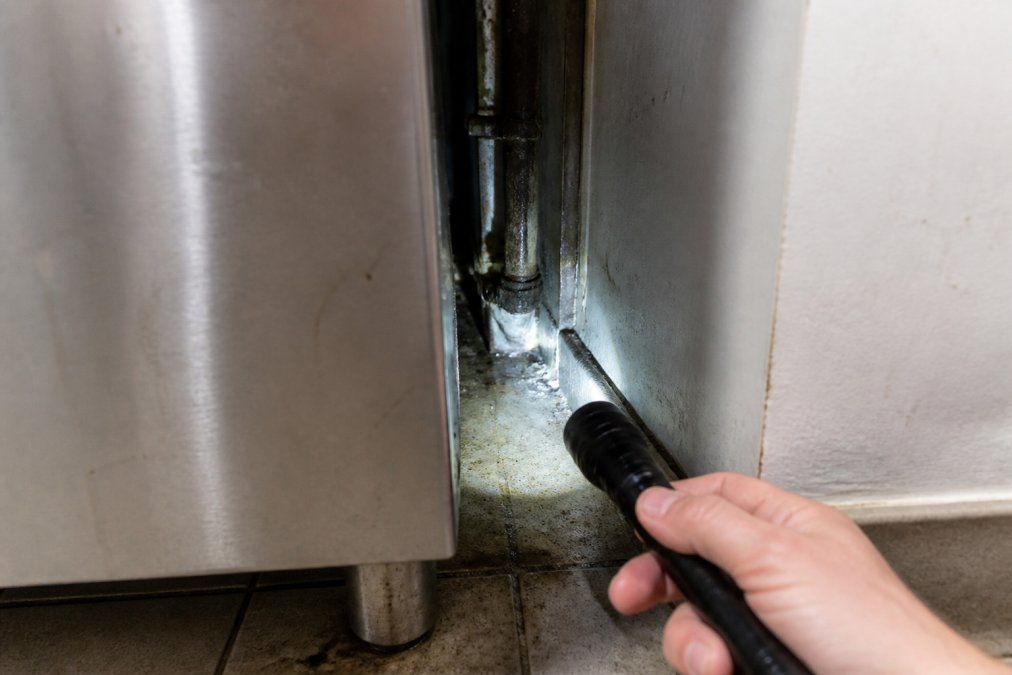
Warm, Dark and Damp Zones
Check these areas first, ideally with a torch:
- Motor housings of fridges, freezers and dishwashers, which stay warm continuously
- Gaps between wall tiles, cracked grout and damaged silicone seals
- Behind and beneath fixed equipment that is rarely pulled out
- Drainage channels, floor traps and the void beneath wet floors
- Cardboard boxes and paper sacks in dry stores, which cockroaches eat and shelter in
- False ceilings and service ducts carrying hot water pipes
The German cockroach is the species most often found in busy kitchens, and it rarely travels more than a few metres from its harbourage. That is good news: it means targeted treatment of the right zones works.
How Cockroach Infestation Threatens Food Safety Regulations for Pest Control
A cockroach infestation is a legal problem as much as a hygiene one. Under Regulation (EC) No 852/2004 on the hygiene of foodstuffs, retained in UK law, food business operators must keep premises free of pests and maintain adequate pest control procedures. Local authority environmental health officers enforce this through the Food Standards Agency's inspection regime, and evidence of an active infestation can trigger a lower food hygiene rating, remedial notices or, in serious cases, closure.
The practical consequences stack up quickly:
- Contamination risk: cockroaches transfer bacteria including Salmonella and E. coli onto food contact surfaces, and they feed on waste and faeces
- Enforcement action: inspectors look for monitoring records, treatment reports and proof of a managed pest control contract
- Reputation damage: a poor rating is published and visible to customers
- Insurance and due diligence: documented pest management supports your defence if a complaint is made
The Food Standards Agency guidance for food businesses is clear that pest control must be proactive, not reactive. Paperwork matters. Keep every report, bait plan and monitoring record.
Safe Pest Control Methods for Restaurants
Safe pest control methods for restaurants have to do two things at once: eliminate the infestation and remain safe around food, staff and customers. That rules out blanket spraying in most working kitchens.
Professional treatment typically combines:
- Gel baiting: applied in cracks and harbourages, out of reach of food preparation areas, with low toxicity to people and animals
- Insect growth regulators: break the breeding cycle rather than only killing adults
- Monitoring stations: sticky or bait stations checked on a schedule to prove activity has stopped
- Targeted residual insecticide: confined to non-food-contact zones such as voids and service ducts
The thing nobody tells you about baiting is that it fails if the kitchen is not cleaned first. Grease, food debris and competing food sources make bait unattractive. Cleaning before treatment is not optional.
How to Prevent Cockroaches in Commercial Kitchens
Prevention is cheaper than treatment, and it is mostly about removing the three things cockroaches need: food, water and shelter. Learning how to prevent cockroaches in commercial kitchens comes down to routine discipline rather than one-off deep cleans.
Build these into your daily and weekly schedule:
| Task | Frequency | Why it matters |
|---|---|---|
| Clear and clean under equipment | Daily | Removes food debris and grease |
| Check drains and floor traps | Weekly | Removes water sources and harbourage |
| Inspect deliveries for egg cases | Every delivery | Stops new introductions |
| Pull out and inspect fixed units | Monthly | Reveals hidden activity early |
| Review monitoring stations | Monthly | Confirms whether activity has stopped |
| Seal cracks, gaps and pipework | Quarterly | Removes harbourage |
Two habits make the biggest difference. First, never store cardboard in a kitchen: it is food and shelter in one. Second, fix leaks promptly, because a dripping pipe behind a unit creates exactly the damp microclimate cockroaches prefer.
What to Do When You Find Signs of an Infestation
Act the same day you find evidence. An established cockroach infestation doubles down quickly, and delay only widens the treatment area.
- Do not disturb the area more than necessary. Note the location of droppings, smears or sightings.
- Stop using open insecticide sprays. They scatter the population.
- Isolate affected equipment and surfaces and clean thoroughly, especially grease traps and under units.
- Record everything with dates, times and photographs for your due diligence file.
- Call a qualified pest control contractor for identification and a treatment plan.
Identification matters more than most people realise. German, Oriental and American cockroaches need different baiting strategies and different harbourage targets, so a contractor who treats the symptom without confirming the species will often be back within months.
If you are dealing with a recurring problem, ask why it returned. The usual answers are untreated harbourage, a neighbouring unit with an active infestation, or a cleaning routine that misses the same spots every time. ProPest Oxford Ltd focuses on identifying the source rather than just treating the visible signs, with same-day or next-day appointments and services available seven days a week.
Cockroaches in a working kitchen are a hygiene, legal and reputational risk that rarely resolves on its own. If you have found droppings, smears, egg cases or that distinctive oily smell, get a qualified technician to confirm the species and treat the source properly. ProPest Oxford Ltd offers professional identification and eradication with RSPH Level 2 qualified technicians, NPTA membership and BASIS PROMPT registration, plus a focus on finding the source of the infestation rather than just the symptoms. Book a service with ProPest Oxford Ltd.
Frequently Asked Questions
What are the primary signs of a cockroach infestation in a restaurant?
The clearest signs are dark droppings that look like ground pepper or coffee grounds, brown smear marks along skirting boards and pipework, and shed skins near warm equipment. You may also notice a musty, oily smell in enclosed areas. Live sightings during the day usually indicate a heavy cockroach infestation because the insects are nocturnal and avoid light. Check behind fridges, under sinks and inside motor housings.
How do cockroaches affect food safety regulations for pest control in the UK?
Under UK food hygiene law, food businesses must keep premises free from pests and maintain a documented pest control system. Cockroaches carry bacteria such as Salmonella and E. coli on their bodies, so an infestation can lead to failed inspections, improvement notices or closure. Environmental health officers look for evidence of monitoring, treatment records and proof that you acted quickly. A professional pest control contractor can provide the paperwork inspectors expect to see.
What safe pest control methods for restaurants can be used without closing the kitchen?
Gel baits and targeted insecticide applications can often be used in food preparation areas without closing, provided the technician follows product labels and keeps treatments away from open food. Non-toxic monitoring traps help track activity. Your contractor should use methods approved for food environments and schedule work around service hours. Always ask for a written method statement and safety data sheets before treatment begins.
How often should a commercial kitchen be inspected for pests?
Most commercial kitchens benefit from a professional inspection every four to twelve weeks, depending on risk level, building age and previous history. High-risk sites such as bakeries or premises with shared walls may need monthly visits. Between professional inspections, staff should check for droppings, smears and live insects weekly. Document every check so you can show environmental health officers a consistent monitoring routine.