 ultimate-guide
Hiring Professional Pest Control: A 2026 Guide
Table of Contents
- BPCA Certified Pest Control: What the Qualification Means
- Key Questions to Ask a Pest Control Technician
- Understanding the Cost of Professional Pest Control Services
- How to Spot a Legitimate Pest Control Company
- What Happens After Your First Treatment
- Conclusion: Making the Right Choice
- Frequently Asked Questions
Why Hiring Professional Pest Control Experts Matters
Pest infestations are more than an inconvenience, they're a genuine threat to your property's structural integrity, your family's health, and your peace of mind. When you're dealing with rats in the walls, cockroaches in the kitchen, or wasps nesting near your home, the instinct to grab a can of supermarket spray is understandable. But that approach rarely works, and it often makes things worse.
Professional pest control experts bring something DIY treatments cannot: proper identification of the infestation source, targeted treatment strategies, and the knowledge to prevent recurrence. Many property owners discover this the hard way, they treat the visible problem, only to find it returns within weeks or months because the root cause was never addressed.
The difference between a temporary fix and a lasting solution comes down to expertise. When you hire professional pest control experts, you're paying for someone who understands pest behaviour, knows which treatments work for which species, and can identify entry points and conditions that allowed the infestation to take hold in the first place. This is especially critical in older properties across Oxfordshire and East Sussex, where structural vulnerabilities create perfect conditions for pests to establish themselves.
For homeowners, landlords managing multiple properties, hospitality businesses protecting their reputation, and agricultural operations safeguarding crops and livestock, the decision to hire professional pest control experts isn't optional, it's essential. The cost of professional treatment is invariably less than the cost of property damage, health risks, or business disruption from an uncontrolled infestation.
BPCA Certified Pest Control: What the Qualification Means
The British Pest Control Association sets the standard for professional pest control in the UK. Understanding what BPCA certification actually means helps you separate legitimate operators from those cutting corners.
BPCA certification requires pest control technicians to meet rigorous standards for knowledge, safety, and ethical practice. The most common qualification you'll encounter is RSPH Level 2 (Royal Society for Public Health), which demonstrates that a technician understands pest biology, treatment methods, health and safety protocols, and environmental responsibility. Technicians holding this qualification have proven they can identify pests correctly, select appropriate treatments, apply them safely, and advise customers on prevention.
When you hire professional pest control experts with BPCA credentials, you're getting someone who:
- Understands the life cycles and behaviour of common UK pests
- Knows which treatments are legal and effective for each species
- Follows strict health and safety protocols to protect your family and pets
- Can identify why the infestation occurred and recommend structural fixes
- Maintains professional insurance and operates within regulatory guidelines
Beyond RSPH Level 2, some technicians hold additional certifications in specialist areas, rodent control, bird management, or commercial food safety protocols. These additional qualifications matter if your infestation involves a specific pest type or if you operate in a regulated industry like hospitality or healthcare.
The qualification also signals accountability. BPCA members commit to a code of conduct and must maintain continuing professional development. If something goes wrong, there's a complaints process and professional standards to fall back on. This matters when you're inviting someone into your home or business to apply chemical treatments.
BASIS PROMPT registration is another marker of legitimacy. This scheme tracks pesticide application competence and ensures technicians understand how to handle chemicals responsibly. If a pest control company advertises BASIS PROMPT registration alongside BPCA membership, you're looking at a business that takes professional standards seriously.
Key Questions to Ask a Pest Control Technician
Before booking a service, you need to ask the right questions. This isn't about being difficult, it's about ensuring the person treating your property has the expertise and approach you need.
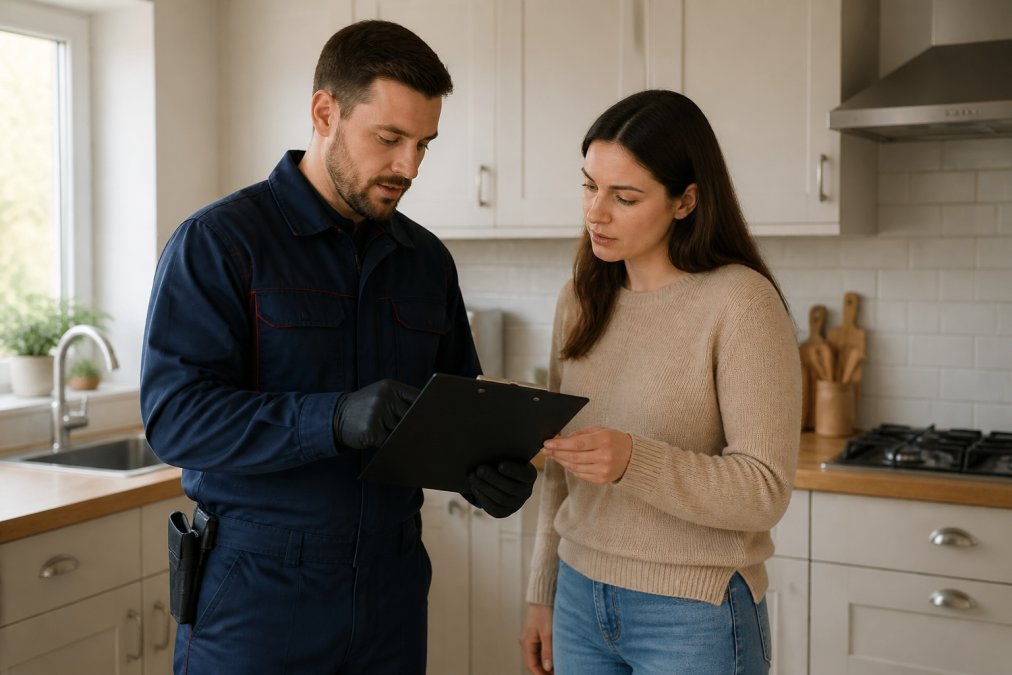
Verifying Qualifications and Certifications
Start by asking directly: "What qualifications do your technicians hold?" The answer should include RSPH Level 2 as a minimum. If the company hesitates or gives vague responses like "we're fully trained," that's a warning sign. Legitimate professional pest control experts will have their credentials documented and readily available.
Ask whether the company is a BPCA member and BASIS PROMPT registered. These aren't optional extras, they're evidence of professional commitment. A company that skips these accreditations is cutting costs in ways that affect your service quality.
Request proof of insurance. Professional pest control work carries liability risks. Your technician needs public liability insurance and employers' liability insurance if they have staff. This protects you if something goes wrong during treatment.
Understanding Their Approach and Guarantees
This is where you separate thorough operators from those just spraying and leaving. Ask: "How will you identify the source of the infestation?" A proper answer involves inspection, checking entry points, assessing conditions that attracted pests, and explaining what they found. If the technician wants to start treatment immediately without inspection, they're not doing the job properly.
Ask about their treatment strategy. Will they use chemical sprays, traps, exclusion methods, or a combination? Different pest problems require different approaches. Rodents often need a combination of trapping and exclusion work. Cockroaches might require gel baits and environmental management. A technician who explains their reasoning shows they're thinking about your specific situation, not applying a one-size-fits-all solution.
Crucially, ask about guarantees. What happens if the problem returns? Many professional pest control experts offer a warranty period, typically 30 to 90 days, where they'll return for free if the infestation recurs. Some offer longer guarantees if you sign up for preventative maintenance visits. This commitment signals confidence in their work and protects you if treatment doesn't fully resolve the issue.
Understanding the Cost of Professional Pest Control Services
The cost of professional pest control services varies significantly based on the type of pest, the severity of the infestation, the size of the property, and the treatment approach required. Rather than quoting a fixed price, most professional pest control experts provide a quote after inspection.
Several factors influence pricing. A single-room rodent problem costs less than treating an entire house with a widespread infestation. A property with easy access to affected areas costs less to treat than one requiring structural work or extensive exclusion measures. Emergency same-day or next-day appointments typically cost more than scheduled visits. Ongoing preventative maintenance contracts are usually cheaper per visit than one-off emergency call-outs.
When comparing quotes from different professional pest control experts, you're not just comparing price, you're comparing the scope of work. A cheaper quote might exclude inspection, prevention advice, or follow-up visits. A more expensive quote might include structural recommendations, multiple visits, and a guarantee. The lowest price is rarely the best value.
Many companies offer package deals for regular maintenance. If you're a landlord managing multiple properties or a business needing ongoing pest prevention, scheduled quarterly or monthly visits often cost less per treatment than emergency call-outs. This approach also prevents infestations from taking hold in the first place.
Ask about what's included in the quoted price. Does it cover inspection, treatment, follow-up visits, and prevention advice? Are there additional costs if structural work is needed? What happens if the infestation requires multiple treatment cycles? Understanding these details prevents surprises when the invoice arrives.
How to Spot a Legitimate Pest Control Company
Not every business calling itself a pest control company meets professional standards. Spotting the legitimate operators from the chancers requires knowing what to look for.
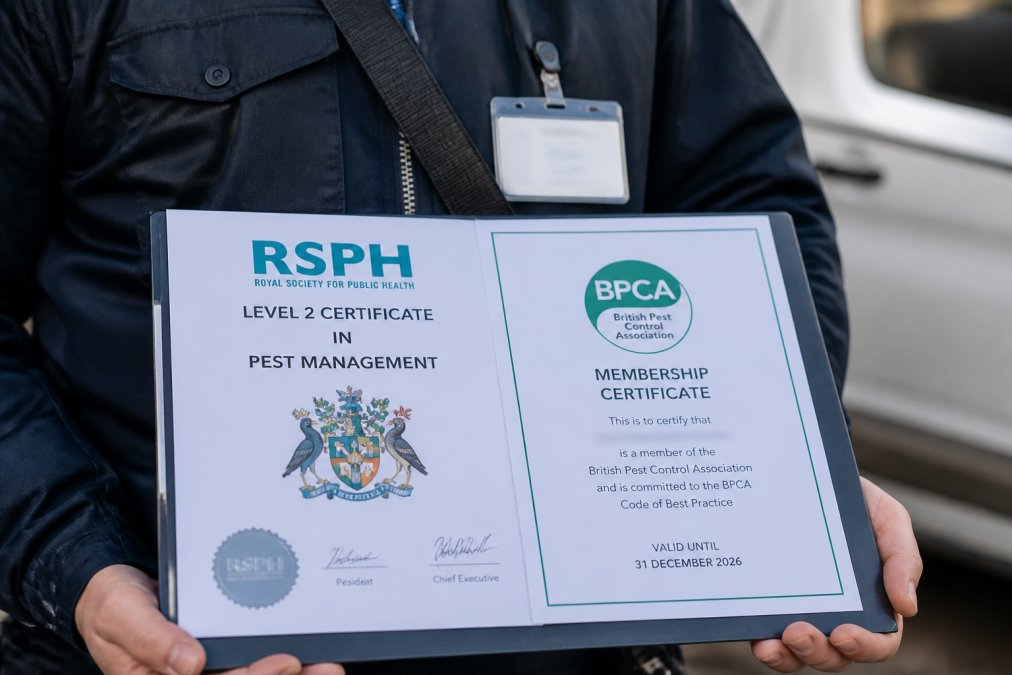
A legitimate company will have a professional online presence with clear contact information, service area details, and customer reviews. Check whether they're listed on the BPCA member directory, this is public and searchable. Verify their BASIS PROMPT registration through the official scheme.
Ask for references or recent customer testimonials. Legitimate companies will have reviews on Google, Yell, or Trustpilot. Read them carefully, look for patterns. Are customers mentioning specific outcomes? Do reviews mention follow-up visits or guarantees being honoured? Be wary of companies with no reviews or only generic five-star ratings with no detail.
Check whether they're insured and can provide proof. A legitimate operator will have public liability insurance and be happy to show you the certificate. If they're evasive about insurance, walk away.
Listen to how they communicate. Do they ask questions about your infestation, or do they immediately quote a price? Professional pest control experts will want to understand your situation before proposing a solution. They'll explain what they've found and why they're recommending a particular approach.
Be cautious of companies offering suspiciously low prices or guaranteeing complete eradication after a single visit. Pest control is rarely that simple. Some infestations require multiple visits. Guarantees that sound too good to be true usually are.
What Happens After Your First Treatment
Understanding the post-treatment process helps you set realistic expectations and spot problems early if they arise.
Immediately after treatment, your technician should explain what to expect. Some treatments require you to stay out of treated areas for a few hours. Others need you to avoid cleaning treated surfaces for several days to allow the treatment to work. Follow these instructions precisely, they're not suggestions.
Many pest problems require follow-up visits. Rodent infestations often need a second visit 7-10 days after the first treatment to check traps, assess whether entry points have been sealed, and adjust the strategy if needed. Cockroach infestations typically require multiple visits because the lifecycle means some eggs won't have hatched during the first treatment.
During follow-up visits, your technician should review what's changed. Are you still seeing signs of pests? Have entry points been properly sealed? Are conditions that attracted the pests (food sources, moisture, clutter) being managed? This feedback loop is how professional pest control experts ensure the problem stays solved.
If the infestation returns within the guarantee period, contact the company immediately. Provide details about what you're seeing. A legitimate operator will return and investigate why treatment didn't hold. Sometimes this reveals a new entry point or a condition that needs addressing. Sometimes it means a different treatment approach is needed.
Prevention is the goal of any professional pest control service. Before they finish, ask for specific advice on preventing recurrence. This might include sealing gaps around pipes, improving drainage, removing clutter that harbours pests, or managing food storage. Taking this advice seriously is how you avoid calling them back.
Conclusion: Making the Right Choice
Hiring professional pest control experts is an investment in your property's safety, your family's health, and your peace of mind. The difference between a qualified, professional operator and an unaccountable one shows up in the results, and in your wallet over time.
When you're choosing a pest control company, prioritise qualifications, transparency, and a thorough approach over the lowest price. Ask questions about their methods, verify their credentials, and understand what's included in their guarantee. A company like ProPest Oxford Ltd, which holds RSPH Level 2 qualifications, maintains NPTA membership and BASIS PROMPT registration, and offers same-day or next-day appointments, demonstrates the standards you should expect from professional pest control experts.
The real test is whether the infestation stays gone. A legitimate operator will stand behind their work with a guarantee and follow-up support. They'll identify why the infestation happened and address the root cause, not just spray and leave. That's the difference between a temporary fix and a lasting solution.
Pest infestations don't resolve themselves, and DIY approaches rarely work long-term. Booking a consultation with professional pest control experts who hold proper qualifications and offer guaranteed work gives you the expertise and accountability you need. ProPest Oxford Ltd offers same-day and next-day appointments with RSPH Level 2 qualified technicians, focused on identifying the source of infestation rather than just treating symptoms. Get in touch to book a service and restore your property to a pest-free state.
Frequently Asked Questions
What qualifications should a professional pest control expert have in the UK?
Look for technicians holding a minimum RSPH Level 2 qualification, which demonstrates formal training in pest management. BPCA certification is also a strong indicator of expertise and professional standards. Verify membership with recognised bodies such as NPTA or BASIS PROMPT registration. These credentials ensure your technician understands pest identification, safe chemical handling, and legal compliance with UK regulations.
How do I know if a pest control company is legitimate?
Check for RSPH Level 2 qualified technicians, NPTA membership, and BASIS PROMPT registration. Ask for proof of insurance and request references from previous customers. Legitimate companies provide clear communication about their approach, offer written quotations, and explain their treatment methods before starting work. Be wary of companies unwilling to discuss qualifications or provide documentation.
What should I ask about the cost of professional pest control services?
Request a detailed quotation that breaks down the treatment type, number of visits required, and any follow-up inspections. Ask whether the price includes a guarantee or warranty, and clarify what happens if the problem returns. Pricing depends on infestation severity, property size, and treatment complexity. Always obtain quotes from multiple providers to understand the market, but choose based on qualifications and approach rather than price alone.
How quickly can a professional pest control expert attend my property?
Many professional pest control services offer same-day or next-day appointments for urgent infestations. When you call, explain the severity of your problem so the company can prioritise your booking. Services available seven days a week are common among established providers. Contact your chosen company directly to confirm availability for your specific situation.
What makes BPCA certified pest control different from other services?
BPCA certification indicates the technician has met rigorous standards for pest management knowledge and professional conduct. Certified experts stay current with best practices, understand integrated pest management principles, and comply with environmental and safety regulations. This certification provides assurance that you're receiving treatment from someone with verified expertise rather than relying on general claims.
What happens if the pest problem returns after treatment?
Reputable pest control companies typically offer a guarantee period during which they will return to re-treat the area at no additional cost if the problem recurs. Ask about this guarantee before booking and get it in writing. The guarantee period varies by company and infestation type. Understanding what's covered helps you avoid unexpected costs and ensures you're protected if initial treatment doesn't fully resolve the issue.