 ultimate-guide
How to Get Rid of Rats Permanently: 7 Proven Steps
Table of Contents
- Signs of a Rat Infestation You Should Not Ignore
- How to Get Rid of Rats Permanently: The Methods That Actually Work
- How to Rat-Proof a House So They Cannot Return
- How Long Does It Take to Get Rid of Rats?
- When to Call Professional Pest Control Services
- Safety Precautions When Dealing With Rats
- Frequently Asked Questions
Last Updated: September 11, 2026
Signs of a Rat Infestation You Should Not Ignore
Rats are creatures of habit, and they leave a trail long before you ever see one. According to the NHS guidance on rodent-borne disease, contact with rat urine and droppings can spread serious illness, so early detection matters for your health as much as your property. Below, we'll show you exactly what to look for, which methods work, and why most DIY attempts fail within months.
Droppings, Grease Marks and Other Tell-Tale Evidence
Droppings are the single most reliable sign. Fresh droppings are dark and soft; older ones turn grey and brittle. You will typically find them along skirting boards, behind appliances, and inside cupboards.
Grease marks are the second giveaway. Rats follow the same routes repeatedly, and their oily fur leaves dark smears along walls and pipes. A common mistake is assuming these marks are dirt or damp. In practice, they trace the exact path a rat travels each night.
Noises, Smells and Damage That Point to Rats
Scratching and scurrying sounds in lofts or wall cavities, usually just after dusk, point strongly to rats rather than mice. Mice are quieter and more sporadic.
A persistent ammonia-like smell in a closed room often means a nest or a dead rodent behind plasterboard. Chewed cables, torn food packaging, and gnawed pipework round out the picture. Rodents must gnaw constantly to wear down their teeth, so damaged wiring is a serious fire risk, not just a nuisance.
How to Get Rid of Rats Permanently: The Methods That Actually Work
Permanent removal means breaking the infestation cycle, not just killing the rats you can see. A female rat can produce several litters a year, so any method that leaves survivors or a food source in place will fail. The reliable approach combines trapping, removing attractants, and sealing entry points in that order.
Trapping vs Poisoning: What Works and What Does Not
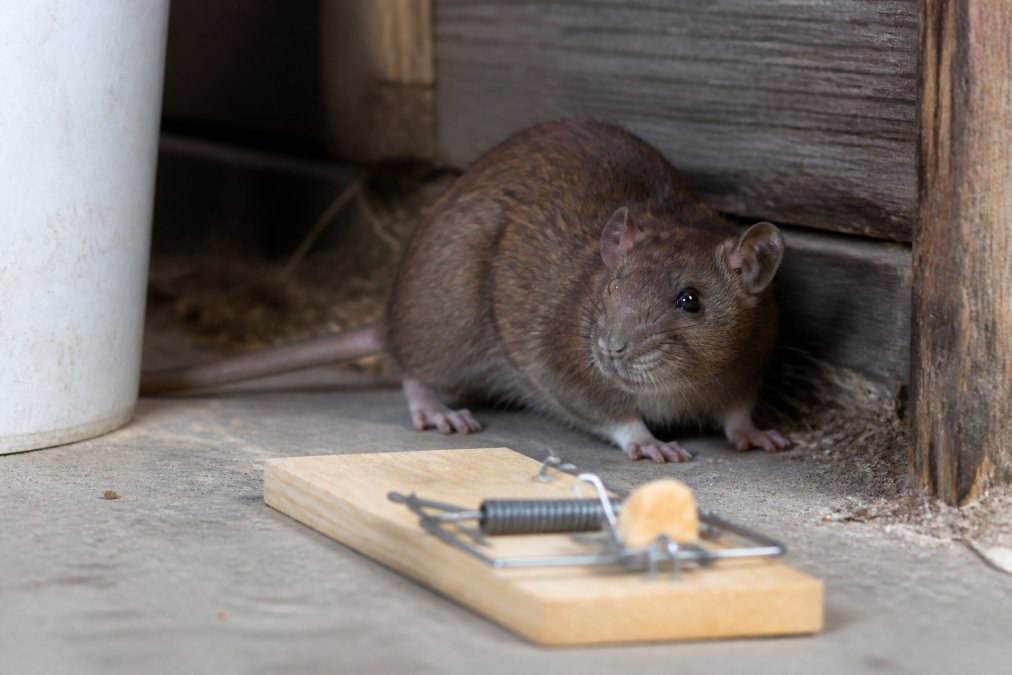
Trapping is the more controlled option. Snap traps and live traps let you confirm exactly what you have caught and where, which matters when children or pets share the property.
Poisoning carries real drawbacks. Rodenticides are governed in the UK by the Health and Safety Executive guidance on rodenticides, and rats can die in inaccessible voids, creating a smell that is difficult and costly to fix. Resistance to some poisons is also well documented.
| Method | Best For | Main Drawback | Skill Needed |
|---|---|---|---|
| Snap traps | Small, visible infestations | Requires correct placement | Moderate |
| Live traps | Homes with pets or children | Must release far away | Moderate |
| Rodenticide | Large, hidden infestations | Secondary poisoning risk | High |
| Professional baiting | Persistent or widespread cases | Requires a trained technician | N/A |
Why DIY Treatments Often Fail
Most DIY attempts fail for three reasons: the food source stays available, entry points stay open, and only part of the population is removed.
A common mistake is setting one or two traps and stopping once nothing is caught for a night. Rats are neophobic, meaning they avoid new objects for days before approaching them. Traps need to sit untouched for a while before they become effective. If you are coming from a failed DIY attempt, expect the remaining rats to be warier than the first ones.
How to Rat-Proof a House So They Cannot Return
Rat-proofing is the step that turns a temporary fix into a permanent one. Rats can squeeze through gaps the width of a pencil, so proofing means sealing anything larger than about 20 millimetres. Work from the outside in, and check every point where a pipe, cable, or vent enters the building.
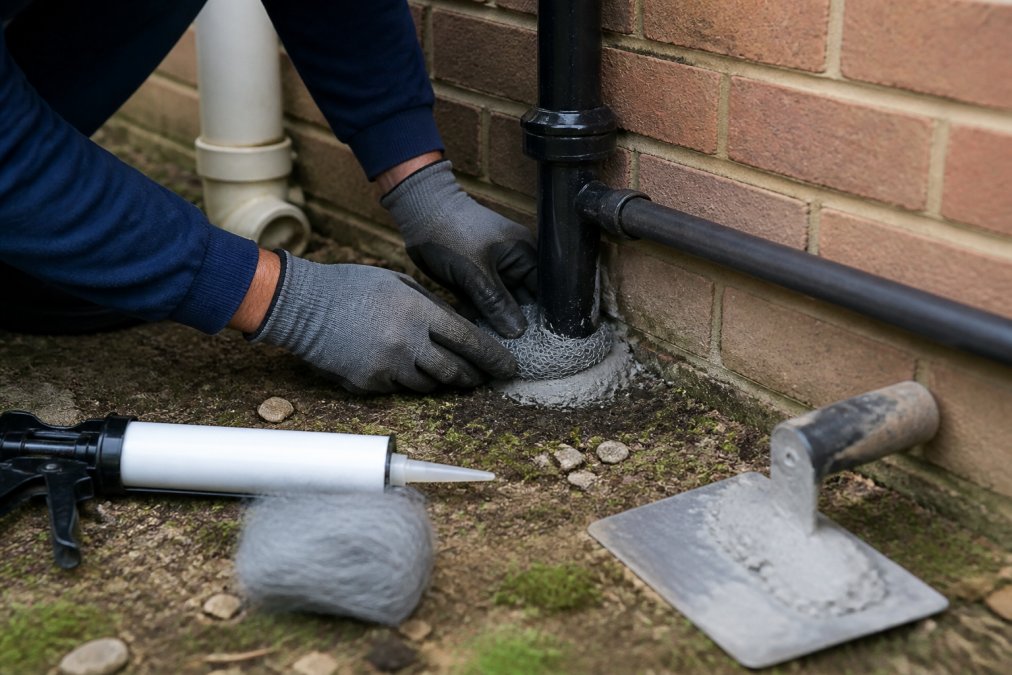
Focus on these areas:
- Gaps around external pipes, drains, and vents
- Broken air bricks and damaged mortar
- Gaps under doors, especially garage and outbuilding doors
- Loose roof tiles and gaps at the eaves
- Open compost bins and uncovered food waste
Use wire wool combined with sealant for small gaps, since rats cannot chew through the metal strands. For larger openings, fit metal mesh or a purpose-made rat blocker. Identifying the source matters more than treating the symptom.
How Long Does It Take to Get Rid of Rats?
Most infestations take two to four weeks to clear when the source is identified and proofing is done properly. Trapping alone may show results within days, but the population is rarely eliminated that quickly.
Timelines vary by severity. A single rat entering through one gap can be resolved in under a week. A breeding colony in a large property with multiple entry points can take a month or more, especially if the rats have access to a steady food supply. The British Pest Control Association guidance on rodents notes that reinfestation is common where proofing is skipped, which is why the two steps belong together.
When to Call Professional Pest Control Services
Professional help is worth it when the infestation is widespread, when rats are in wall cavities or under floors, or when DIY methods have already failed once. Trained technicians can locate entry points and nests that are invisible to a homeowner, and they carry the qualifications and insurance to handle rodenticides safely.
ProPest Oxford Ltd provides same-day or next-day appointments, and every technician holds a minimum RSPH Level 2 qualification. The business is associated with the NPTA and registered with BASIS PROMPT, and works seven days a week across Oxfordshire and East Sussex. For landlords, cafés, and large estates, the focus is on identifying the source of the infestation rather than just treating the symptoms, which is what stops the problem returning.
Safety Precautions When Dealing With Rats
Safety comes down to avoiding direct contact with rats, their droppings, and their urine. Never handle a live or dead rat with bare hands, and never sweep up droppings dry, as this releases contaminated dust into the air.
- Wear gloves and a face mask when clearing droppings or nesting material
- Ventilate the area before and during cleaning
- Disinfect surfaces with a suitable cleaner after removal
- Seal droppings in a bag before disposing of them
- Wash hands thoroughly afterwards, even if you wore gloves
- Keep pets and children away from the affected area until it is clean
If you have been bitten or have symptoms such as fever or jaundice after contact with rodents, seek medical advice promptly. For anything beyond a small, visible infestation, a professional assessment removes both the risk and the guesswork.
Rats return when the conditions that attracted them stay in place, and that is the part most treatments miss. ProPest Oxford Ltd addresses the cause rather than the symptom, combining expert identification, safe eradication, and long-term proofing so the problem does not come back. With same-day or next-day appointments, RSPH Level 2 qualified technicians, and seven-day availability, the team is set up for urgent domestic and commercial work alike. Get started with ProPest Oxford Ltd and secure a property that stays free from rats.
Frequently Asked Questions
What is the most effective way to get rid of rats permanently?
Permanent rat removal combines three things: removing the current population, blocking every entry point, and cutting off food and water. Trapping or baiting alone rarely works long term because new rats move in through the same gaps. A professional survey identifies the entry points and the nest, then treats the infestation and proofing together. ProPest Oxford Ltd focuses on finding the source rather than just the symptoms.
How do I find where rats are entering my house?
Check the signs of a rat infestation first: droppings along skirting boards, grease marks on pipes, and gnawed cables or food packaging. Rats squeeze through gaps as small as 20mm, so inspect around waste pipes, air bricks, roof eaves, and where services enter the building. Look for smudge trails and rub marks at floor level. If you cannot trace the entry point yourself, a professional survey with a camera will find it quickly.
How long does it take to get rid of rats?
Most domestic infestations clear within two to four weeks with a proper treatment plan. Trapping can remove rats within days, while baiting usually takes one to three weeks depending on the size of the colony. How long it takes to get rid of rats also depends on whether entry points are sealed at the same time. Without proofing, rats often return within months, which is why follow-up visits matter.
Can I get rid of rats without using poison?
Yes. Trapping, proofing, and removing food and water sources can clear an infestation without rodenticide. This is often the preferred route in homes with children, pets, or livestock nearby. The trade-off is that trapping needs more visits and careful placement. A professional pest control service can advise which method suits your property, and technicians holding RSPH Level 2 qualifications will use the safest effective option.