 how-to
How to Get Rid of a Small Wasp Nest: Safe Steps
Table of Contents
- How to Get Rid of a Small Wasp Nest: First Steps
- How to Remove a Wasp Nest Safely
- When to Remove a Wasp Nest (And When to Leave It)
- Wasp Nest Removal Cost: What Affects the Price
- How to Prevent Wasps Nesting Next Spring
- Common Mistakes That Make a Small Wasp Nest Worse
- Frequently Asked Questions
Last Updated: October 6, 2026
How to Get Rid of a Small Wasp Nest: First Steps
A small wasp nest is easiest to deal with in its first weeks, when it holds only a handful of wasps and the queen has not yet built up her colony. The pattern is always the same: the earlier you act, the simpler and cheaper the job.
Speed matters because a nest the size of a golf ball in May can become a football by August. So before you reach for a spray can, do one thing first: check whether the nest is actually active. We will walk you through how to get rid of a small wasps nest safely, when to stop and call in a professional, and how to prevent a repeat next spring.
Check whether the nest is active before you do anything
An inactive nest needs no chemical treatment at all. Wasps abandon their nests in late autumn, and the colony dies off over winter. If you find a grey papery structure in a shed or loft between November and March, it is almost certainly empty.
Here is how to tell the difference:
- Watch from a safe distance for 15 to 20 minutes. Active nests have wasps flying in and out steadily.
- Look for live insects crawling on the outer shell. A dead nest looks dry and crumbly.
- Check the time of year. A nest built this spring or summer is likely still occupied.
- Never tap or poke the nest to "test" it. That is how people get stung.
If you see no movement at all, you can remove the nest by hand with gloves and a bag, then seal and bin it.
How to Remove a Wasp Nest Safely
Treat the nest after dark, when every wasp is inside and sluggish. This is the single biggest safety factor in the whole job, and it is why professional technicians almost always work at dusk or dawn.
You will need:
- A certified wasp insecticide labelled for outdoor use
- Protective clothing: coveralls, gloves, goggles, and a face covering
- A torch with a red filter, so the light does not agitate the wasps
- A clear escape route, planned before you start
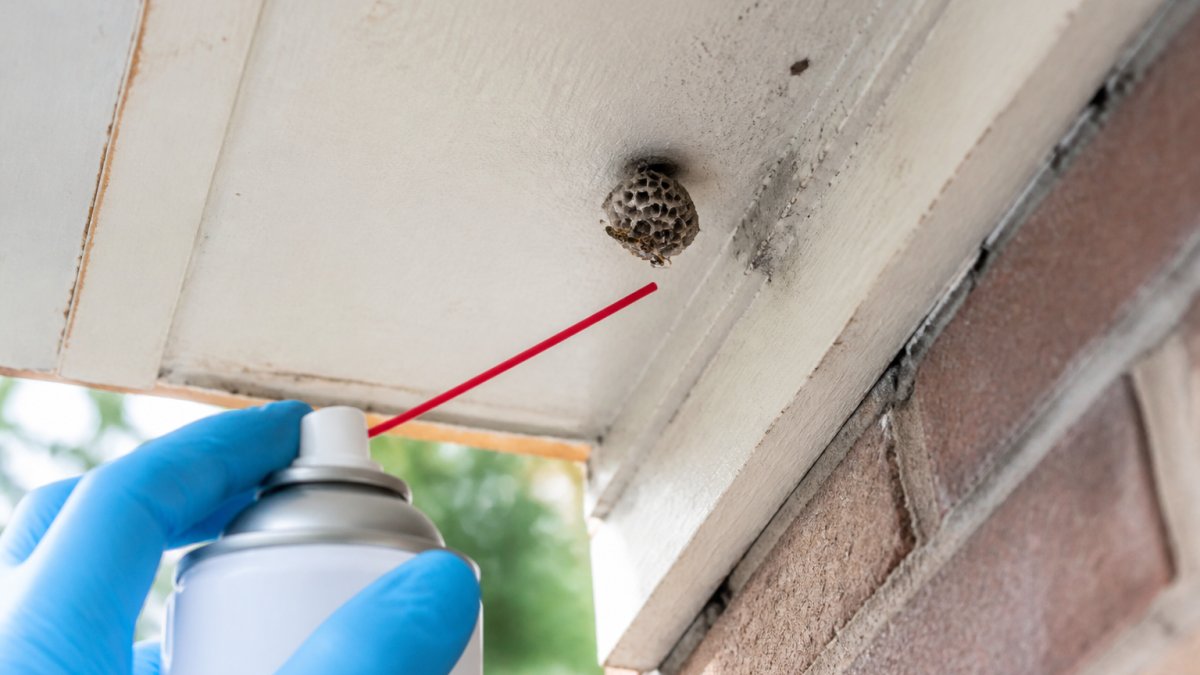
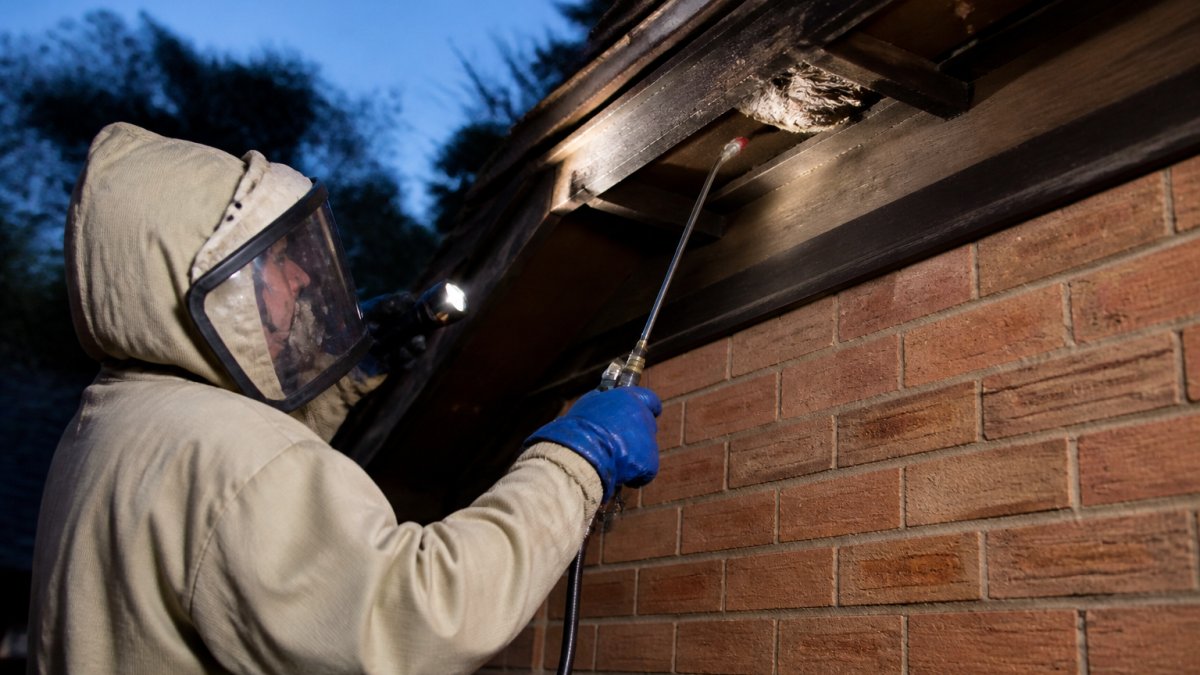
Treating the nest after dark with a certified insecticide
Wait until well after sunset, when the temperature has dropped and the colony is settled. Approach quietly and keep your torch pointed low. Aim the spray directly at the nest entrance, not the outer shell, and follow the product label exactly on distance and dosage.
Once treated, leave the area immediately and do not return until daylight. Check the nest the next day from a distance. If wasps are still flying, it needs a second application.
When to stop and call a professional instead
Stop and call us if any of the following apply:
- The nest is bigger than a tennis ball, or you cannot see its full size
- It sits high up, under eaves, or inside a wall cavity or loft
- Anyone in the household is allergic to stings
- You have already tried once and the wasps came back
- You are unsure whether the insects are wasps or bees
Bees are protected and should never be treated with wasp spray. If you are not certain what you are looking at, stop.
When to Remove a Wasp Nest (And When to Leave It)
The right time to remove a wasp nest is early, while it is still small and the colony is still building. After that, the decision gets more complicated.
Leave the nest alone in these cases:
- Late autumn or winter. The colony is already dying. Just remove the empty nest once you are sure it is abandoned.
- Bees, not wasps. Honeybees and bumblebees are important pollinators and are protected. They need a beekeeper, not a spray.
- A nest in a hedge or tree away from your home. If it poses no risk to people or pets, it will die off on its own.
Remove it promptly if it is near a door, window, play area, or anywhere people pass regularly.
Wasp Nest Removal Cost: What Affects the Price
Wasp nest removal cost depends on where the nest is, how big it has grown, and how easy it is to reach. There is no single flat rate.
The main factors that move the price up or down:
- Height and access. A nest at ground level is quick. One under a third-floor eaves needs ladders or a tower.
- Location. Nests inside wall cavities or loft insulation take longer and need more care.
- Nest size. A small nest is a short visit. A large one may need a return trip.
- Number of nests. Multiple nests on one property are common in late summer.
- Time of year. Peak season is busiest, so booking early helps.
For an accurate figure, ask for a quote based on your specific property.
How to Prevent Wasps Nesting Next Spring
Prevention starts in late winter, before the queens emerge. A queen wasp wakes from hibernation in spring and looks for a sheltered spot to start a new nest (Why do wasps build nests?). Remove those spots, and she will go elsewhere.
- Check your loft, shed, and garage in February and March for old nests and remove them.
- Seal cracks around eaves, soffits, and air bricks.
- Fit insect mesh over vents and loft openings.
- Keep bins sealed and clear up fallen fruit, which attracts wasps in late summer.
- Check outbuildings you rarely use, as these are common nesting sites.
Common Mistakes That Make a Small Wasp Nest Worse
The most common mistake is treating a nest during the day, when the colony is active and aggressive. That turns a simple job into a dangerous one.
Other errors we see regularly:
- Using the wrong product. Pet-safe or general fly sprays do nothing to a wasp colony.
- Sealing the entrance. This traps wasps inside, and they will find another way out.
- Knocking the nest down first. This releases the whole colony at once.
- Standing directly under the nest. Always work from the side and keep a clear path back.
- Assuming it is gone after one treatment. Always check the next day before you relax.
If you have made any of these mistakes, stop and call us. A trained technician with RSPH Level 2 qualifications can finish the job safely.
A small wasp nest rarely stays small for long, and the wrong treatment can make it far more dangerous than it needs to be. ProPest Oxford Ltd handles wasp nest removal across Oxfordshire and East Sussex with same-day or next-day appointments, seven days a week. Our technicians hold a minimum RSPH Level 2 qualification, and we are NPTA members and BASIS PROMPT registered, so you know the person at your door is trained and insured. Get started with ProPest Oxford Ltd and have your property wasp-free again.
Frequently Asked Questions
Should you remove a small wasp nest yourself?
It depends on the size, location and your tolerance for risk. A nest the size of a golf ball, attached to a shed or outbuilding you rarely use, is manageable for a confident DIYer with the right protective kit and a certified insecticide. If the nest is above a doorway, in a loft hatch, or anywhere you cannot retreat from quickly, leave it to a professional. Wasp stings can trigger anaphylaxis in some people, and a fall from a ladder is a real risk.
How can you tell whether a wasp nest is active?
Watch from a safe distance for ten to fifteen minutes during daylight. Steady wasp traffic entering and leaving a single point means the nest is live. A nest with no movement across several warm days is likely abandoned, which is common from late autumn once the colony dies off. Never tap or poke the nest to test it. If you are unsure, a qualified technician can confirm activity during a survey.
When is the best time to remove a wasp nest?
Early morning or after dusk, when wasps are inside the nest and least active. In terms of the season, removing a nest in June or July, before the colony peaks, is easier and safer than waiting until August or September when worker numbers are at their highest. If the nest is already large and busy, book a professional rather than attempting treatment yourself.
How can you stop wasps from building another nest?
Remove old nests in winter, because queens often return to the same site. Seal gaps in roof tiles, soffits, air bricks and shed walls. Check lofts, garages and outbuildings in April and May for the small starter nests queens build in spring. Keep bins sealed, clear fallen fruit, and use a wasp trap in early summer to catch queens before a colony establishes. A professional survey can identify the entry points wasps are using.