 ultimate-guide
Ignoring Woodworm in Antique Furniture: What Happens
Table of Contents
- What Happens If You Ignore Woodworm in Antique Furniture
- From a Few Holes to a Structural Problem
- How Far an Infestation Can Spread
- Signs of Active Woodworm Infestation in Antique Pieces
- How to Treat Woodworm in Antique Furniture Without Ruining It
- Woodworm Treatment Cost UK: What Affects the Price
- Why Early Treatment Saves the Piece and the Price
- Preventing Woodworm From Returning to Your Furniture
- Frequently Asked Questions
Last Updated: September 20, 2026
What Happens If You Ignore Woodworm in Antique Furniture
Ignoring woodworm in antique furniture does not make the problem go away. It makes it worse, and it makes it more expensive. The larvae keep eating, the damage spreads from a few visible holes into the load-bearing structure of the piece, and by the time the legs wobble or the seat rail crumbles, you are looking at restoration costs far beyond what a straightforward treatment would have cost. This guide from ProPest Oxford Ltd explains exactly what happens if you ignore woodworm in antique furniture, how to spot an active infestation before it becomes structural, and what treatment actually involves.
Woodworm is the common name for the larval stage of several wood-boring beetle species that lay eggs in timber and whose larvae tunnel through it as they feed. In antique furniture, the most common culprits are the common furniture beetle and, less often, the deathwatch beetle in older, damper oak.
Most people notice woodworm only when they see the holes. By then, the larvae may have been feeding inside the wood for two to four years. The holes are exit holes, not entry points. The damage is already done.
From a Few Holes to a Structural Problem
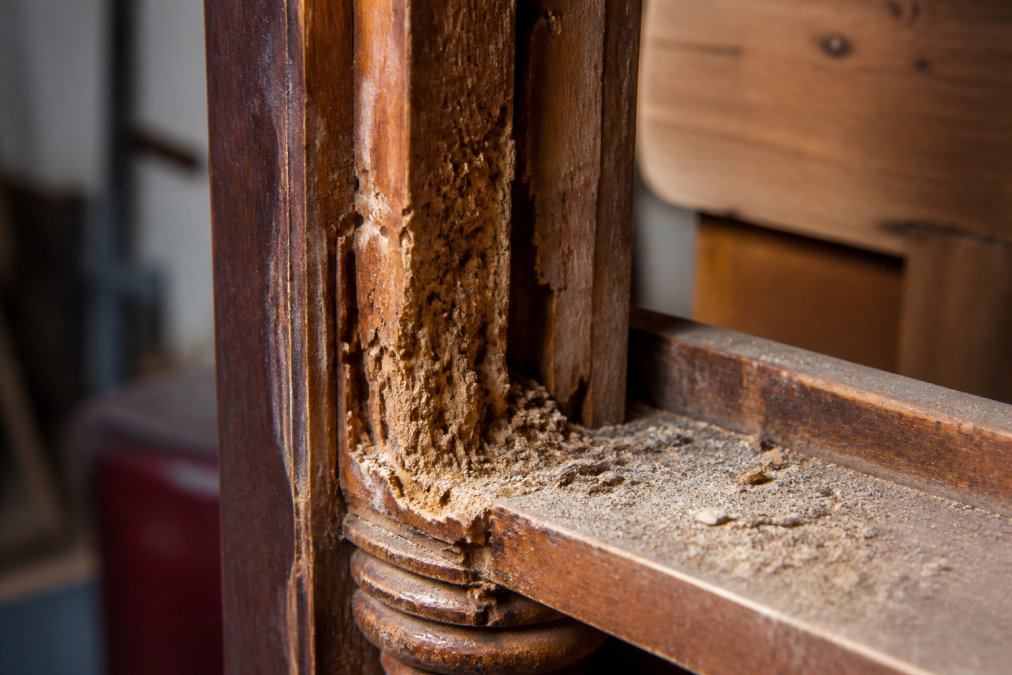
The visible holes are the least of your worries. What matters is what is happening inside the timber, and the internal damage is always worse than the surface suggests. A piece with twenty small exit holes on the outside may have hollowed-out sections running the length of a leg or through a seat rail.
Antique furniture is particularly vulnerable because the timber is often older, drier, and already weakened by decades or centuries of use. The joints, glue lines, and thin sections are the first to fail. A chair that was stable last year can develop a wobble that no amount of tightening will fix, because the wood itself has lost its integrity.
The consequences of ignoring an active infestation stack up quickly:
- Veneers lift and separate as larvae tunnel beneath the surface
- Joints loosen permanently as the surrounding timber hollows out
- Decorative carving and inlay crumble where the wood is thinnest
- The piece becomes unsafe to sit on, use, or even move
- Restoration costs escalate from treatment-level to full conservation-level
For a piece with sentimental or market value, that last point is the one that hurts most. Structural damage from woodworm is often irreversible.
How Far an Infestation Can Spread
An infestation rarely stays contained to one piece of furniture. Adult beetles emerge, mate, and lay eggs nearby, which means a single untreated chair in a spare room can seed an entire collection.
The spread follows a predictable pattern. Beetles emerge from the infested piece, fly a short distance, and look for similar timber with a suitable moisture content. Nearby furniture, floorboards, skirting, and structural timbers are all fair game. In older properties, this is how a furniture problem becomes a building problem.
What most guides miss is that the spread is not always obvious. You may not see fresh holes in the second piece for a year or more, because the larvae are feeding inside. By the time the new holes appear, you have two established infestations instead of one.
Signs of Active Woodworm Infestation in Antique Pieces
Knowing the signs of active woodworm infestation is the difference between catching it early and paying for restoration. The key word is active. Old exit holes from a treated or historical infestation look identical to fresh ones, so you need to look for evidence that beetles are currently emerging.
Fresh Exit Holes and Frass: What to Look For
Fresh exit holes are clean-edged and light-coloured inside, because the beetle has only just chewed through. Older holes darken and collect dust over time. Check the holes with a torch and a magnifying glass.
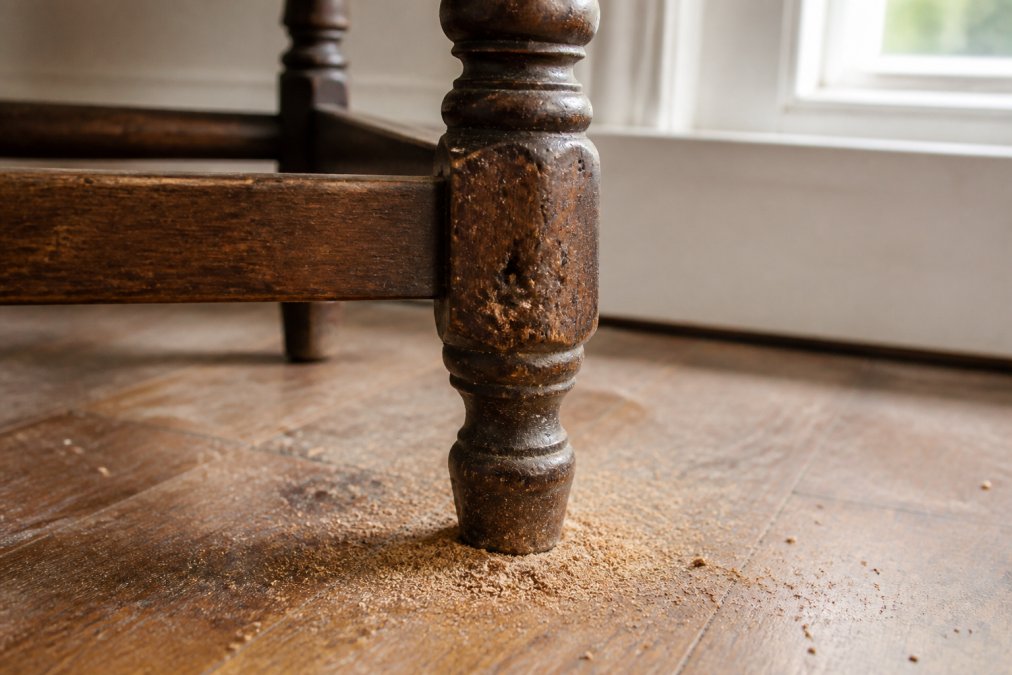
Frass is the fine, powdery bore-dust that larvae push out of their tunnels. It looks like sawdust and often collects in small piles beneath the piece or on the floor inside a cabinet. Fresh frass is a strong indicator of current activity.
Other signs worth checking:
- Tunnels visible in broken or exposed timber
- A faint tapping or scraping sound in very quiet rooms during warmer months
- Adult beetles around windows in spring and summer, looking for light
- Weak or crumbling timber when pressed with a fingernail
The best time to check is late spring to early autumn, when adult beetles are emerging. If you find live beetles, you have a current infestation, not a historical one.
How to Treat Woodworm in Antique Furniture Without Ruining It
Treating woodworm in antique furniture is not the same as treating a floorboard or a shed rafter. Antiques need a treatment that kills the infestation without damaging the finish, the patina, or the structural integrity of the piece.
The standard professional approach involves three stages: identification, targeted application, and monitoring. Identification confirms the beetle species and the extent of the infestation. Targeted application uses a suitable insecticidal treatment applied to the affected areas, often by injection into the exit holes and brushing onto exposed surfaces. Monitoring confirms the treatment has worked and no new activity appears.
Why Off-the-Shelf Products Often Fail on Antiques
DIY woodworm treatments sold in hardware shops are formulated for general timber, not for finished antiques. They often contain solvents that strip wax, shellac, or French polish. They rarely penetrate deeply enough to reach larvae tunnelling well below the surface. And they do nothing about the source of the infestation if the beetles are also in nearby floorboards or structural timber.
A common mistake is treating the visible holes and assuming the job is done. The larvae are often elsewhere in the piece, and the adults may be breeding in adjacent wood. Without addressing the whole picture, the problem returns.
This is where professional help makes a real difference. At ProPest Oxford Ltd, our technicians hold a minimum RSPH Level 2 qualification.
Woodworm Treatment Cost UK: What Affects the Price
Woodworm treatment costs in the UK vary widely, and any company that quotes a flat figure without seeing the piece is guessing. Pricing depends on the size of the piece, the extent of the infestation, whether the beetles have spread to other timber, and the type of treatment required.
- The number of pieces affected
- Whether structural timber in the property is involved
- The species of beetle and its treatment requirements
- Access to the affected areas
- Whether the finish needs protecting or restoring
Why Early Treatment Saves the Piece and the Price
The cost of treating woodworm in antique furniture early is always lower than the cost of restoring a piece after years of damage. This is not a sales line; it is simple economics. Treatment stops the larvae. Restoration rebuilds what the larvae have already destroyed, and that is skilled, time-consuming work.
Preventing Woodworm From Returning to Your Furniture
Prevention is mostly about controlling the conditions beetles like. Woodworm prefers damp timber, poor ventilation, and undisturbed wooden items. Address those three factors and you remove most of the invitation.
Practical prevention steps:
- Keep relative humidity in storage and display rooms moderate; avoid damp cellars and unheated outbuildings
- Improve airflow around and beneath furniture, especially against external walls
- Inspect any newly acquired antique before it enters the house, and quarantine it for a season if you are unsure
- Treat or seal bare timber in lofts, floors, and outbuildings where beetles can breed
- Book a periodic inspection if you own a collection or a period property
Frequently Asked Questions
Can woodworm spread from antique furniture to other items?
Yes. Adult beetles emerge from infested timber and fly to lay eggs on nearby wooden items, so a single untreated piece can seed an infestation across a room or house. They will readily move onto other antique furniture, floorboards, skirting boards and structural timbers. Treating only the piece you noticed first often leaves the source untouched, which is why a survey of the surrounding area matters as much as treating the visible damage.
How do I know if woodworm in my furniture is still active?
Look for fresh exit holes with clean, pale edges, and fine powdery frass collecting underneath or around the piece. If new holes or dust appear over several weeks, the infestation is active. Old damage tends to have darkened, rounded holes with no fresh dust. Tapping the timber and checking for weakness also helps. A professional survey confirms activity and identifies the species, because signs of active woodworm infestation vary between common furniture beetle and deathwatch beetle.
What is the best treatment for woodworm in antique furniture?
For a single valuable piece, targeted treatment is usually best: a residual insecticide applied to the affected timber and the surrounding wood, sometimes combined with a surface sealant. The right approach depends on the species, how far the damage has spread and whether the piece is veneered or solid. A technician with an RSPH Level 2 qualification can assess this properly.
Do I need professional pest control for woodworm in a single piece of furniture?
Not always, but it is worth a professional assessment if the piece is valuable, if you have seen signs of active woodworm infestation, or if other wooden items in the property show damage. DIY kits are widely sold, yet many fail because they treat only the surface and miss larvae deeper in the timber. A survey confirms whether the infestation is active and whether it has spread to floors or joists before you spend money on treatment.