 blog
blog
Pest Control for Local Cafes: A 2026 Guide
Table of Contents
- Why Cafes Are a Magnet for Pests
- Safe Pest Control Methods for Restaurants and Cafes
- Food Hygiene Regulations for Cafes: What You Must Know
- Pest Prevention Checklist for Food Businesses
- Choosing a Pest Control Provider for Your Cafe
- Frequently Asked Questions
Last Updated: September 12, 2026
Why Cafes Are a Magnet for Pests
Pest control for local cafes is the practice of preventing, monitoring and eliminating rodents, insects and other pests in food service premises while meeting UK food hygiene law. It matters more in cafes than almost anywhere else, because warmth, food debris and constant foot traffic create ideal conditions for infestation.
Three things make a cafe irresistible. First, the building itself: back doors propped open for deliveries, gaps around pipework, and bin stores sited too close to the kitchen. Second, the supplies: sacks of flour, sugar and coffee beans give rodents and stored-product moths a ready food source. Third, the rhythm of the day: spills at the counter, crumbs under booth seating and overnight waste all go unnoticed during a busy lunch service.
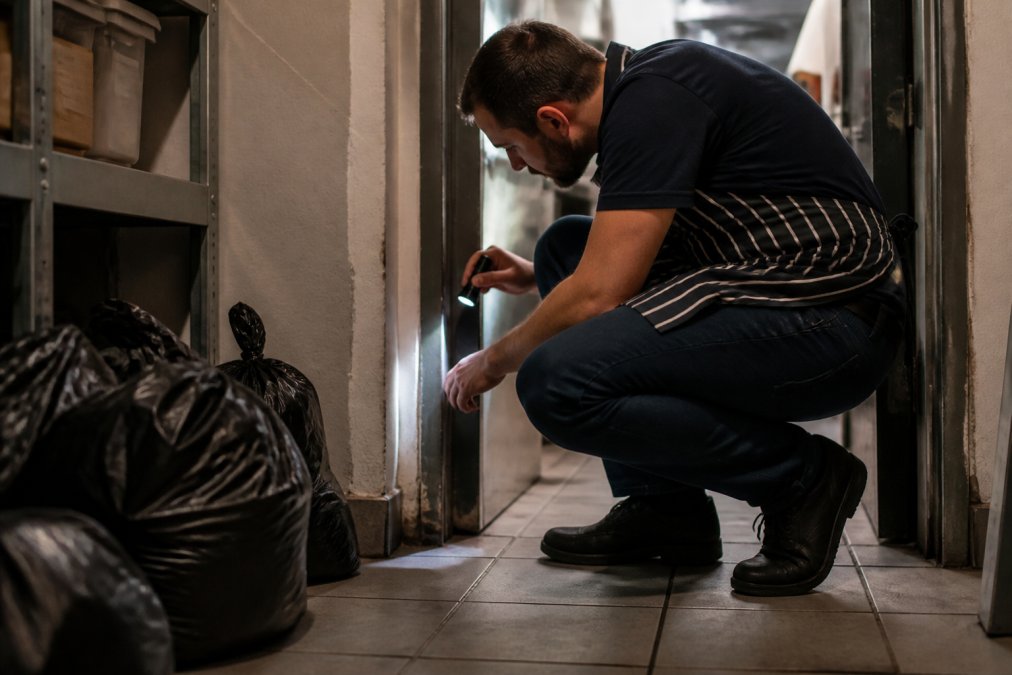
Safe Pest Control Methods for Restaurants and Cafes
Safe pest control methods for restaurants are those that eliminate pests without contaminating food, surfaces or equipment. In practice, this means combining monitoring, exclusion and targeted treatment rather than blanket spraying.
The best providers work in this order:
- Identify the species and entry points
- Seal access routes where practical
- Place monitoring devices to track activity
- Apply targeted treatment only where needed
- Schedule follow-up visits to confirm success
This approach protects staff, customers and stock. It also gives you documentation for your food safety records.
Non-Toxic Traps and Monitoring
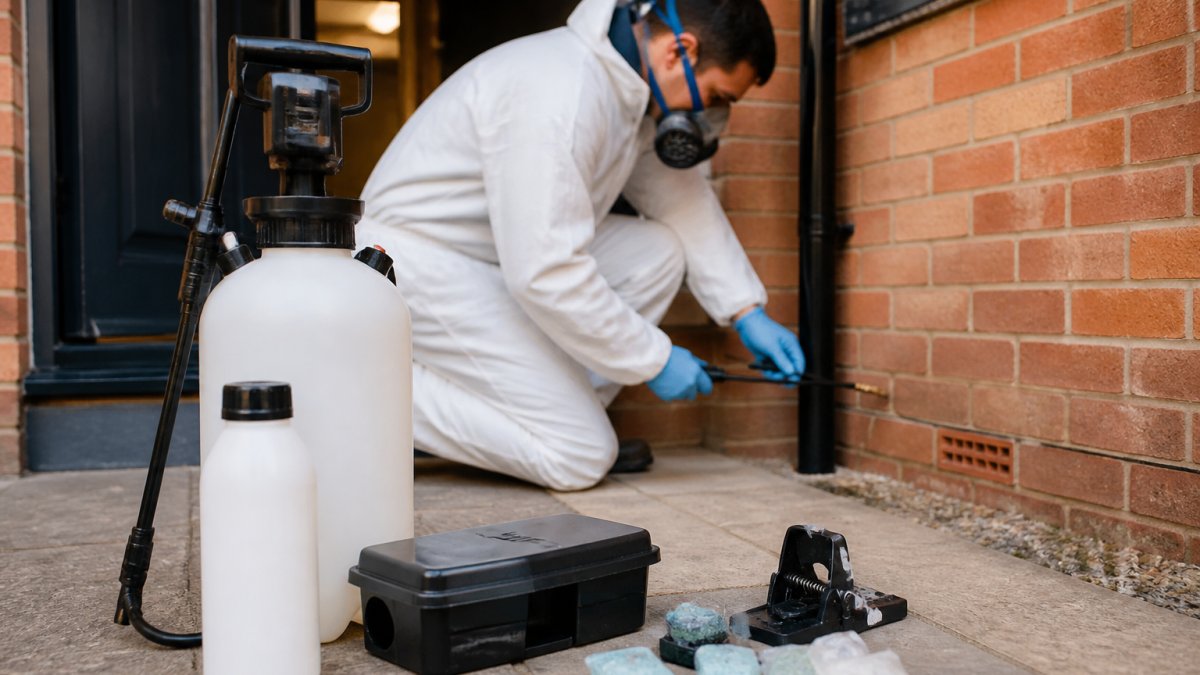
Non-toxic traps and monitoring stations form the backbone of any cafe pest programme. Snap traps, glue boards in enclosed units and pheromone monitors catch or detect pests without spreading chemicals near food.
Modern monitoring uses tamper-resistant stations that hold bait or glue securely, keeping them out of reach of staff and customers. Numbered stations mapped on a simple plan let you track activity over time. If station three near the dry store keeps catching, you have a location problem, not just a pest problem.
A common mistake is placing traps randomly. Position them along walls, behind units and at entry points, where rodents actually travel.
Targeted Treatments for Food Prep Areas
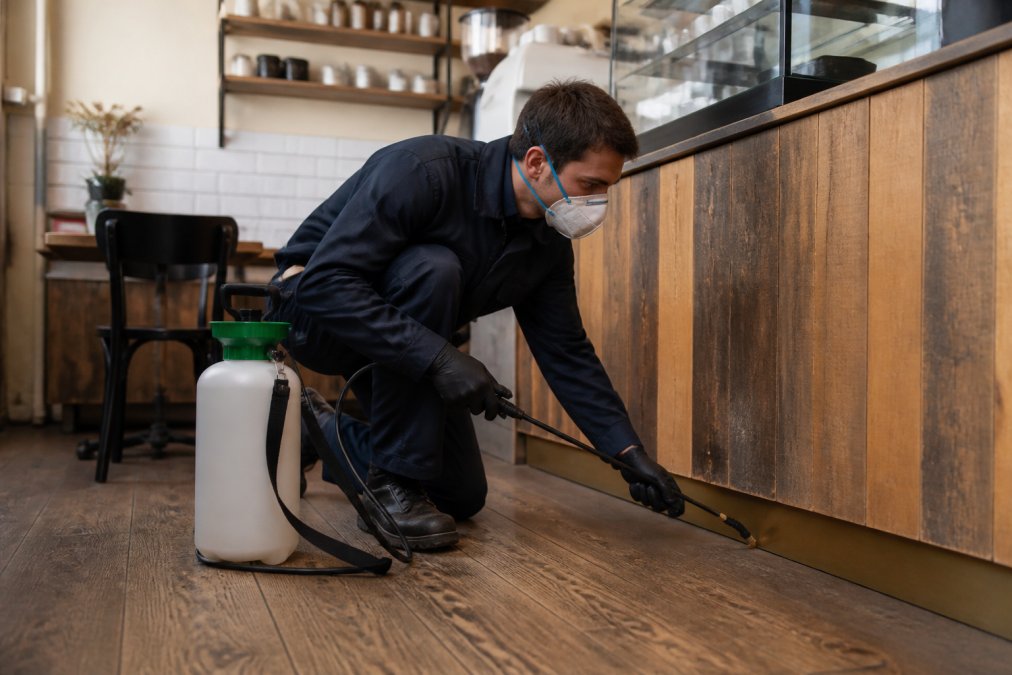
Targeted treatments in food prep areas require a licensed technician and careful timing. Gel baits applied to cracks and voids, insecticide dusts in wall cavities and residual sprays on non-food-contact surfaces all have a place when used correctly.
What most guides miss is the sequencing. Treatment should follow cleaning, not precede it. Treating a greasy, cluttered kitchen wastes product and risks contamination. The technician should also record which products were used and where, so you have a paper trail for inspections.
Food Hygiene Regulations for Cafes: What You Must Know
Food hygiene regulations for cafes in the UK centre on one principle: you must manage food safety risks, including pests, using a documented, proactive approach. The Food Standards Agency guidance on food safety management sets out what this means in practice.
Under retained EU regulation 852/2004, food businesses must: (food.gov.uk)
- Keep premises clean and maintained
- Protect food from contamination, including by pests
- Implement a food safety management system based on HACCP principles
- Keep records that demonstrate your controls work
For pests, that means you cannot simply react to a sighting. You need evidence of ongoing monitoring, corrective actions when activity is found, and records of any professional visits. Environmental health officers will ask for this during an inspection.
Pest Prevention Checklist for Food Businesses
A pest prevention checklist for food businesses turns good intentions into a daily habit. Use this one and adapt it to your layout.
- Check back doors and delivery entrances for gaps; fit door brushes and seals
- Inspect deliveries for signs of pests before signing
- Store dry goods in sealed, pest-proof containers off the floor
- Clean under and behind equipment at least weekly
- Empty bins nightly and keep external bins lidded and away from walls
- Check monitoring stations weekly and log findings
- Repair leaks promptly; standing water attracts pests
- Seal cracks around pipework and cable entry points
- Review contractor reports and act on recommendations
| Problem | Fix | Impact |
|---|---|---|
| Gaps at back door | Fit brush seals and kick plates | Blocks main rodent entry |
| Open dry goods | Use sealed containers | Removes food source |
| Unchecked traps | Weekly logged inspections | Early detection |
| Bin store against wall | Move 1m from building | Breaks pest highway |
Choosing a Pest Control Provider for Your Cafe
Choosing a pest control provider for your cafe comes down to three things: qualifications, approach and discretion. A cheap one-off visit is rarely cheaper than a proper programme.
Ask any provider these questions before booking:
- Are your technicians qualified to at least RSPH Level 2 in pest management?
- Do you identify the source of the infestation or just treat symptoms?
- Can you provide written reports suitable for environmental health?
- Are you insured, and can you show membership of a recognised trade body?
- How quickly can you attend an urgent call-out?
ProPest Oxford Ltd works with hospitality businesses across Oxfordshire and East Sussex. Our technicians hold a minimum RSPH Level 2 qualification, we focus on finding the source rather than just the symptoms, and we offer same-day or next-day appointments seven days a week. We are associated with the NPTA and BASIS PROMPT, and we understand that a pest problem is a reputation problem for a cafe.
As one customer put it after a rodent exclusion job: "Very Friendly and quick to respond. Rat Blocker installed and sewer wall repaired. Excellent work and value for money. Highly recommend."
Pricing depends on the size of your premises, the species involved and whether you need a one-off treatment or ongoing monitoring, so we quote after a site assessment rather than over the phone. For current rates or to arrange a visit, check the Chartered Institute of Environmental Health for food safety training and standards and then contact us directly.
Frequently Asked Questions
What are the legal requirements for pest control in food businesses?
Under UK food hygiene law, you must keep your premises free from pests and maintain a documented pest management system. This means regular inspections, proofing, and records of any treatments. Cafes are legally required to identify and control pest risks, and Environmental Health Officers can request evidence during inspections. A professional pest control contract helps you meet these obligations and provides the documentation you need to show compliance.
How often should a cafe have professional pest control inspections?
Most cafes should have a professional inspection at least every three months, though high-risk sites or those with previous issues may need monthly visits. Regular inspections catch early signs before an infestation takes hold. Between visits, your staff should carry out daily checks of food storage, waste areas, and entry points. A pest control provider can tailor a schedule based on your building, location, and history.
How can I prevent pests in my cafe without using harsh chemicals?
You can prevent pests using safe pest control methods for restaurants, such as sealing cracks, installing door sweeps, storing food in airtight containers, and fixing leaks promptly. Non-toxic traps and monitoring stations help track activity. If treatment is needed, ask your provider about gels, baits, and targeted applications that pose minimal risk in food prep areas. Good housekeeping and waste management are your first line of defence.
Does a cafe need a pest control contract to pass a hygiene inspection?
You are not legally required to have a contract, but you must be able to prove you are managing pests effectively. A contract with a qualified provider gives you scheduled visits, treatment records, and a clear paper trail. During a hygiene inspection, Environmental Health Officers look for evidence of monitoring and action. A pest prevention checklist for food businesses, combined with professional support, makes passing an inspection much simpler.
A single sighting can undo years of good reviews, and environmental health officers expect documented pest management, not just a clean kitchen. ProPest Oxford Ltd provides RSPH Level 2 qualified technicians, source-focused inspections, and flexible seven-day scheduling so your cafe stays compliant and your customers never notice a thing. Get started with ProPest Oxford Ltd and keep your premises pest-free.