 blog
Are Ants Nesting Under Your Paving a Problem?
Last Updated: 31 October 2026
Quick Summary
The best way to prevent ants under paving is to keep joints full and the bedding sound: sweep kiln-dried sand or a jointing compound into dry joints, compact it, and re-bed any hollow or sunken slabs. Treat an active colony with bait first, then re-sand once activity stops.
- Ants nest under paving because sand joints and soil beneath give them a dry, stable cavity.
- Run the inspection and maintenance routine every few weeks through spring and summer.
- Topping up sand over a live nest just gives ants fresh material to excavate.
- Bait works on the colony, not the trail, so expect foraging to continue for several days.
- Late winter and early spring are the best time to inspect joints and re-sand.
Table of Contents
- Why Ants Nest Under Paving and What It Costs You
- How to Keep Ants Out of Pavers: A Step-by-Step Routine
- Filling Gaps Between Paving Slabs to Stop Ants
- Ant Nest Treatment for Patios: Bait, Sprays and What Actually Works
- Safe Ant Control Around Pets and Children
- Distinguishing Ants From Other Paving Pests
- Seasonal Timing: When Ants Under Paving Are Most Active
- Booking a Professional Ant Treatment for Your Paving
- Frequently Asked Questions
Why Ants Nest Under Paving and What It Costs You
Ants nest under paving because the sand joints and the soil beneath give them a dry, stable cavity with easy access to food. Treating these calls as a structural problem first and a pest problem second is a sound approach. The nest is a symptom. The gap is the cause.
Many guides focus only on killing the ants visible on the surface. That can work for a short time, but the colony may rebuild from the same opening.
Ants under paving cause three kinds of damage:
- Joint erosion. Foraging ants push sand out of the joints, one grain at a time.
- Settling pavers. Hollowed-out bedding layers let slabs drop and rock underfoot.
- Recurring colonies. One untreated gap becomes the entry point for next year's nest.
Ant infestations that keep coming back usually trace to the same weak spot. Our guide on why pest infestations keep returning explains how to find that root cause rather than chasing symptoms.
Signs You Have an Ant Colony Beneath the Slabs
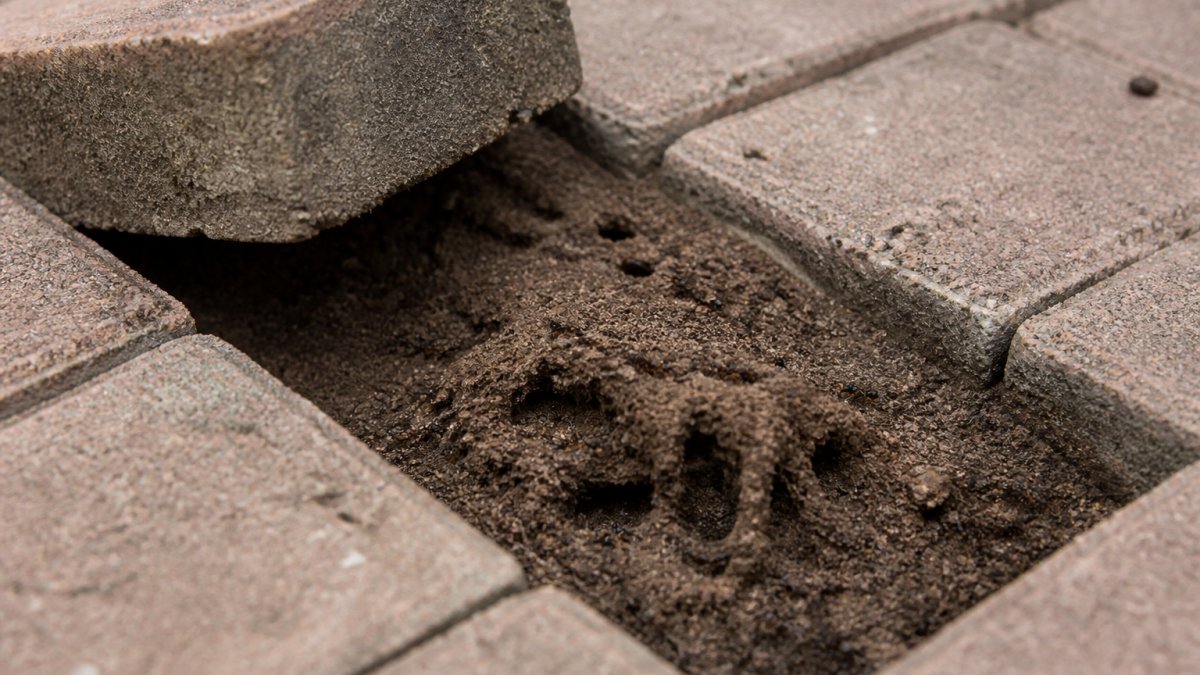
Look for small soil mounds along the joints, sand trickling out after rain, and trails of ants running a fixed line across the patio. Winged ants emerging in summer point to a mature colony nearby.
A common mistake is mistaking a surface trail for the nest itself. The ants you see are foragers. The colony sits deeper, often under a slab edge or against the house wall.
How to Keep Ants Out of Pavers: A Step-by-Step Routine
Keeping ants out of pavers comes down to a repeatable inspection and maintenance routine, not a one-off spray. Run this every few weeks through spring and summer:
- Sweep joints clear of loose soil and debris.
- Check for sunken slabs and hollow-sounding pavers.
- Top up joint sand where it has washed out.
- Clear leaf litter and plant pots away from the patio edge.
- Keep bins sealed and sweep up crumbs and spills outdoors.
- Trim vegetation back from walls and paving.
- Re-inspect after heavy rain.
For a wider prevention routine that covers other pests too, see our seven prevention steps.
Filling Gaps Between Paving Slabs to Stop Ants
Filling gaps between paving slabs to stop ants means replacing lost joint sand with a swept-in kiln-dried sand or a suitable jointing compound, then compacting it properly. Empty joints are open doors: they give ants a dry, stable cavity and a direct route into the bedding layer.
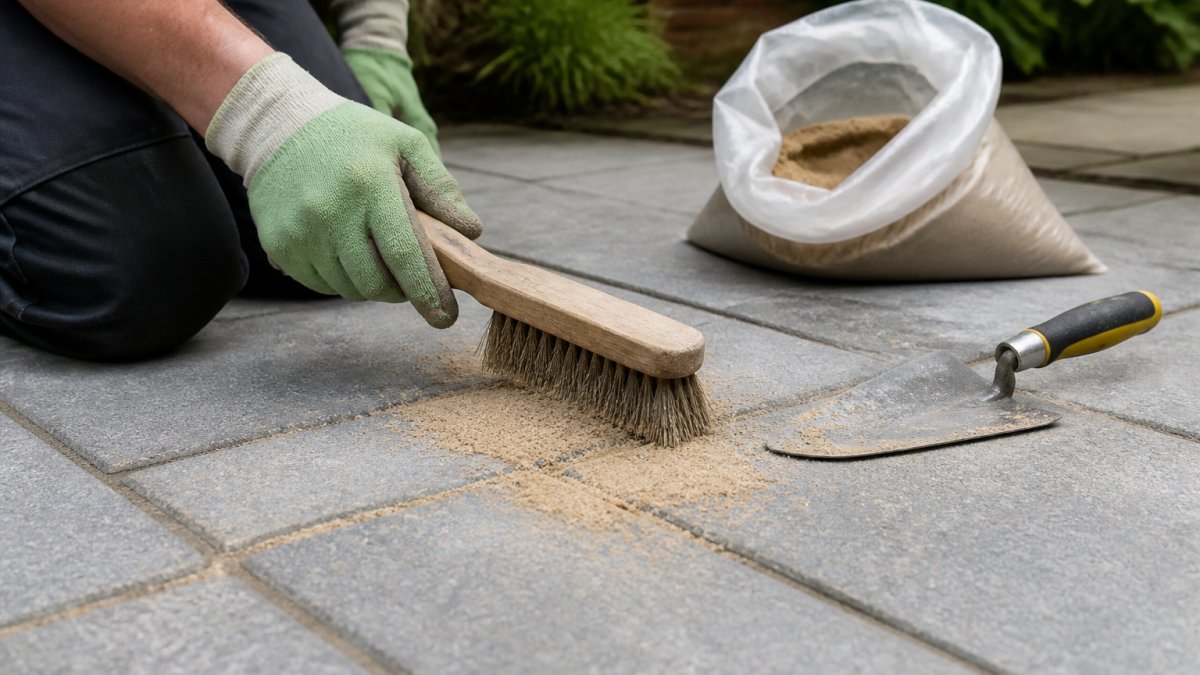
Choose the right joint material. Kiln-dried sand is a common choice for swept-in joints on a flexible patio. It flows into narrow gaps and can be topped up as it settles. Polymeric or resin jointing compounds are another option for joints that keep opening. For wide or broken joints, a mortar repair may be needed.
Check the base before you re-sand. Sand disappears for a reason. If slabs sound hollow underfoot, rock when stepped on, or sit lower than their neighbours, the bedding layer has likely settled or been hollowed out. Topping up joints over a failed base is temporary, the sand will wash or work out again.
Sort drainage at the same time. Water pooling at the patio edge softens the bedding and washes joint sand out. Check that the patio falls away from the house, that gully covers and drain surrounds are clear, and that soil or mulch is not banked up against the paving edge. A small French drain or gravel margin at the low edge can stop water sitting against the joints.
Re-sand in suitable conditions. Sweep kiln-dried sand into dry joints on a dry day and compact it into place. Top up as sand settles, and inspect joints periodically through the year.
Measure whether it worked. After re-sanding and treating, check the same joints every few weeks through spring and summer. Signs of progress include joints staying full after rain, no fresh soil mounds, and no fixed trail crossing the patio.
Repair and base maintenance can help stop the next colony forming in the same place, alongside bait for the colony already present. Run the repair alongside the step-by-step prevention routine so the paving, the garden edges and the bin area are all managed together.
Ant Nest Treatment for Patios: Bait, Sprays and What Actually Works
Ant nest treatment for patios works best with insecticidal bait placed close to foraging trails, because foragers carry it back to the colony and share it with the queen and brood. Surface sprays kill the ants you can see and rarely reach the colony, so they are a barrier tool rather than a cure. The table below compares the main options by how they work, where they suit, and where they fall short.
| Method | How it works | Best for | Limitations |
|---|---|---|---|
| Gel or granular bait | Foragers carry the active ingredient back to the nest and pass it on | Most patio nests, including those under slab edges and along wall joints | Takes days to work; may need re-baiting; not instant |
| Residual insecticide | Coats surfaces and kills ants on contact | Perimeter barriers around doors, thresholds and wall bases | Misses the colony; breaks down with rain and sunlight |
| Household remedies | Bicarbonate of soda, soap and water, vinegar, boiling water | Small surface trails and minor nuisance | No lasting control; can damage joint sand or plants |
| Physical repair | Re-sanding joints, re-bedding slabs, sealing gaps | Nests linked to failed joints or hollow bedding | Does not kill an active colony on its own |
Bait placement is important. Where possible, position it where ants are actually walking, close to the trail, rather than where the nest is assumed to be.
How long bait takes depends on the product and the colony size. Results vary, so check the product label for expected timescales.
Residual sprays have a place, but use them as a perimeter barrier after the nest is under control, not as the first move. Spraying a trail before baiting can repel foragers and stop them picking up bait at all. If you use a residual product, follow the label exactly for application rate, surfaces and drying time, and keep it away from drains, ponds and flowering plants where pollinators forage.
Household remedies such as bicarbonate of soda, soap and water, or boiling water may kill surface ants they contact, but they do not reach the colony. Use them for small trails rather than as a substitute for other treatment.
When choosing between remedies, work in this order: identify the trail and entry gap, bait the colony, wait for activity to stop, then repair the joint or slab so the gap is no longer available. That sequence matches the cause rather than chasing the symptom. Our ant nest removal guide covers costs and how to prepare your home if you decide to escalate to a professional treatment.
Safe Ant Control Around Pets and Children
Safe ant control around pets and children means keeping bait stations sealed and out of reach, and following the label on any insecticide exactly. Never scatter loose bait where a dog or toddler can reach it.
Our guide to safe pest control for pets covers pet-friendly methods, how long to keep animals away after treatment, and the signs of pesticide toxicity to watch for.
For households with young children, keep any treatment sealed and out of reach, and follow the product label.
Distinguishing Ants From Other Paving Pests
Ants run in defined trails and build small soil mounds at joints. Other paving pests behave differently:
- Termites leave mud tubes and damaged wood, not neat sand trails.
- Ground beetles are solitary and do not form trails.
- Woodlice gather in damp shade and scatter when disturbed.
If you see winged insects swarming from a single point in summer, that is likely a mature ant colony releasing alates, not a random invasion. Correct identification changes the treatment entirely.
Seasonal Timing: When Ants Under Paving Are Most Active
Ants under paving are most active from spring through late summer, when colonies forage widely and expand. In the UK climate, activity peaks on warm, humid days and after rain softens the ground.
Late winter and early spring are the best time to inspect joints and re-sand, before the season starts. Autumn is the time to repair settled slabs so water cannot pool and soften the bedding over winter.
Ant activity is generally higher in warmer months, so timing treatment to the active season is sensible.
Booking a Professional Ant Treatment for Your Paving
Booking a professional ant treatment makes sense when nests keep returning, when paving is settling, or when you need a treatment that is safe around family and pets. Our technicians hold a minimum RSPH Level 2 qualification, and we focus on finding the source rather than just the symptoms.
We offer same-day or next-day appointments, seven days a week, and we are associated with the NPTA and BASIS PROMPT. You can book a professional ant treatment for your paving, or read our ant nest removal guide for costs and how to prepare your home.
Frequently Asked Questions
Will filling gaps between paving slabs stop ants?
It removes the easiest nesting space but does not kill an existing colony. Brushing kiln-dried sand or a polymeric jointing compound into the gaps can limit the loose, dry soil ants favour. If ants are already established beneath the slabs, seal the joints after treatment rather than before, otherwise you trap the colony under the paving and foraging workers simply push fresh soil out through the next weak point.
What is the best way to stop ants nesting under a patio?
Combine three things: remove the food and moisture that attract them, keep jointing sand topped up so gaps stay closed, and treat any active nest with a bait the workers carry back to the colony. Ants under paving are usually after aphid honeydew, dropped crumbs and damp soil. Fix leaking downpipes and drainage first, then bait. Combining prevention with treatment of any active colony is generally the most effective approach.
Are ants under paving harmful to the patio itself?
The ants do not eat stone or concrete, but their excavations do cause damage. As they move soil out from beneath slabs, small voids form and the paving settles unevenly, which shows up as rocking slabs and widened joints. Persistent nest building along a foundation or exterior wall can also undermine pointing and let water in. Treating the colony early is cheaper than relaying slabs later.
When should I call a pest control professional about ants?
Call when baiting has failed twice, when nests keep reappearing in the same joints, or when ants are working into a building through exterior walls. Large paving areas, multiple colonies and properties with children, pets or livestock are also worth professional attention, because product choice and placement matter. A qualified pest control professional can advise on identifying the species and on treatment options.
Ants under paving will keep returning until the gaps and the colony are dealt with together. ProPest Oxford Ltd identifies the source, treats the nest, and advises on joint repair so the problem does not rebuild. With RSPH Level 2 qualified technicians, seven-day availability, and a focus on long-term prevention, we can help you keep your paving clear. Get started with ProPest Oxford Ltd and book a treatment that addresses the cause, not just the ants you can see.