 blog
Pest Control and Rodent Control: Which Do You Need?
Last Updated: October 22, 2026
Quick Summary
Pest control is the broad management of any unwanted species on a property, from wasps and ants to bed bugs, while rodent control is the narrower, more specialised work of removing and excluding rats and mice. Choose rodent control if you have seen droppings, heard scratching at night or found gnaw marks, and general pest control for a single identified insect problem.
- The pest control process follows five stages: survey, identification, treatment, proofing and a follow-up check.
- Rodent control costs depend on property size, infestation severity, visit numbers and whether proofing or drainage repairs are included.
- Rodent proofing seals entry points and is the step that separates a permanent fix from a recurring callout.
- Check qualifications, insurance, proofing capability, availability and follow-up terms before booking a provider.
- ProPest Oxford Ltd technicians hold a minimum RSPH Level 2 qualification and offer same-day or next-day appointments seven days a week.
Table of Contents
- Pest Control and Rodent Control: What's the Real Difference?
- Signs of a Rodent Infestation You Shouldn't Ignore
- The Pest Control Treatment Process, Step by Step
- Rodent Control Costs: What Drives the Price
- Rodent Proofing: Stopping the Problem at the Source
- General Pest Control vs Rodent Control: Side-by-Side Comparison
- How to Choose a Pest Control and Rodent Control Provider
- Frequently Asked Questions
Pest Control and Rodent Control: What's the Real Difference?
Pest control and rodent control are not the same service, and knowing which one you need saves time, money and repeated callouts. Pest control is the broad management of any unwanted species on a property, from wasps and ants to bed bugs and stored-product insects. Rodent control is the narrower, more specialised work of removing and excluding rats and mice, which behave differently, breed differently and require different equipment.
At ProPest Oxford Ltd, we run both services, and the distinction matters more than most homeowners expect. A wasp nest is a one-visit job. A rat in a wall cavity is a proofing and drainage problem that can take weeks to close down properly.
Below, we break down how to tell the two apart, what each treatment involves, and how to choose a provider who fixes the cause rather than the symptom.
Signs of a Rodent Infestation You Shouldn't Ignore
The clearest signs of a rodent infestation are droppings along skirting boards and behind appliances, greasy smear marks on wall edges, gnaw damage to cables and food packaging, and scratching or scurrying sounds in lofts and wall cavities after dark. Rats and mice rarely show themselves, so indirect evidence is usually what you get first.
Look for these in order of reliability:
- Droppings: dark, tapered pellets near food sources, under sinks and in cupboards
- Smear marks: dark greasy trails where rodents brush against walls
- Gnaw marks: fresh damage to wiring, pipe lagging or plastic containers
- Nesting material: shredded paper, insulation or fabric in quiet corners
- Sounds: scratching or movement in lofts, floors and cavity walls at night
One important point most guides miss: a single dropping does not confirm an active infestation. Rodent activity comes in waves, and old evidence can sit undisturbed for months. A technician checks for freshness, tracks and entry points before recommending treatment.
The Pest Control Treatment Process, Step by Step
The pest control treatment process follows five stages: survey, identification, treatment, proofing and a follow-up check. The survey comes first because treating the wrong species wastes everyone's time and money.
Step 1: Survey. A technician inspects the property, including lofts, sub-floor voids, outbuildings and drainage, and records activity and entry points.
Step 2: Identification. Confirming species matters. Rats and mice need different bait stations and different proofing approaches, and some insects require specialist products.
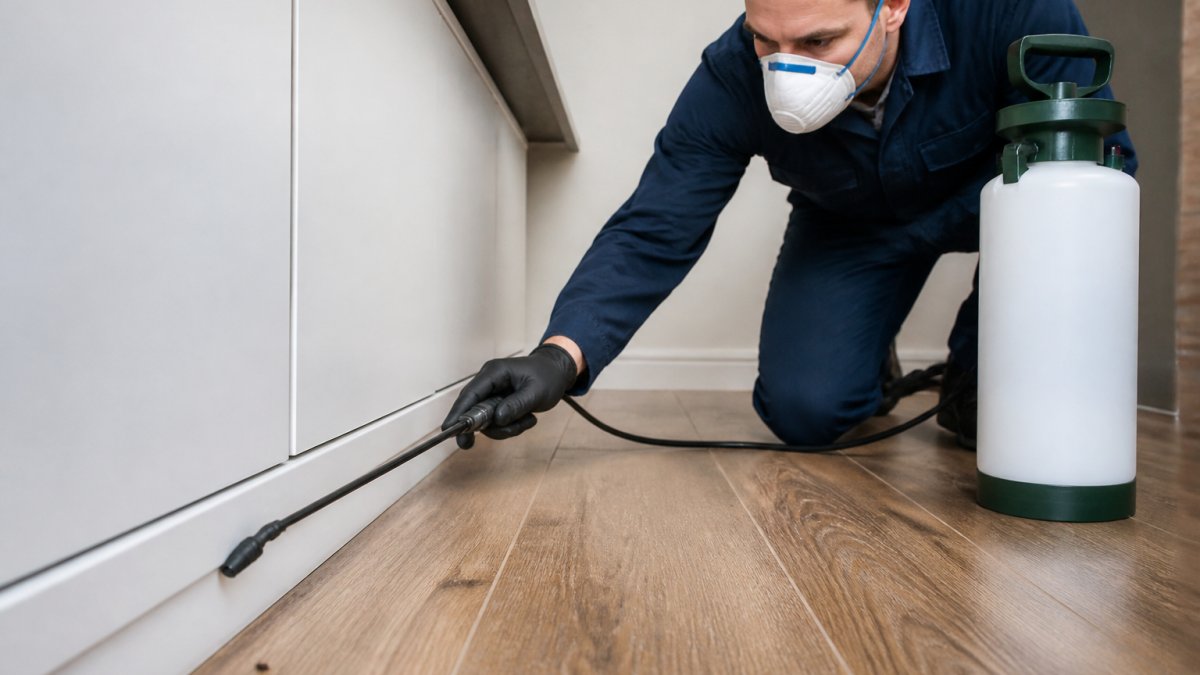
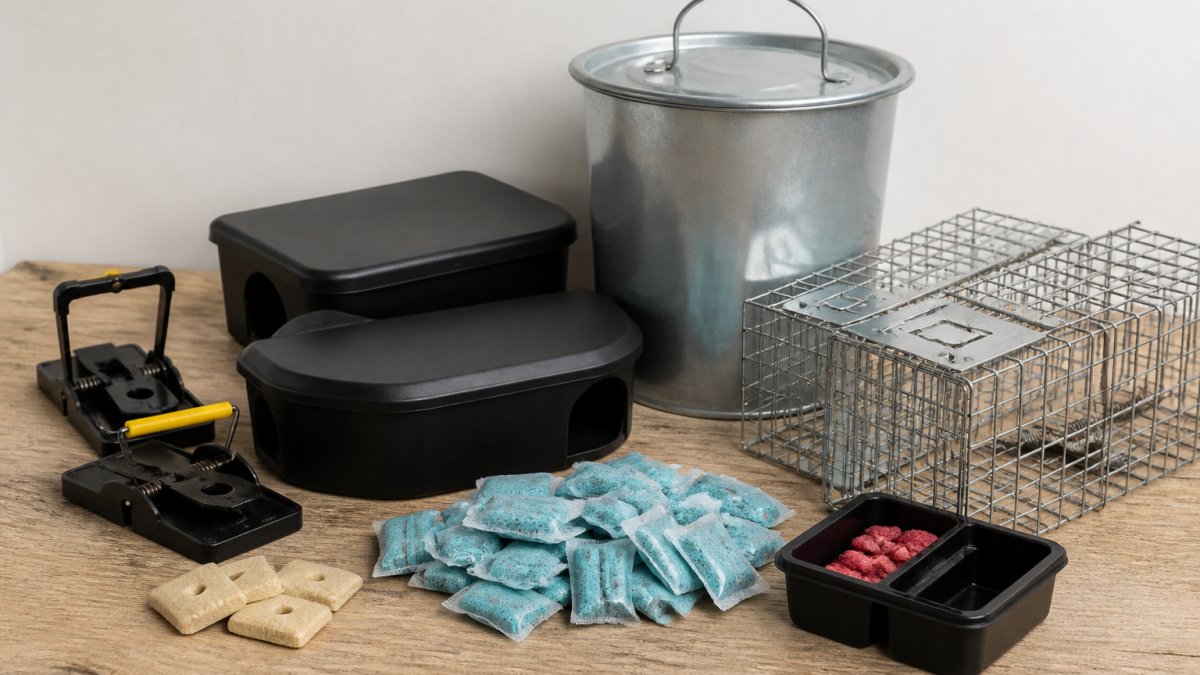
Step 3: Treatment. This may involve baiting, trapping, insecticide application or drainage work, depending on what the survey found.
Step 4: Proofing. Entry points are sealed and drainage defects repaired so the problem does not simply return.
Step 5: Follow-up. A return visit confirms the activity has stopped. Skipping this stage is the most common reason infestations come back.
Our own technicians hold a minimum RSPH Level 2 qualification, which covers safe pesticide use and species identification, and we work to the standards set out by the Health and Safety Executive on pesticides. We also focus on finding the source of an infestation rather than just the symptoms, because a treatment without proofing is a temporary fix.
Rodent Control Costs: What Drives the Price
Rodent control costs depend on the size of the property, the severity of the infestation, how many visits are needed, and whether proofing or drainage repairs are included. There is no single standard price, and any provider quoting a fixed figure over the phone without seeing the property is guessing.
The main cost drivers are:
- Number of visits: a single mouse in a kitchen is a different job from rats across a large estate with outbuildings
- Access difficulty: cavity walls, sub-floor voids and loft spaces take longer than open rooms
- Proofing scope: sealing one air brick is quick; repairing a damaged sewer wall is not
- Property type: period buildings with original drainage and multiple outbuildings take more survey time
- Follow-up requirements: commercial and hospitality premises often need documented visits for hygiene compliance
We do not publish fixed prices because quoting blind leads to either overcharging or under-scoping the job. Instead, we survey first and quote against what we actually find. For current pricing, request a quote directly.
Rodent Proofing: Stopping the Problem at the Source
Rodent proofing is the physical work of sealing entry points so rodents cannot get back in, and it is the step that separates a permanent fix from a recurring callout. Mice can squeeze through gaps far smaller than most people assume, and rats will exploit defective drainage and damaged air bricks.
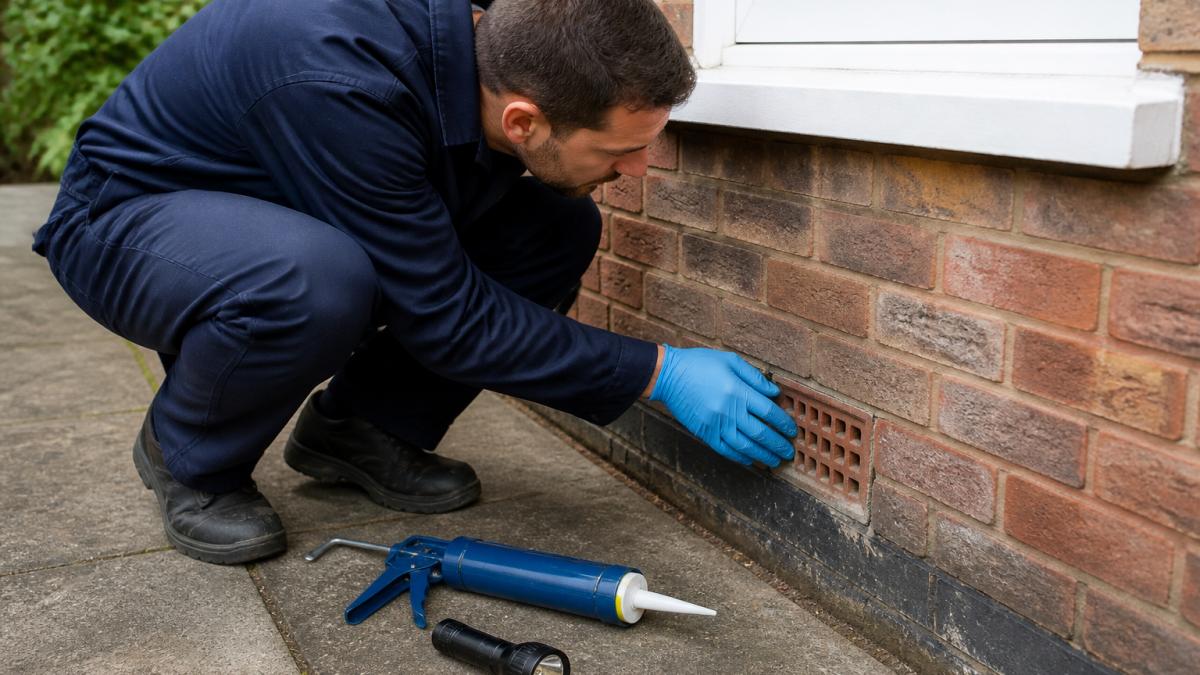
Proofing typically covers:
- Sealing gaps around pipework, vents and air bricks with rodent-resistant materials
- Repairing damaged drainage and sewer connections
- Fitting bristle strips or metal mesh to vulnerable openings
- Clearing and securing outbuildings, sheds and bin stores
One of our customers described exactly this outcome after a rat blocker installation and sewer wall repair: "Very Friendly and quick to respond. Rat Blocker installed and sewer wall repaired. Excellent work and value for money." That is the pattern we see repeatedly. The treatment clears the current population; the proofing stops the next one.
General Pest Control vs Rodent Control: Side-by-Side Comparison
General pest control and rodent control differ in scope, method and how long the work takes. General pest control covers many insects and other species, often in a single visit. Rodent control is narrower but usually longer, because it combines removal with proofing and follow-up.
| Factor | General Pest Control | Rodent Control |
|---|---|---|
| Target species | Wasps, ants, bed bugs, fleas, stored-product insects | Rats and mice |
| Typical visit pattern | Often one visit, sometimes two | Multiple visits plus follow-up |
| Core method | Insecticide application, nest removal, heat treatment | Baiting, trapping, proofing, drainage repair |
| Proofing required | Rarely | Almost always |
| Skill focus | Species identification and safe application | Behaviour, entry points and building fabric |
| Best for | A single identified insect problem | Droppings, gnaw damage, scratching sounds |
Neither service is "better". They answer different questions. If you know what you have, book the specific service. If you are unsure, book a survey and let the identification decide.
How to Choose a Pest Control and Rodent Control Provider
Choosing a provider comes down to five checks: qualifications, insurance, proofing capability, availability and follow-up terms. Get these answered before you book, not after.
- Qualifications: Do technicians hold a recognised qualification such as RSPH Level 2?
- Accreditation: Is the firm a member of a trade body such as the NPTA and registered with BASIS PROMPT?
- Insurance: Is the business fully insured for work on your property?
- Proofing capability: Can they repair entry points and drainage, or only treat?
- Availability: How quickly can they attend, and do they work weekends?
- Follow-up: What happens if activity continues after treatment?
We established ProPest Oxford Ltd in 2017 and built the service around these exact points. Our technicians are RSPH Level 2 qualified, we are NPTA members and BASIS PROMPT registered, we are fully insured, and we offer same-day or next-day appointments seven days a week. We also handle large estates and commercial premises, not just standard domestic callouts, and we work discreetly for landlords, hospitality and healthcare clients who cannot afford a visible disruption.
One honest limitation: we are a local firm covering Oxfordshire and East Sussex, not a national network. If your property sits outside that area, we will say so rather than take a job we cannot service properly.
If you are dealing with scratching in the walls, droppings in the kitchen, or a rodent problem that keeps returning after previous treatments, the issue is almost certainly proofing rather than the treatment itself. ProPest Oxford Ltd identifies the source, clears the infestation, seals the entry points and checks back to confirm the work has held. With same-day or next-day appointments, RSPH Level 2 qualified technicians and seven-day availability, get started with ProPest Oxford Ltd and close the problem down for good.
Frequently Asked Questions
Does pest control include rats and mice?
Yes. Rodent control is part of general pest control, so a reputable provider treats rats and mice alongside insects and other pests. In practice, the visit starts with identifying the species, finding entry points and nesting areas, then placing bait or traps safely away from children and pets. Because rodent control also involves proofing work, ask whether the provider covers both treatment and exclusion, or whether proofing is quoted separately.
How can I tell whether I have rats or mice?
Droppings are the clearest clue. Mouse droppings are roughly the size of a grain of rice and pointed at the ends; rat droppings are larger and more sausage-shaped. Rats also leave smears along skirting boards and produce heavier gnawing damage, while mice tend to leave scattered debris in cupboards and lofts. Grease marks, scratching sounds at night and torn food packaging all point to rodents, but a trained survey confirms the species before treatment starts.
How much does rodent control cost, and what affects the price?
Rodent control costs depend on the property size, the severity of the infestation, the number of visits needed and whether proofing work is included. Access issues such as lofts, cellars, sewers and outbuildings add labour time, as do commercial premises with hygiene obligations. Because every infestation differs, ask for a written quote after a survey rather than a phone estimate, and confirm whether follow-up visits and proofing are included.
How can I prevent rodents from returning after treatment?
Prevention comes down to three things: removing food, removing shelter and blocking entry. Store food in sealed containers, clear dropped fruit and waste promptly, and keep refuse areas tidy. Then carry out rodent proofing, sealing gaps around pipes, vents and doors with suitable materials, and repair damaged air bricks and drains. A provider that identifies the source rather than only treating the symptom gives you a far better chance of the problem staying solved.