 blog
blog
Pigeon Proofing Solar Panels: Mesh vs Netting
Table of Contents
- Why Pigeons Target Solar Panel Arrays
- Professional Pigeon Proofing vs DIY Netting Kits
- Pigeon Proofing Mesh for Solar Panels: Materials and Fixings
- Solar Panel Bird Netting: When It Works and When It Doesn't
- Solar Panel Pigeon Proofing Cost: What Affects the Quote
- Pigeon Proofing Solar Panels Maintenance and Long-Term Performance
- Choosing the Right Solution for Your Property
- Frequently Asked Questions
Last Updated: October 7, 2026
Why Pigeons Target Solar Panel Arrays
Pigeons target solar panel arrays because the gap between the panel and the roof creates a warm, dry, sheltered ledge that mimics the cliff faces their ancestors nested on. Add the shade under the panels and the constant warmth radiating from the roof surface, and you have ideal nesting conditions. For anyone weighing up professional pigeon proofing solar panels vs netting solutions, that nesting instinct is the whole problem in one sentence.
Once a pair settles, the mess compounds fast. Droppings are acidic and corrosive, and they bake onto the glass and the mounting rails. Nests and debris block airflow beneath the panels, and restricted airflow is a genuine performance issue rather than a cosmetic one. Blocked gutters below the array then cause water to track back under the tiles.
Cleaning removes the symptom. Proofing removes the reason the birds arrived.
Professional Pigeon Proofing vs DIY Netting Kits
Professional pigeon proofing uses a measured, fixed barrier installed around the full perimeter of the array, while DIY netting kits rely on generic mesh and clips that rarely suit the actual roof. The difference shows up in the first strong wind.
What Professional Installation Involves
A proper installation starts with a survey of the array, the roof pitch, and the access points. Barriers are then cut to size and fixed so the mesh sits under tension with no gaps at corners or cable entries.
Where DIY Kits Fall Short
DIY kits usually fail for three reasons: the mesh is too flimsy, the fixings are not suited to the roof material, and the coverage stops short of the full perimeter. A gap of a few centimetres is enough. Kits also rarely account for the cable routes and the gap at the bottom edge of the array, which is often the main entry point.
Pigeon Proofing Mesh for Solar Panels: Materials and Fixings
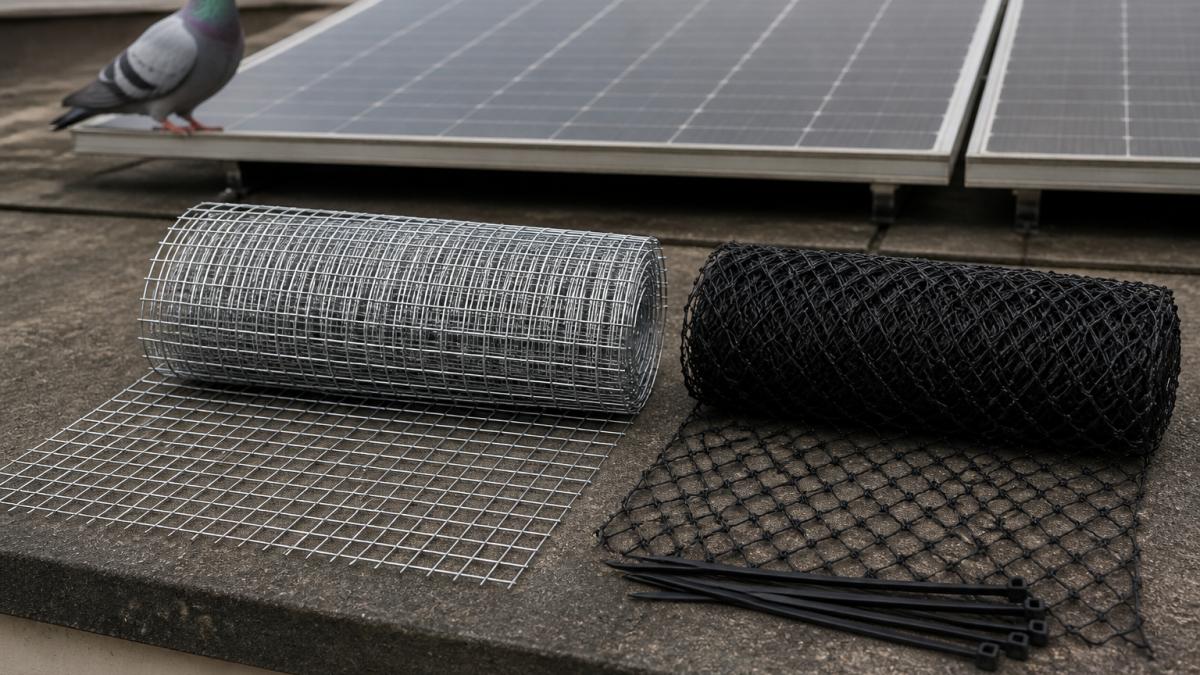
Pigeon proofing mesh for solar panels is typically a PVC-coated welded wire mesh, fixed with stainless steel clips or purpose-made brackets that grip the panel frame without drilling into it. The coating matters because bare galvanised mesh corrodes faster in coastal and damp conditions.
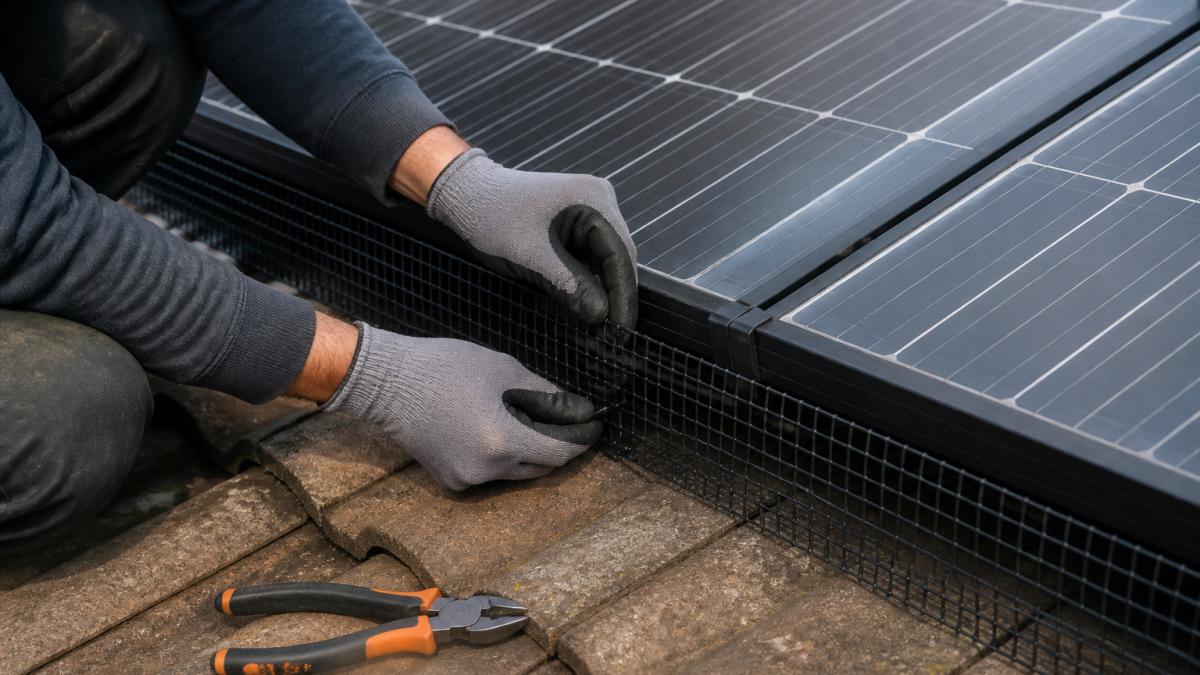
What most guides miss is the fixing method. Clips that grip the panel frame are the standard approach because they avoid penetrating the roof covering or the panel itself. Any fixing that involves drilling introduces a leak risk you will be living with for the life of the array. Mesh aperture also matters: too large and small birds pass through, too small and airflow and drainage suffer. A reputable installer will match the aperture to the bird species actually present.
Solar Panel Bird Netting: When It Works and When It Doesn't
Solar panel bird netting works well on simple, low-pitch arrays with clear, straight perimeter runs and easy roof access. It struggles on complex roofs with multiple arrays, awkward valleys, or heavy shading, where the netting has to be cut around obstacles and the tension is harder to maintain.
Netting is also a poorer fit where the gap under the panels is deep or irregular. In those cases a rigid mesh guard holds its shape better and keeps a consistent standoff from the roof surface. The honest answer is that netting is not a universal fix, and any installer who quotes it without surveying the roof is guessing.
Solar Panel Pigeon Proofing Cost: What Affects the Quote
Solar panel pigeon proofing cost depends on the size and shape of the array, the roof pitch and height, the material chosen, and whether existing nests and debris need clearing first. Access is the biggest single variable. A straightforward array on a bungalow is a very different job to a steep, multi-level roof that needs specialist access equipment.
Pricing also reflects whether the work includes a clean-down of the panels and guttering, and whether any damaged tiles or blocked downpipes need attention. Because every roof is different, we quote after a survey rather than over the phone. You can request a survey and quote from ProPest Oxford Ltd once you know the array layout and access requirements.
| Cost Factor | Why It Changes the Quote |
|---|---|
| Array size and shape | More perimeter means more mesh and more fixings |
| Roof pitch and height | Steep or high roofs need access equipment |
| Mesh material | PVC-coated mesh costs more than bare galvanised |
| Existing nests and debris | Clearing and sanitising adds labour |
| Panel and gutter clean | Often bundled into the same visit |
Pigeon Proofing Solar Panels Maintenance and Long-Term Performance
Pigeon proofing solar panels maintenance is minimal when the barrier is installed correctly, but it is not zero. An annual check of the mesh tension, the fixings, and the corners catches small problems before birds exploit them.
A short inspection each year also lets you clear leaf litter and debris from the gutter line, which protects drainage and keeps airflow under the array clear. If you would rather not climb up there yourself, the Health and Safety Executive's guidance on working at height is clear that roof work carries real risk, which is why we handle inspections as part of a maintenance visit.
Choosing the Right Solution for Your Property
Choosing between mesh and netting comes down to roof complexity, access, and how much you value a one-visit fix. For most domestic arrays, a professionally installed mesh guard is the more durable option. Netting suits simpler roofs where the perimeter is clean and the access is straightforward. Either way, the barrier has to cover the full perimeter with no gaps.
If you are unsure which suits your roof, get it surveyed before you buy anything. Guessing costs more in the long run.
Frequently Asked Questions
Is mesh or netting better for pigeon-proofing solar panels?
Mesh is generally the better choice for solar panels because it clips directly to the panel frame without drilling into the roof or the panels themselves. PVC-coated mesh resists weathering and UV degradation, and its tighter weave stops pigeons from pushing through. Netting can work on larger arrays but needs secure tensioning and more fixing points, which increases the risk of gaps forming over time. For most domestic rooftops, a professionally fitted mesh guard is the more durable option.
How much does professional pigeon proofing for solar panels cost?
Pricing depends on the size of the array, roof access, height, and the amount of debris that needs clearing before installation. A single-storey bungalow with one small array is a very different job from a three-storey property with multiple rows of panels. ProPest Oxford Ltd does not publish fixed prices because every roof is surveyed first. Contact the team directly for a quote based on your specific property.
Can netting damage solar panels or affect their performance?
Correctly installed netting or mesh sits below the panel edge and does not touch the glass surface, so it does not affect output. Problems arise when fixings are drilled into the panel frame or when netting is stretched across the face of the panels, which can scratch the glass and create shading. A professional installation avoids both issues by using clips and brackets designed for the panel profile.
How long does solar panel pigeon proofing last?
A professionally fitted PVC-coated mesh guard typically lasts many years with minimal attention. The mesh itself resists UV damage and rust, but fixings can loosen over time, particularly in exposed coastal or high-wind locations. An annual visual check after winter is sensible. If debris builds up behind the mesh, it should be cleared to prevent the guard from lifting away from the panel edge.
Pigeons under a solar array are a recurring problem, not a one-off. ProPest Oxford Ltd handles the survey, the proofing, and the follow-up maintenance, with technicians holding a minimum RSPH Level 2 qualification and appointments available seven days a week. We identify the source of the infestation rather than just the symptom, so the barrier is fitted where birds are actually getting in. Get started with ProPest Oxford Ltd and keep your array clear for good.