 ultimate-guide
Rodent Control for Large Estates: A Complete Guide
Table of Contents
- Why Rodent Control for Large Estates Requires a Different Approach
- Integrated Pest Management for Rural Properties
- Rodent Proofing Outbuildings: Prevention at Scale
- How to Get Rid of Rats Permanently on Large Estates
- DIY vs Professional Rodent Control for Large Properties
- Choosing a Rodent Control Service: Key Considerations Checklist
- Frequently Asked Questions
Last Updated: 2 September 2026
Why Rodent Control for Large Estates Requires a Different Approach
Rodent control for large estates differs fundamentally from treating standard domestic properties. The scale changes everything: you're managing rodent populations across multiple buildings, extensive grounds, and complex access points that small-property solutions cannot address.
Standard pest control approaches fail on large estates because they treat symptoms rather than sources. A technician sets traps, applies bait, and leaves. Within weeks, new rodents move in from surrounding land. On an estate, you need a comprehensive strategy that identifies entry points, understands why rodents are attracted to your property, and makes it inhospitable long-term.
Large properties present additional challenges: barns and outbuildings where rodents thrive, perimeter fencing spanning hundreds of metres, tenant properties requiring discretion, livestock or pets limiting safe treatments, and environmental sensitivities around water sources. At ProPest Oxford Ltd, we've worked with estate owners who tried DIY approaches or general pest control services, only to find problems returning within months. The difference between temporary fixes and permanent solutions comes down to understanding your property's specific vulnerabilities and building a systematic control strategy.
Integrated Pest Management for Rural Properties
Integrated Pest Management (IPM) is a systematic approach combining multiple control methods to manage pest populations sustainably and effectively. Rather than relying on a single tactic, IPM layers different strategies to reduce rodent populations and prevent reinfestation.
For rural properties and large estates, IPM works because it addresses the full picture: habitat, access, food sources, and active rodent populations. The IPM framework typically includes:
- Inspection and monitoring: Identifying entry points, nesting sites, food sources, and active rodent activity
- Exclusion: Sealing gaps, reinforcing doors, and blocking access routes to buildings
- Habitat modification: Removing shelter and reducing food sources (securing grain, removing spilled feed, managing compost)
- Population control: Using traps, baiting stations, or targeted treatments where rodents are actively present
- Ongoing surveillance: Regular monitoring to catch new activity early before populations re-establish
The strength of IPM is that it doesn't rely on chemicals alone. This matters on large estates where you might have water sources, wildlife corridors, or neighbouring properties to consider. By combining physical barriers, habitat changes, and targeted control, you reduce the need for intensive chemical treatments whilst maintaining effectiveness.
Effective IPM requires ongoing monitoring and maintenance, typically quarterly or bi-annual inspections to catch problems early. This preventive approach costs less over time than dealing with repeated infestations.
Rodent Proofing Outbuildings: Prevention at Scale
Outbuildings are the primary entry point for rodent problems on large estates. Barns, sheds, agricultural stores, and utility buildings offer rodents shelter, nesting material, and often food sources. If these buildings aren't proofed, they become rodent colonies that eventually spread to your main residence.
Rats can squeeze through gaps as small as 6 millimetres; mice need even less (the CDC). Common entry points include gaps around pipes and cables, damaged draught excluders, cracks in foundations, gaps between roof and walls, and damaged vents lacking proper screening.
Rodent proofing involves three steps: inspection, sealing, and verification. During inspection, look for every potential entry point, including those hidden by vegetation or stored materials. Once identified, gaps need permanent sealing. Expanding foam alone won't work; rodents will chew through it. Use physical barriers: steel mesh, wire mesh, or metal flashing.
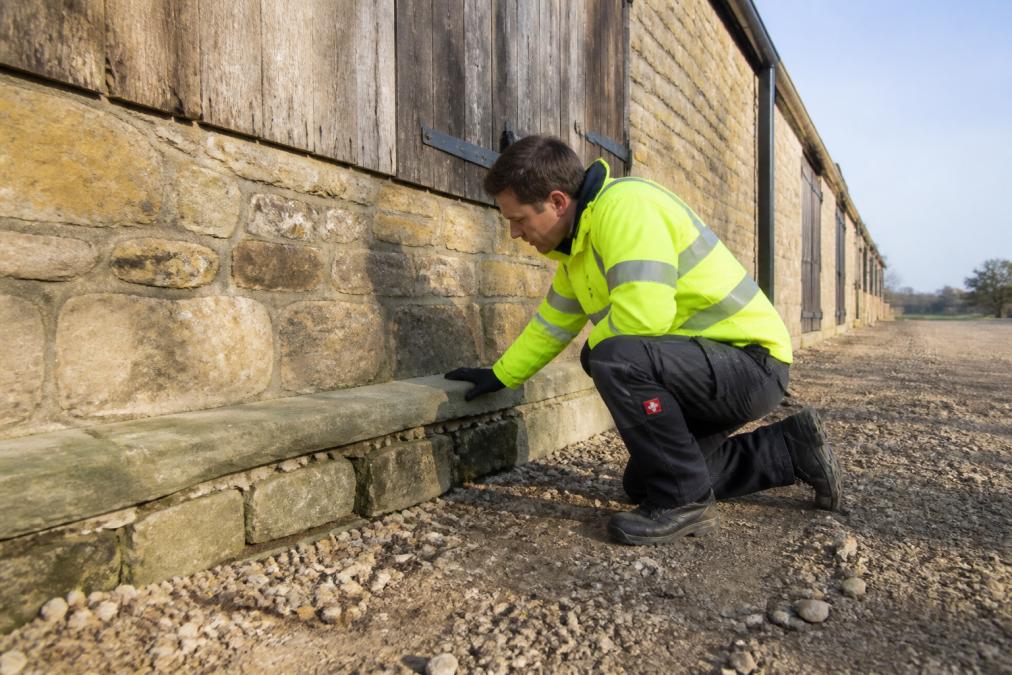
For agricultural buildings storing grain or feed, proofing is only half the solution. Manage how materials are stored: use sealed metal bins, elevate storage on pallets, and clean spilled material regularly. Doors are another critical vulnerability. Install door sweeps, threshold seals, and self-closing mechanisms to ensure doors close properly and stay closed when not in use.
How to Get Rid of Rats Permanently on Large Estates
Getting rid of rats permanently on large estates requires sustained effort across multiple months. The goal is to reduce the active population to zero, then maintain conditions that prevent reinfestation.
Active rodent control uses trapping, baiting, or both. Snap traps are cost-effective and quick but require regular checking. Electronic traps kill instantly and log activity electronically. Multi-catch traps allow you to capture multiple rodents without resetting, though they require careful handling.
Baiting uses poison or non-lethal baits to control populations. Poison baits work but may result in dead rodents in inaccessible locations and potential secondary poisoning of predators. Non-lethal approaches avoid these issues but require more frequent monitoring.
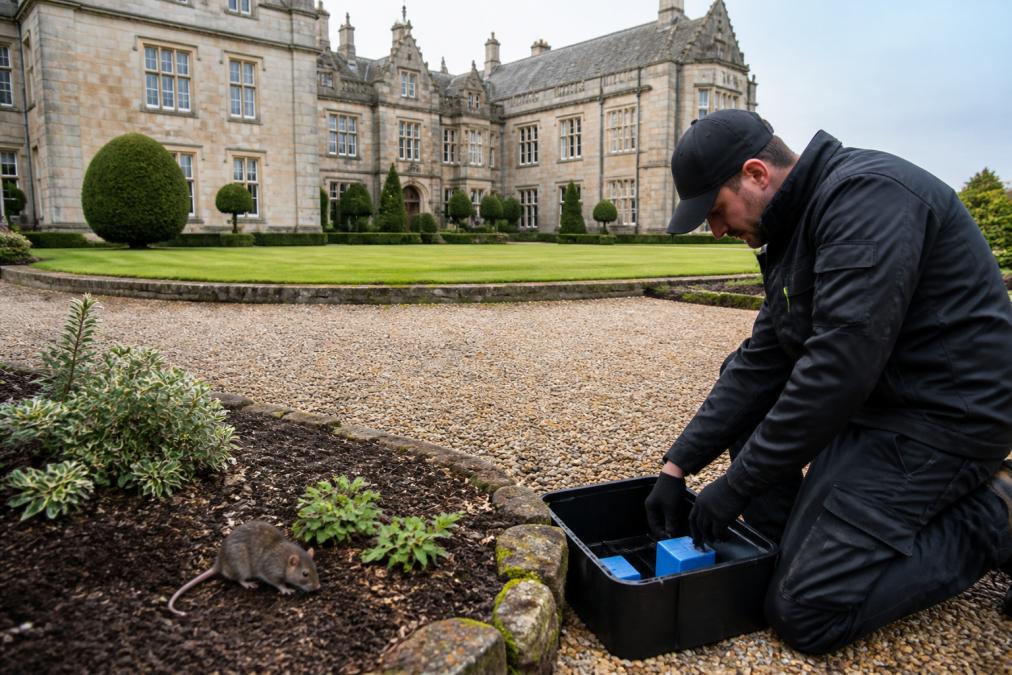
For large estates, a combination approach typically works best. Use traps in areas you can monitor regularly (outbuildings, accessible spaces). Use baiting stations in perimeter areas or where traps aren't practical. Density matters: you need enough control points to impact the population meaningfully.
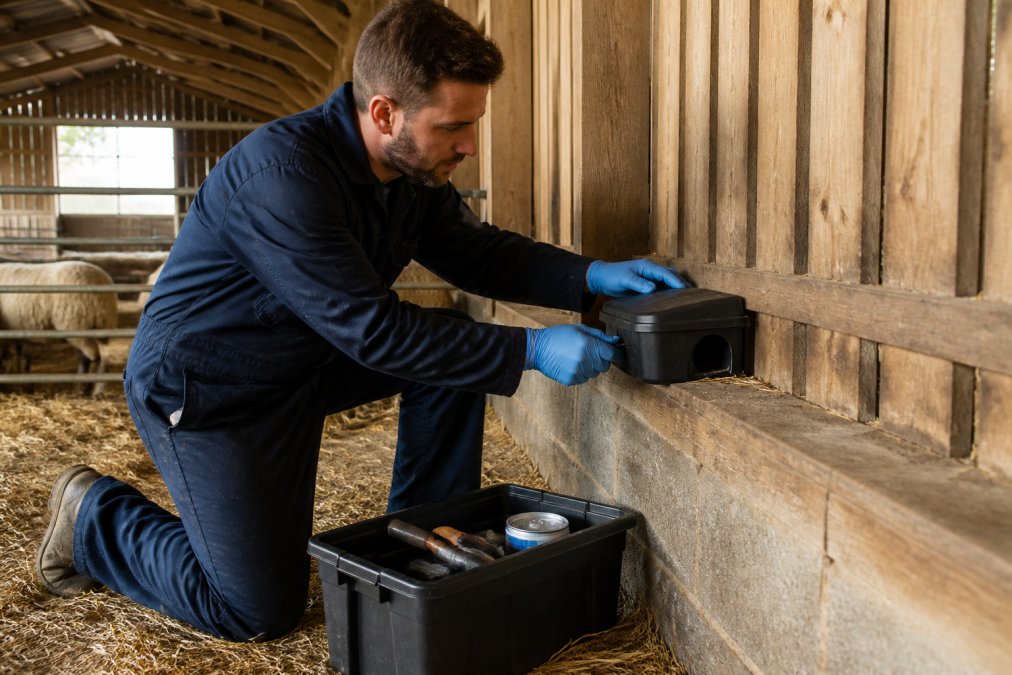
Timing matters. Rodent populations typically peak in autumn as they seek shelter before winter, and again in spring as overwintering populations breed (peer-reviewed research). Launch your control programme before these peaks, July through August and February through March, when populations are smaller.
A common mistake is stopping control measures too early. After two to three weeks of success, many estate owners assume the problem is solved. In reality, rodent populations can rebound within weeks if control efforts stop. Effective permanent control requires maintaining traps and monitoring for at least eight to twelve weeks, even after you stop seeing active rodents.
DIY vs Professional Rodent Control for Large Properties
The decision between DIY and professional rodent control depends on the scale of your problem, your comfort with hands-on pest management, and your available time.
DIY rodent control works best for small, contained problems caught early. If you've noticed a few droppings in one outbuilding and you're willing to inspect regularly, seal gaps, and maintain traps, you can often resolve it yourself. The advantage is cost; the disadvantage is that it requires your time and knowledge.
On large estates, DIY becomes more challenging. You're managing multiple buildings, extensive perimeter areas, and potentially higher rodent populations. Mistakes are costly; a missed entry point means your efforts fail. Inconsistent monitoring means you won't catch returning activity.
Professional rodent control brings expertise, equipment, and accountability. A qualified technician understands rodent behaviour, knows where to look for entry points, and has access to professional-grade exclusion materials and control methods. For large estates, professionals can develop a long-term management plan tailored to your property's specific vulnerabilities.
The trade-off is cost. Professional services are more expensive than DIY, but on large estates, the cost is often justified by the speed of resolution and lower risk of failure. A failed DIY attempt can mean months of continued infestation whilst you figure out what went wrong.
For large properties, a hybrid approach often works well. Professionals handle the initial comprehensive inspection, exclusion work, and population control. Once the acute problem is resolved, you maintain basic monitoring and preventive measures yourself, with annual or bi-annual professional inspections to catch problems early.
Choosing a Rodent Control Service: Key Considerations Checklist
If you're engaging a professional rodent control service for your large estate, these considerations will help you choose the right partner.
Qualifications and Certifications
Verify that technicians hold appropriate qualifications. In the United Kingdom, the RSPH Level 2 in Pest Management is the standard professional qualification (rsph.org.uk). Technicians should be registered with BASIS PROMPT and ideally be members of professional bodies like NPTA (National Pest Technicians Association). Don't assume all pest control companies meet these standards; ask directly and verify.
Experience with Large Properties
Not all pest control services have experience managing large estates. A company comfortable with domestic infestations might struggle with the scale and complexity of outbuildings and perimeter management. Ask specifically about their experience with agricultural properties and multi-building complexes.
Detailed Initial Inspection
A reputable service will conduct a thorough initial inspection before quoting. They should walk the entire property, document entry points, assess habitat factors, and provide a written report. If a company quotes based on a phone call or brief visit, that's a red flag.
Clear Treatment Plan
You should receive a written treatment plan outlining the approach, timeline, and monitoring schedule. This plan should address exclusion work, active control methods, and ongoing surveillance. It should specify how long the programme will run and what constitutes success.
Transparency on Methods and Chemicals
Ask what control methods they'll use and why. Will they use lethal or non-lethal approaches? What chemicals, if any, are involved? How will they manage the risk of secondary poisoning or odour from dead rodents?
Responsiveness and Appointment Flexibility
Large estates often require scheduling flexibility. Can the service accommodate appointments outside standard hours? How quickly can they respond to urgent call-outs?
Guarantees and Aftercare
Understand what happens if the problem isn't resolved. Do they offer a guarantee? Will they return at no charge if rodents return within a certain period? What does ongoing monitoring cost?
Insurance and Compliance
Verify that the company is fully insured and compliant with UK pest control regulations. They should carry public liability insurance and be registered with appropriate regulatory bodies.
| Consideration | What to Check | Why It Matters |
|---|---|---|
| Qualifications | RSPH Level 2, BASIS PROMPT registration, NPTA membership | Ensures technicians meet professional standards |
| Large property experience | Portfolio of estate/agricultural work | Domestic experience doesn't guarantee competence at scale |
| Initial inspection | Thorough walk-through with written report | Reveals true scope and prevents underquoting |
| Treatment plan | Written plan with timeline and monitoring schedule | Clarifies expectations and success criteria |
| Methods and chemicals | Detailed explanation of approach and rationale | Addresses safety and environmental concerns |
| Responsiveness | Appointment availability and response times | Critical for urgent situations and tenant properties |
| Guarantees | Return visits, follow-up, and warranty terms | Protects you if initial treatment doesn't resolve the issue |
| Insurance and compliance | Public liability, regulatory registration | Protects you legally if something goes wrong |
Rodent control for large estates is a long-term commitment, not a quick fix. Success depends on understanding the full scope of the problem and maintaining consistent effort over months, not weeks. A systematic approach, inspection, exclusion, active control, and ongoing monitoring, works. Half-measures and inconsistency don't.
If you're managing a large estate and rodent activity is affecting your property, your tenants, or your business, professional intervention often saves time and money. ProPest Oxford Ltd has the expertise to assess your property, develop a tailored control strategy, and manage the implementation. Our RSPH Level 2 qualified technicians understand the specific challenges of rural properties and estates, and we're available seven days a week to respond to your needs. Book a service and let's eliminate the problem for good.
Frequently Asked Questions
How quickly can you respond to a rodent infestation on a large estate?
Same-day or next-day appointments are available seven days a week. Large estates often require rapid response to prevent rodent populations from spreading across multiple buildings and outhouses. Early intervention stops the problem before it becomes entrenched in walls, lofts, and agricultural structures. Contact ProPest Oxford Ltd immediately when you spot signs of infestation.
What is integrated pest management for rural properties?
Integrated pest management (IPM) combines inspection, exclusion, sanitation, and targeted treatment rather than relying on chemicals alone. For rural properties, this means identifying entry points, removing food sources, sealing gaps, and using traps or baits strategically. IPM reduces chemical use, protects wildlife, and addresses root causes, making it ideal for large estates where environmental impact matters.
How often should rodent control inspections happen on a large estate?
Seasonal inspections are recommended, with increased frequency during autumn and winter when rodents seek shelter indoors. High-risk areas such as grain stores, outbuildings, and livestock facilities may need quarterly checks. A professional assessment will identify your estate's specific risk factors and establish an inspection schedule that prevents re-infestation without unnecessary visits.
What qualifications do your technicians hold?
All ProPest Oxford Ltd technicians hold a minimum RSPH Level 2 qualification in pest management, demonstrating professional competency in identification, treatment, and safety. The company is registered with BASIS PROMPT and is a member of the NPTA, ensuring compliance with industry standards and ongoing professional development. You can verify credentials before booking.
Can professional rodent control prevent re-infestation on a large estate?
Yes, when combined with structural improvements and ongoing maintenance. Professional treatment eliminates existing populations, but permanent prevention requires rodent proofing of outbuildings, exclusion of entry points, and regular monitoring. Large estates benefit from scheduled maintenance visits that catch early signs before infestations take hold, protecting your investment long-term.
Is there a guarantee if the rodent problem returns after treatment?
Guarantees vary depending on the scope of work and whether structural exclusion measures are implemented. A professional assessment will clarify what's included and what follow-up support is available. Estates that combine professional treatment with proofing of outbuildings and exclusion work typically see the strongest, longest-lasting results.