 ultimate-guide
Discreet Pest Control for Hospitality: A 2026 Guide
Table of Contents
- Why Discreet Pest Control Matters for Hospitality Businesses
- Integrated Pest Management for Hotels: Prevention Before Treatment
- How to Handle Pest Sightings in Hotels Without Raising Alarm
- Discreet Treatment Methods That Keep Guests Unaware
- Commercial Pest Control Audit Preparation: What Inspectors Look For
- Choosing a Discreet Pest Control Provider: A Checklist
- Common Mistakes Hospitality Venues Make With Pest Control
- Conclusion
- Frequently Asked Questions
Last Updated: September 18, 2026
Why Discreet Pest Control Matters for Hospitality Businesses
Discreet pest control for hospitality is the practice of preventing, monitoring and treating infestations without guests, diners or patients ever becoming aware of it. At ProPest Oxford Ltd, we treat confidentiality as part of the service, not an optional extra. Get it right and nobody notices anything. Get it wrong and one sighting can undo years of work.
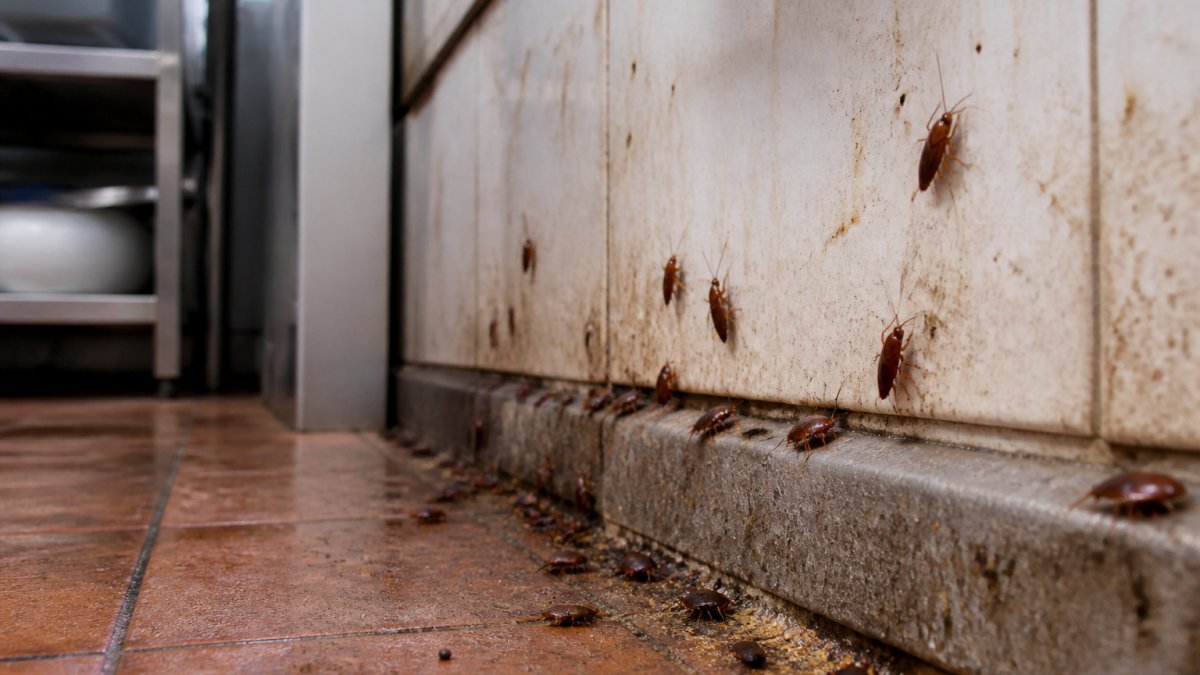
A guest who spots a mouse in a dining room does not keep it to themselves. They tell the table, they tell the front desk, and they tell the internet. In a sector built entirely on trust, a visible infestation is a commercial event, not just a hygiene problem.
The Reputation Cost of a Visible Infestation
Reviews are permanent, searchable and read by people who were about to book. A single review mentioning pests sits at the top of your listing for years, long after the problem is solved.
The damage rarely stops at the review. Word of mouth in a local market moves quickly, and hospitality businesses in smaller towns feel it fastest.
Legal Duties Under UK Food Safety Law
Food businesses must keep premises clean and free from pests under Regulation (EC) 852/2004 as retained in UK law. The Food Standards Agency's inspection regime treats pest activity as a compliance failure, not a housekeeping issue.
That matters because enforcement is public. A low hygiene rating is visible to every customer who checks before booking.
Integrated Pest Management for Hotels: Prevention Before Treatment
Integrated pest management for hotels means solving the cause of an infestation before reaching for a treatment. Poison kills what is there today. Proofing the entry point stops the next generation arriving. Most recurring problems we attend were never properly investigated the first time.
That is why our technicians focus on identifying the source rather than just the symptoms, and why we hold RSPH Level 2 qualifications as a minimum standard.
Building a Monitoring Routine That Guests Never Notice
- Inspect bin stores, delivery doors and service corridors weekly
- Check glue boards and bait stations on a fixed rotation
- Log every sighting, however minor, with time and location
- Review delivery practices with suppliers quarterly
- Keep treatment records together in one accessible file
How to Handle Pest Sightings in Hotels Without Raising Alarm
Move the guest first, deal with the pest second. A calm relocation to another table or room costs you a drink or an upgrade. A public argument at the table costs you the room's worth of reviews.
Train staff on one script and one escalation route. Nobody should be improvising in front of customers.
- Apologise briefly without naming the problem
- Relocate the guest immediately, without negotiation
- Log the location and time while it is fresh
- Call your contractor the same day, not the next morning
- Review the entry point within 48 hours
Discreet Treatment Methods That Keep Guests Unaware
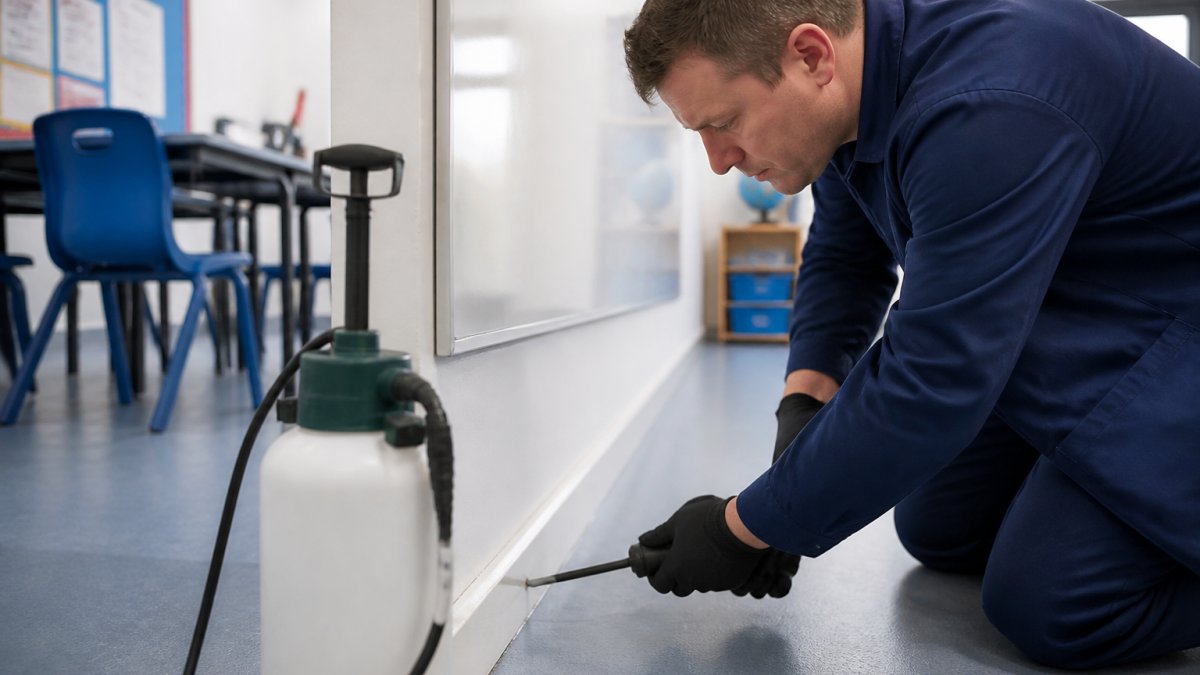
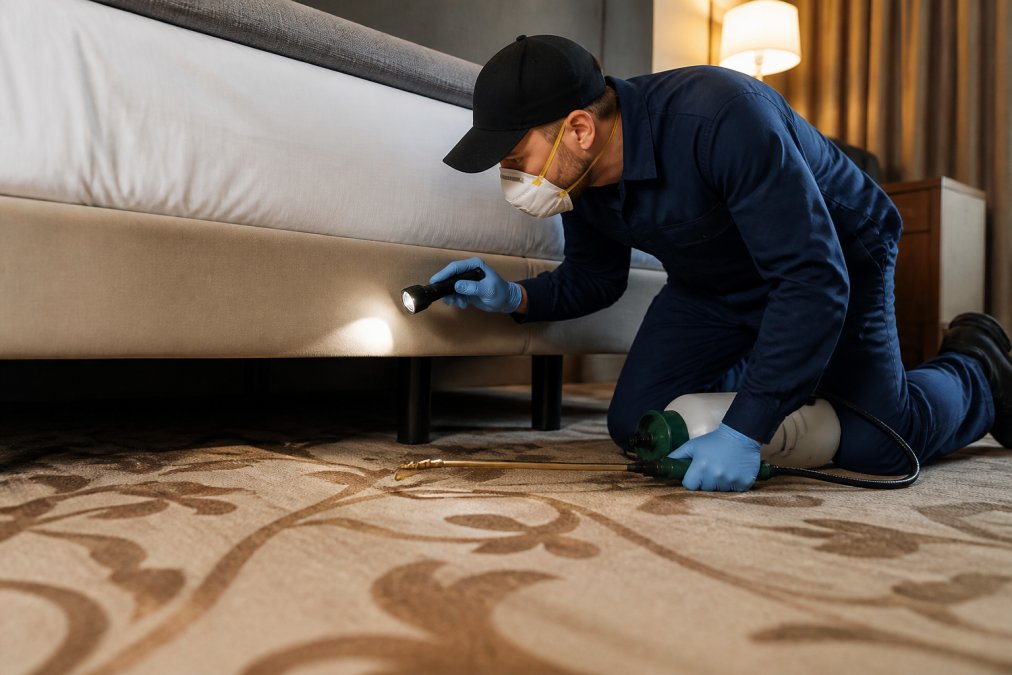
The methods themselves are ordinary. The scheduling and the presentation are what make them invisible. A technician in an unmarked vehicle, working in a plain uniform, is indistinguishable from any other contractor on site.
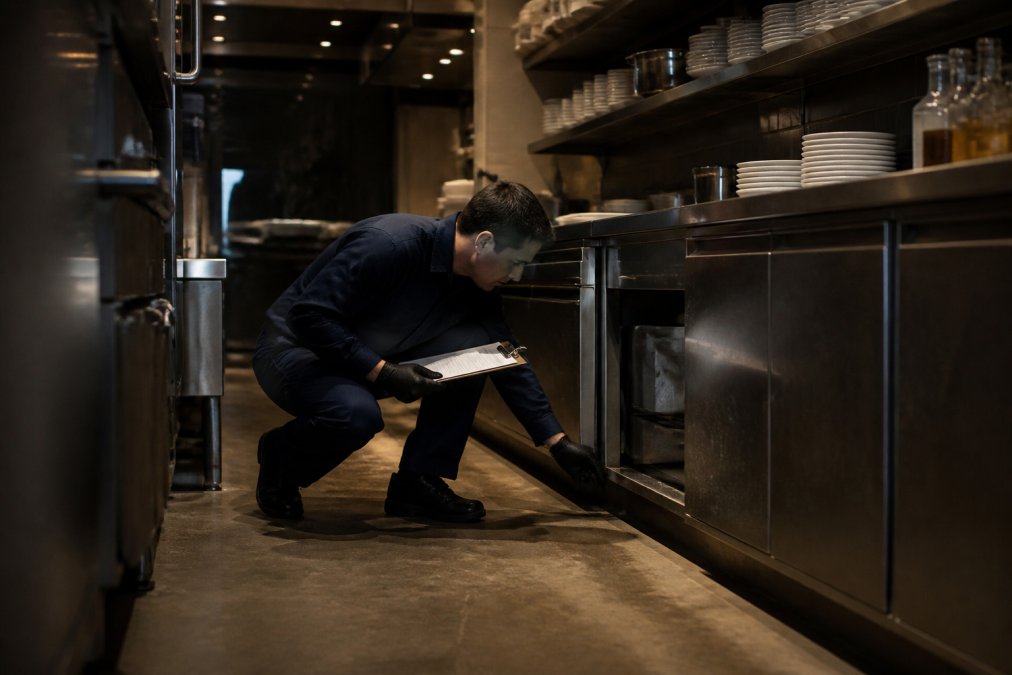
Treatment choices follow the same logic. Gels, tamper-resistant bait stations and targeted proofing work quietly in service areas. Broad spraying in guest-facing spaces is rarely necessary and rarely wise.
Out-of-Hours Scheduling and Unmarked Vehicles
Book treatments before service or after close, and route staff through back-of-house entrances only. Guests should never see equipment, and they should never see a van with pest control written on the side.
Commercial Pest Control Audit Preparation: What Inspectors Look For
Commercial pest control audit preparation comes down to documentation. Inspectors are not only checking whether pests are present. They are checking whether you would know if they were. A clean kitchen with no records is a bigger problem than a minor issue with a clear paper trail.
Keep these ready before any visit:
| What Inspectors Check | What They Want to See | How Often to Review |
|---|---|---|
| Monitoring records | Dated logs, signed and current | Monthly |
| Treatment reports | Contractor visits with findings | After every visit |
| Proofing condition | No gaps at doors, pipes, voids | Quarterly |
| Staff knowledge | Team can describe reporting process | On induction |
| Waste and deliveries | Covered bins, sealed stock | Weekly |
A contractor who documents properly is worth more than one who simply turns up. Our team works to a seven-day schedule.
Choosing a Discreet Pest Control Provider: A Checklist
Ask these before you sign anything:
- Are technicians qualified to at least RSPH Level 2?
- Can they work outside opening hours without disrupting service?
- Do they arrive in unmarked vehicles and plain uniform?
- Will they investigate the source, not just treat the symptom?
- Are they members of a recognised trade association such as the NPTA?
- Are they registered with a competent authority scheme such as BASIS PROMPT?
- Is the business fully insured?
- Do they provide written reports suitable for inspection?
The Food Standards Agency guidance on managing food safety is a useful reference when you brief staff on what records to keep.
Common Mistakes Hospitality Venues Make With Pest Control
Treating the sighting instead of the cause is the mistake that costs the most. The same entry point produces the same problem every few months, and each visit is billed as a new job.
The second is silence. Staff who fear blame will hide sightings, and you cannot manage what nobody reports.
The third is choosing on price alone. A cheaper contractor who documents poorly leaves you exposed at inspection, and that exposure is far more expensive than the difference in the invoice.
Conclusion
Pest control in hospitality is a reputational risk you manage continuously, not a problem you solve once. ProPest Oxford Ltd works with venues across Oxfordshire and East Sussex on prevention, monitoring and confidential treatment, backed by RSPH Level 2 qualified technicians, NPTA membership and BASIS PROMPT registration. If your current provider only turns up when something goes wrong, it is worth a second opinion. Book a service with ProPest Oxford Ltd and get a monitoring routine that keeps your guests unaware and your records inspection-ready.
Frequently Asked Questions
How do you maintain guest privacy during pest control treatments?
Discreet pest control for hospitality means working around your schedule, not the other way round. Treatments happen before opening, after closing, or in low-traffic zones while guests are elsewhere. Technicians arrive in unmarked vehicles, wear plain uniforms, and move through service corridors rather than guest areas. ProPest Oxford Ltd plans each visit around your occupancy calendar, so rooms and public spaces stay presentable throughout.
What are the legal requirements for pest control in hospitality businesses?
Under the Food Safety Act 1990 and Food Hygiene Regulations, food businesses must maintain premises free from pests and keep documented pest control records. Environmental Health officers can inspect at any time. A professional contract with scheduled monitoring, written reports, and treatment logs gives you the evidence trail inspectors expect. Working with a provider that follows integrated pest management for hotels keeps your paperwork and your premises compliant.
How often should hospitality venues schedule professional pest inspections?
Most hotels, restaurants, and care homes benefit from monthly monitoring visits, with quarterly deep inspections. High-risk areas like commercial kitchens, bin stores, and laundry rooms may need fortnightly checks during warmer months. If you have previously had an infestation, more frequent visits help confirm the problem is resolved. Your provider should adjust the schedule based on your building, location, and pest pressure rather than applying a fixed template.
What should I do if a guest reports seeing a pest?
Stay calm, apologise sincerely, and move the guest to another room if possible. Log the sighting immediately with time, location, and description. Contact your pest control provider the same day so they can inspect before evidence is disturbed. Do not attempt DIY sprays, which can scatter insects and make tracing the source harder. A documented, fast response shows due diligence and protects both the guest relationship and your audit trail.