 How-to
How to Stop Wasps Returning to the Same Spot
Last Updated: November 10, 2026
Quick Summary
To stop wasps returning, remove the old nest, seal the gaps it used, and clear anything that draws them in, ideally before the next season starts. Wasps often reuse sheltered spots because scent trails and dry, dark voids attract new queens. Cleaning and sealing the area removes that pull.
- Old nests are not reused, but the gap they used can attract new queens.
- Seal soffits, eaves, air bricks and vents with suitable exterior materials.
- Clean porous surfaces to remove scent trails before sealing the gap.
- Keep bins closed, rinse recycling and clear fallen fruit to remove food sources.
- Call a professional for active nests, hard-to-reach entry points or repeat problems.
Table of Contents
- Why Wasps Keep Returning to the Same Spot
- What You Will Need Before Starting
- How to Seal Wasp Entry Points Around Your Property
- Removing Attractants and Neutralising Pheromone Trails
- Natural Wasp Deterrents for Gardens and What Actually Works
- Wasp Nest Removal Cost UK and When to Call a Professional
- Seasonal Prevention Timeline for Spring and Summer
- Booking a Professional Wasp Prevention Visit with ProPest Oxford Ltd
- Frequently Asked Questions
Wasps that keep coming back to the same spot are frustrating, and wasps returning to a site is usually not as mysterious as it seems. This guide from ProPest Oxford Ltd explains why it happens and what you can do to stop it. The short answer is that you need to deal with the old nest, seal the gaps it used, and remove anything that draws wasps in, and you need to do it before the next season starts.
Why Wasps Keep Returning to the Same Spot
Wasps often return to a location they have used before, even when the original nest has gone. Rentokil says wasps never reuse an old nest, but removing it can make it possible to seal the gap and reduce the chance that a new queen selects the same void the following spring Rentokil guide to wasp dos and don'ts. That distinction matters, because it shapes what you need to do.
Many homeowners find the same sheltered gap gets chosen again year after year, with wasps returning to it each season. The gap is usually dry, dark and out of the weather, which is exactly what a new queen looks for.
Nest site fidelity and the role of pheromones
Wasps are believed to leave scent trails that can help other wasps find good nesting spots, which is one reason a spot may attract wasps again after the nest has been removed.
- Scent marks can remain on surfaces for a while after a nest is gone
- Clean and seal the area so the trail does not lead new wasps back
- Address the physical gap, not just the smell, or the spot stays attractive
Returning wasps versus a new colony
It helps to know which problem you have. An old nest is not reused, so wasps you see at a familiar spot are usually new queens or workers exploring a good location. Treating them as the same colony leads to wasted effort. Focus on making the site unattractive and blocked off, rather than repeatedly spraying the same spot.
What You Will Need Before Starting
Gather these items before you begin, so you can finish the job in one session:
- A sturdy ladder and someone to hold it
- Exterior-grade silicone or polyurethane sealant
- Fine mesh screening or wire wool for larger gaps
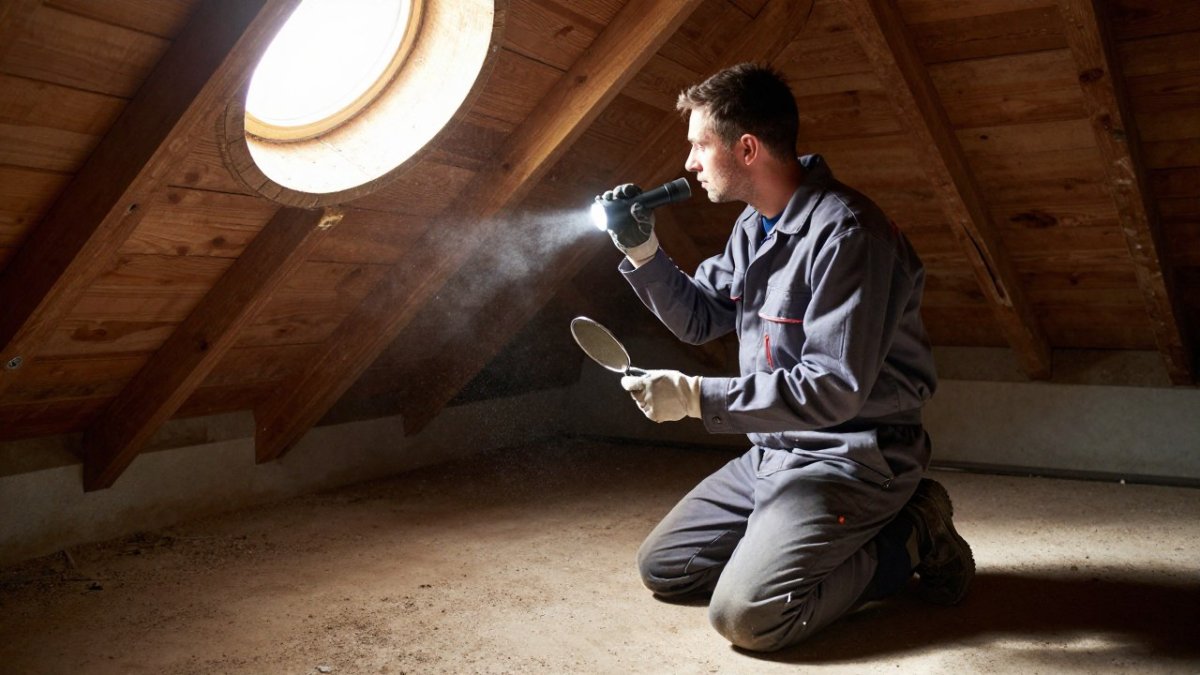
- A torch to check dark voids
- Gloves and eye protection
- A cloth and mild detergent to wipe down the area
Never disturb an active nest. If you are not sure whether a nest is still in use, leave it alone and call a professional.
How to Seal Wasp Entry Points Around Your Property
Sealing gaps is an important long-term step, because once the gaps are closed, new queens have fewer places to start a colony. Work methodically around the outside of the building and note each gap you find.
Checking soffits, eaves and wall cavities
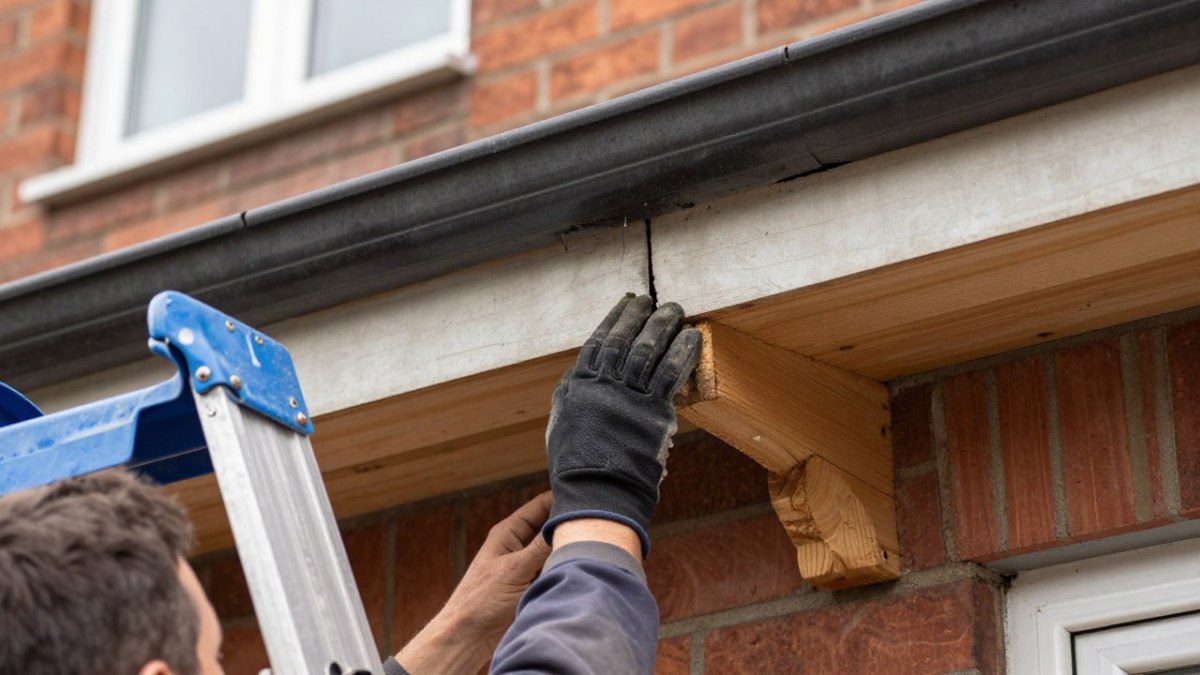
Start at the highest points and work down. Wasps favour sheltered spaces that are easy to enter and hard to reach.
- Check the soffits and fascia boards for small holes or loose panels
- Look under the eaves where timber and brickwork meet
- Inspect air bricks, vents and gaps around pipes and cables
- Shine a torch into any cavity and listen for activity
- Mark each gap so you can seal them all in one go
Choosing materials for structural proofing
Match the material to the gap. A large void needs a different fix from a small crack.
- Small cracks: exterior silicone sealant
- Vents and air bricks: fine mesh screening, so air still flows
- Larger holes: wire wool packed in, then sealed over
- Timber gaps: filler suited to outdoor use
Avoid sealing anything while wasps are actively using it. Wait until you are sure the area is empty.
Removing Attractants and Neutralising Pheromone Trails
Food and water draw wasps around the home, and a spot with a steady supply is more likely to become a repeat target. Removing these attractants makes the area far less appealing.
- Keep bins closed with tight lids and rinse recycling before it goes out
- Clear up fallen fruit in the garden and pick up windfalls from apple and pear trees weekly
- Cover sugary drinks and food outdoors, and wipe down picnic tables after use
- Fix dripping taps and leaking outdoor containers
- Move pet food bowls indoors between meals
Why pheromones persist and how to neutralise them
Wasps mark favoured nest sites with chemical cues, and these cues can remain on porous surfaces long after a nest has gone. Simply wiping with water may not be enough, because the compounds can bind to timber, brick and render. A two-stage clean can help:
- Degrease first. Wash the area with a sugar-soap solution or a mild alkaline cleaner to lift organic residue. Work from the top down and rinse with clean water.
- Neutralise second. Apply an enzyme-based cleaner designed for pet odours or a diluted white vinegar solution (roughly one part vinegar to four parts water) to the porous surfaces. Leave it to dwell for the time stated on the product, then rinse and allow to dry fully before sealing.
Watch out: do not seal over a damp or dirty surface, because trapped moisture and residue can degrade the sealant and leave the scent cue intact beneath it.
What to clean and what to replace
- Timber and render: scrub, neutralise, dry, then seal
- Cavity walls: vacuum out loose debris before treating the entry gap
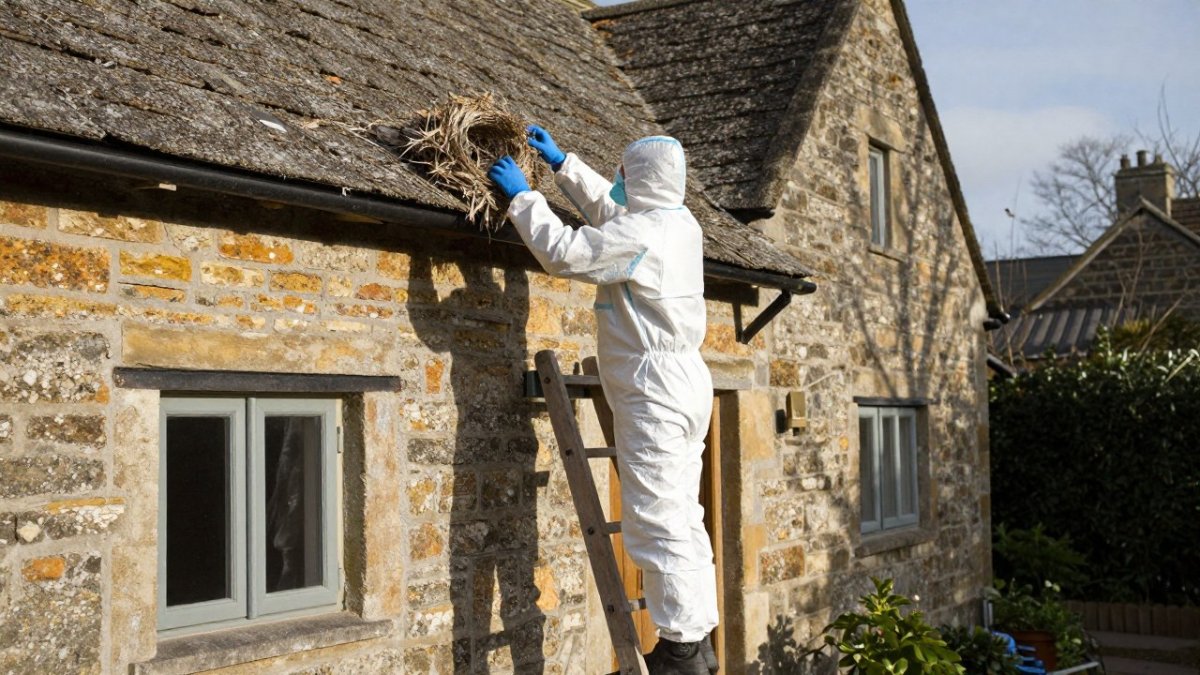
- Old nest material: bag it and dispose of it, do not compost it near the property
- Soft furnishings in sheds: launder or replace if a nest has been in contact
Once the area is clean and dry, seal the gap so the scent cannot lead wasps back in. Cleaning without sealing only buys time; sealing without cleaning leaves the cue in place for the next queen.
Natural Wasp Deterrents for Gardens and What Actually Works
Some people look for natural deterrents first, and no natural option should be treated as a permanent fix. Use any such measures as a supplement to sealing and cleaning, not as a replacement.
A practical approach is to plant wasp-unfriendly herbs near seating areas and keep the garden tidy. Where a shed or outbuilding is involved, check for gaps first. If you are dealing with a nest in a garden shed, see our guide on how to remove a wasp nest from your garden shed for step-by-step help.
Wasp Nest Removal Cost UK and When to Call a Professional
If a nest is active, or you cannot reach the entry point safely, call a professional. Pricing depends on the size of the nest, its location and how much work the job needs, so the cost varies from one job to the next. For current prices and a quote for your situation, see our wasp nest removal service in Oxford or check professional wasp nest removal costs in East Sussex.
Call a professional when:
- The nest is large or in a hard-to-reach place
- Wasps are stinging or the nest is near people or pets
- You have a known allergy to stings
- The problem keeps returning despite sealing
If you have pets at home, read about safe wasp nest removal for homes with pets before deciding whether to tackle it yourself.
Seasonal Prevention Timeline for Spring and Summer
Timing matters. Early action stops a new queen from settling in the first place.
- Late winter to early spring: seal gaps before queens start looking for nest sites
- Spring: check soffits, eaves and vents, and clean any old scent trails
- Summer: keep bins closed, clear food sources and inspect for new activity
- Late summer and autumn: note any problem spots so you can fix them before winter
Checking each season gives you the best chance of stopping repeat visits. For help with a gap that is already in use, see how to handle wasp and bee nest removal safely.
Timing matters, so the table below sets out when to act through the year.
| Season | Action | Why it matters |
|---|---|---|
| Late winter to early spring | Seal gaps | Before queens look for nest sites |
| Spring | Check soffits, eaves and vents | Clean any old scent trails |
| Summer | Keep bins closed, clear food sources | Stops new activity building up |
| Late summer and autumn | Note problem spots | Fix them before winter |
Booking a Professional Wasp Prevention Visit with ProPest Oxford Ltd
If wasps keep returning despite your efforts, a professional inspection can find the source. At ProPest Oxford Ltd, our technicians focus on identifying the source of an infestation rather than just treating the symptoms. Our team is RSPH Level 2 qualified, and we offer same-day or next-day appointments, seven days a week.
One customer described the team as very friendly and quick to respond, and said the work was excellent and good value. You can book a service to have a technician look at your property.
Frequently Asked Questions
Why do wasps return to the same spot every year?
Wasps show nest site fidelity: they are drawn back to sheltered voids that previously worked, often reinforced by pheromone trails left by earlier colonies. Wasps do not reuse an old nest, but the same sheltered gap can be selected again for a new nest. Sealing the gap after removing the old nest reduces the chance of a new queen choosing that void the following spring.
Do wasps reuse old nests?
Wasps do not reuse an old nest. A new queen will build a fresh nest, but she may choose the same sheltered gap, such as a loft void, wall cavity or soffit, because it offers protection and proven access. Removing the old nest and sealing its entry point is the most effective way to stop a repeat colony from forming in that location.
When is the best time to remove a wasp nest to prevent return?
Remove a nest after activity has stopped, typically in late autumn once the colony has died off and only the queen has left to hibernate. Treating an active nest in summer is hazardous and can provoke stings. After removal, seal the entry point before the following spring, when new queens start looking for nesting sites. Professional removal is advisable if the nest is high, inside a wall or near people.
Are DIY wasp deterrents effective for long-term prevention?
DIY deterrents are unlikely to provide lasting protection, as a determined queen may still use a sheltered gap. Long-term prevention depends on structural proofing, removing food sources such as open bins and fallen fruit, and sealing cavities. If wasps keep returning despite these measures, a professional inspection can identify the source rather than just the symptoms.