 how-to
Safe Wasp Nest Removal for Homes With Pets
Quick Summary
Safe wasp nest removal for homes with pets means planning the job around your animals before treatment begins. Move pets to a closed room with water and a bed, keep them inside until the technician confirms the area is safe, and tell the technician about your pets' species and health conditions.
- Move pets to a safe room with a closed door before treatment starts
- Provide water, food and a bed so animals stay comfortable indoors
- Keep pets inside until the technician confirms the treated area is safe
- Call a professional if the nest is near doors, windows or pet routes
- Contact a vet immediately if a pet may have eaten a poisoned wasp
Table of Contents
- Why Pets Make Wasp Nest Removal Different
- Identifying a Wasp Nest and Where Wasps Build
- Step-by-Step: Preparing Your Home and Pets Before Treatment
- When to Call a Professional Wasp Nest Removal Service
- How Long to Keep Pets Away After Pest Treatment
- Recognising Wasp Sting Symptoms in Dogs and Cats
- Stopping Wasps Returning to the Same Spot
- Booking Safe Wasp Nest Removal for Your Home
- Frequently Asked Questions
Why Pets Make Wasp Nest Removal Different
Last Updated: 7 November 2026
Wasp nests are a common problem in UK gardens, sheds and loft spaces. When a home has pets, removing one is not just about getting rid of the insects.
Pets behave differently from people. A dog may sniff at a nest entrance, chase a wasp, or dig at the soil near a nest in the ground. A cat may climb onto a shed roof or stalk insects near an eave.
This is why safe wasp nest removal for homes with pets needs more planning. Read how we approach pest control safely around children and pets.
Key differences to keep in mind:
- Dogs are more likely to investigate and disturb a nest
- Cats often climb, which can bring them close to eaves and roof spaces
- Small animals can be stung in the mouth or face after sniffing a nest
- Treated surfaces may stay unsafe for pets for a period of time
Identifying a Wasp Nest and Where Wasps Build
Knowing what kind of nest you have helps you decide how to handle it. Common UK wasps, including the German wasp and common wasp, usually build paper nests that look grey or light brown and feel papery to the touch.
Wasps choose sheltered spots that are out of the weather. Common locations include:
- Loft spaces and roof voids
- Wall cavities and gaps under roof tiles
- Eaves, soffits and fascia boards
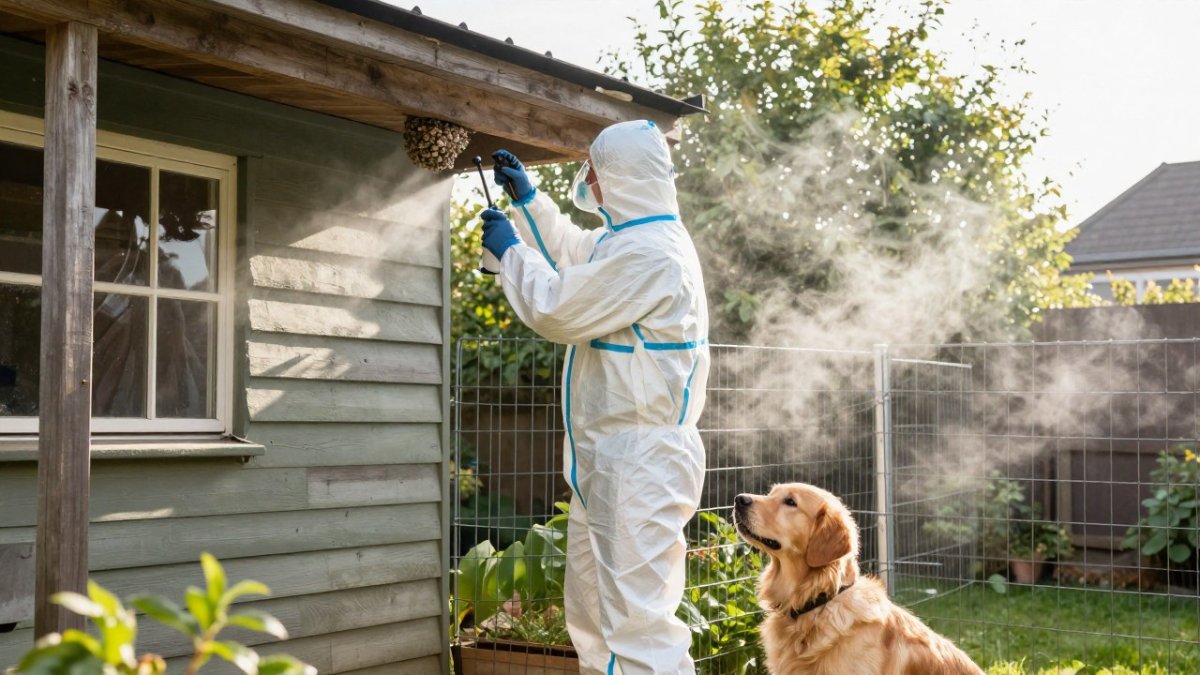
- Garden sheds and garages
- Holes in the ground, often under lawns or patio edges
- Dense shrubs and trees
A nest in the ground can look like a small, crumbly mound. Be careful with these. Dogs in particular often dig at them. If you see a steady flow of wasps going in and out of one spot, a nest is likely nearby.
Watch from a safe distance. Wasp activity is usually busiest on warm, dry days. If the nest is in a shed, see our guide to removing a wasp nest from your garden shed.
Step-by-Step: Preparing Your Home and Pets Before Treatment
Good preparation makes treatment safer for everyone. Follow these steps before a technician arrives or before you attempt any control yourself.
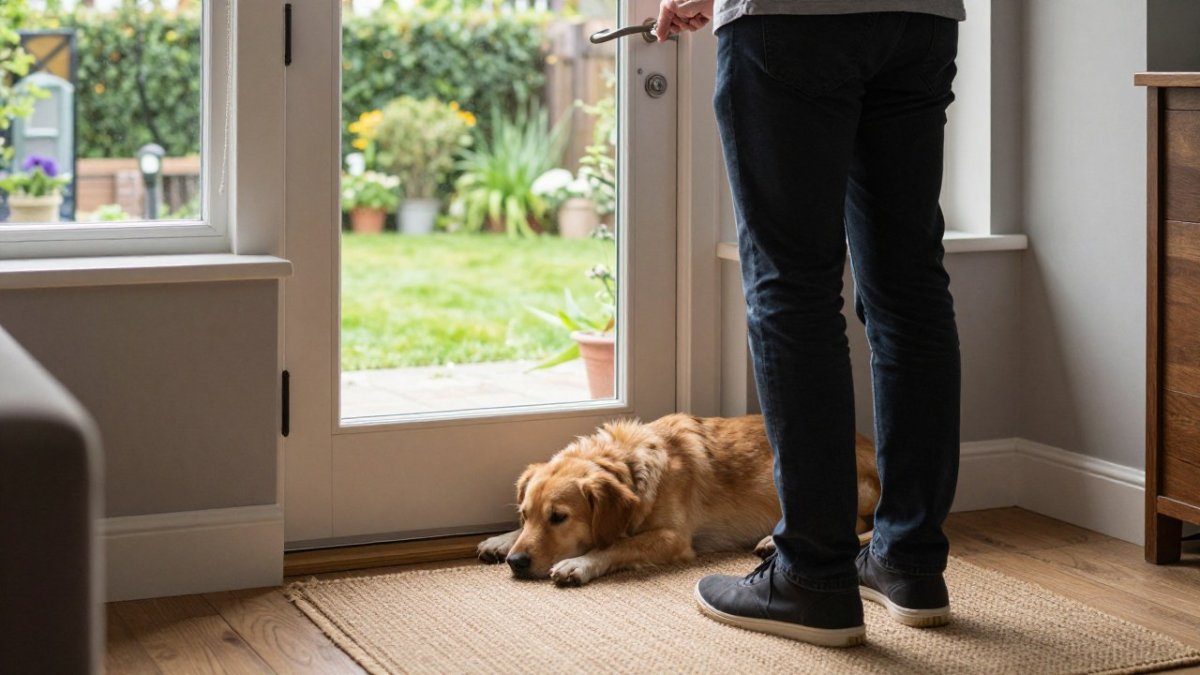
- Move pets to a safe room. Choose a room with a closed door, away from the treatment area. A bedroom or utility room works well.
- Provide water, food and a bed. Animals should be comfortable for the length of time they are kept inside.
- Clear the area around the nest. Remove toys, bowls and garden furniture that a pet might use.
- Keep children inside. Make sure children stay away from the work area too.
- Close windows and vents near the nest. This stops insecticide drifting into living spaces.
- Tell your technician about your pets. Mention the species, size and any health conditions, so they can plan the job.
A common mistake is letting a dog out into the garden "just for a minute" during treatment. Even a short exposure can cause a sting or contact with residue on the grass. Keep pets inside until the work is finished and the area has been cleared by the technician. For more detail, read our guide on handling wasp and bee nest removal safely.
The steps below summarise how to prepare your home and pets before treatment begins.
| Step | What to do | Note |
|---|---|---|
| 1 | Move pets to a safe room | Choose a room with a closed door |
| 2 | Provide water, food and a bed | Keep animals comfortable throughout |
| 3 | Clear the area around the nest | Remove toys, bowls and furniture |
| 4 | Keep children inside | Stay away from the work area |
| 5 | Close windows and vents near the nest | Stops insecticide drifting indoors |
| 6 | Tell your technician about your pets | Share species, size and health conditions |
When to Call a Professional Wasp Nest Removal Service
Some nests can be left alone. A nest high in a tree, well away from doors, windows, play areas and pet routes, with wasps that are not bothering anyone, is often best observed and left until the colony dies off in late autumn. The decision changes when the nest is close to where people or pets spend time, when activity is heavy, or when anyone in the household has a sting allergy. If you want to find a local wasp nest removal service in Oxford, the options are listed on our site.
Call a professional if any of the following apply:
- The nest is inside a wall cavity, loft, roof void or under a floor
- The nest is near a door, window, conservatory or child's play area
- You see a lot of wasp traffic, or the nest is large
- A pet has already been stung, or is repeatedly investigating the nest
- Someone in the household has a known allergy to stings
- You have tried a shop-bought product and the activity has continued
What a professional treatment actually involves
Treatment usually takes under an hour for a single accessible nest. Activity at the entrance often increases briefly after treatment as returning wasps contact the product, then falls away over the following days. A follow-up visit is sometimes needed if activity persists after about a week.
What affects the cost
The cost of professional wasp nest removal depends on the job. The main factors are:
- Accessibility: a nest at ground level or on a shed is quicker to reach than one high in a gable or deep in a wall cavity
- Location: internal nests in lofts or voids take longer and may need more preparation
- Height and access equipment: ladders, towers or roof access add time and risk
- Number of nests: some properties have more than one
- Follow-up: a return visit may be included or charged separately
Pricing depends on the specifics of the job, so contact ProPest Oxford Ltd directly or visit their website for a current quote. You can check typical professional wasp nest removal costs in East Sussex before getting in touch.
Why the pet angle changes the plan
Our technicians hold minimum RSPH Level 2 qualifications and are associated with NPTA and BASIS PROMPT. We offer same-day or next-day appointments and work seven days a week.
How Long to Keep Pets Away After Pest Treatment
There is no single safe return time that applies to every job. The period depends on the product used, the formulation, the surface treated and how quickly it dries or breaks down. Follow the specific return time given by your technician, which should override any general rule of thumb.
The product label and the technician's advice matter more than a generic 'wait a few hours' figure.
As a general guide, pets should be kept away until:
- The treated surface is visibly dry
- The technician has confirmed the area is safe to re-enter
- Any dust around the nest entrance has settled and been cleared where accessible
- Fallen wasps have been removed from the ground
Keep pets off the treated area until the technician confirms it is safe. Do not shorten the window because the garden looks dry.
What to do if a pet contacts a product or eats a poisoned insect
Wasps that have been treated may fall to the ground and remain attractive to dogs and cats. A pet that eats a poisoned wasp or contacts residue can show signs within minutes to hours. Signs to watch for include drooling, vomiting, tremors, weakness, dilated pupils, increased heart rate and, in severe cases, collapse or seizures.
If you suspect exposure:
- Move the pet away from the area and prevent further contact.
- Note the product name and active ingredient from the label or the technician's paperwork.
- Contact your vet immediately, or your nearest out-of-hours practice if it is evening or weekend.
- Do not induce vomiting or give home remedies unless your vet instructs you to.
- Take the product label or a photo of it with you.
Your vet can advise you on the next steps. Do not wait for symptoms to worsen before calling.
Practical aftercare for the following days
- Keep pets off treated patios, path edges and shed floors until the technician's stated return time has passed
- Sweep up fallen wasps and dispose of them where pets cannot reach
- Wash outdoor bowls, toys and bedding that may have been in the treatment zone
- Watch for unusual behaviour for 24 to 48 hours after any possible exposure
- Store any leftover product out of reach and never decant it into unlabelled containers
If in doubt, extend the exclusion period. A few extra hours indoors is a small cost compared with a vet visit.
Recognising Wasp Sting Symptoms in Dogs and Cats
Stings can happen even with careful planning. Common signs in dogs and cats include:
- Sudden swelling of the face, muzzle, lips or paws
- Excessive pawing at the mouth or face
- Drooling, vomiting or reluctance to eat
- Hives, redness or tenderness at the sting site
- Difficulty breathing, collapse or pale gums
Swelling in the mouth or throat, or any breathing difficulty, is an emergency. Contact your vet straight away. For milder signs, call your vet for advice, especially if your pet is young, elderly or has a known health condition.
Do not give human medication to a pet without veterinary advice. Keep your vet's number and nearest out-of-hours clinic to hand.
Stopping Wasps Returning to the Same Spot
Once a nest is removed, wasps may come back if the same entry point or attractant remains. To reduce the chance of a repeat visit:
- Seal gaps around eaves, soffits and roof tiles
- Fix holes in sheds, wall cavities and loft vents
- Clear up fallen fruit and sugary spills in the garden
- Keep bins closed and clean
- Check the same spot again in the following weeks
Prevention is most effective when it is done before the next nesting season.
Booking Safe Wasp Nest Removal for Your Home
If you have pets and a wasp nest, the safest next step is to get professional advice early. Book a visit so a technician can assess the nest, plan the treatment around your animals and explain exactly what to do before and after the work.
Visit the ProPest Oxford Ltd website to check our services and request a quote.
Frequently Asked Questions
How can I get a wasp nest removed safely if I have pets?
Keep pets indoors and well away from the nest area during any treatment, and ask the technician in advance which products they will use and how long the area must stay closed off. A professional who knows you have pets can plan the visit, choose the most suitable method and give you clear instructions on access and aftercare. Never attempt to disturb a nest yourself while animals are nearby, as wasps defend nests aggressively.
How long should pets stay away after a wasp nest has been treated?
Keep pets away from the treated area for as long as the technician advises, which is commonly until any product has dried and the area has been cleared. Follow the specific guidance given for the product used. Check treated areas before letting animals back in, and keep them out of nearby sheds, lofts or wall gaps until the technician confirms it is safe.
What should I do if my pet is stung by a wasp?
Watch for swelling around the mouth or face, vomiting, restlessness, pale gums or difficulty breathing. Remove the sting if you can see it, and contact your vet promptly, particularly if the animal has a known allergy or the symptoms are severe. Do not give human painkillers unless a vet has told you to, as many are toxic to dogs and cats.
When should I call a professional about a wasp nest?
Call a professional if the nest is inside the house, in a loft, wall cavity or other hard-to-reach place, if it is large, or if anyone in the household has a known wasp allergy. Professionals with recognised qualifications can assess the nest, treat it safely and advise on keeping your pets protected throughout the process.