 blog
Top Five Signs of Fleas in a Carpeted Home
Table of Contents
- Top Five Signs of Fleas in a Carpeted Home
- Sign 1: Pets That Won't Stop Scratching
- Sign 2: Tiny Bites Around Your Ankles
- Sign 3: Flea Dirt in Carpet Fibres
- Sign 4: Salt-and-Pepper Specks and Live Jumpers
- Sign 5: A Musty, Irritating Smell in Rooms
- How to Check Carpet for Fleas in Ten Minutes
- Flea Dirt in Carpet: The Wet Paper Test That Confirms It
- How Long Can Fleas Live in Carpet?
- How to Get Rid of Fleas in Carpet
- When DIY Stops Working and You Need a Professional
- Frequently Asked Questions
Last Updated: October 18, 2026
Top Five Signs of Fleas in a Carpeted Home
Fleas are small, wingless insects that feed on the blood of pets and people, and a carpet gives them somewhere dark and warm to breed. At ProPest Oxford Ltd, we are called to homes where the first signs of fleas were missed for weeks. That delay is what turns a small problem into a full-blown infestation.
Carpet is the perfect hiding place. Flea eggs drop off your pet and settle deep in the pile. Larvae curl into the fibres. Adults wait there for a host to walk past. You will not see most of this activity, which is why the signs below matter so much.
Below, we walk through the five signs of fleas we see most often, how to check your carpet in ten minutes, and what to do next. The earlier you spot them, the easier the problem is to clear.
Sign 1: Pets That Won't Stop Scratching
Constant scratching is usually the first sign of fleas in a carpeted home. A flea bite itches, so pets scratch, nibble and bite at their skin. Look at the base of the tail, the belly and behind the ears, where fleas gather.
Other clues on your pet:
- Small red bumps or scabs on the skin
- Hair loss in patches from scratching
- Restless behaviour and broken sleep
- Dark specks in the fur, which are flea droppings
A common mistake is treating the pet and ignoring the carpet. Most fleas in an infested home live in the environment, not on the animal. If you only treat the pet, the carpet keeps feeding new fleas back onto it.
Sign 2: Tiny Bites Around Your Ankles
Bites on your lower legs are one of the clearest signs of fleas in the home. Fleas jump low, so they tend to bite around the ankles and shins. The bites are small, red and very itchy, often in clusters or lines.
These bites show up most in people who sit or stand on carpeted floors. If you notice new bites each morning, check where you have been sitting. A favourite armchair or a spot by the sofa is often the source.
Do not confuse flea bites with mosquito bites. Flea bites are usually smaller, grouped together, and centred on the lower leg. They also tend to appear indoors, not after time spent outside.
Sign 3: Flea Dirt in Carpet Fibres
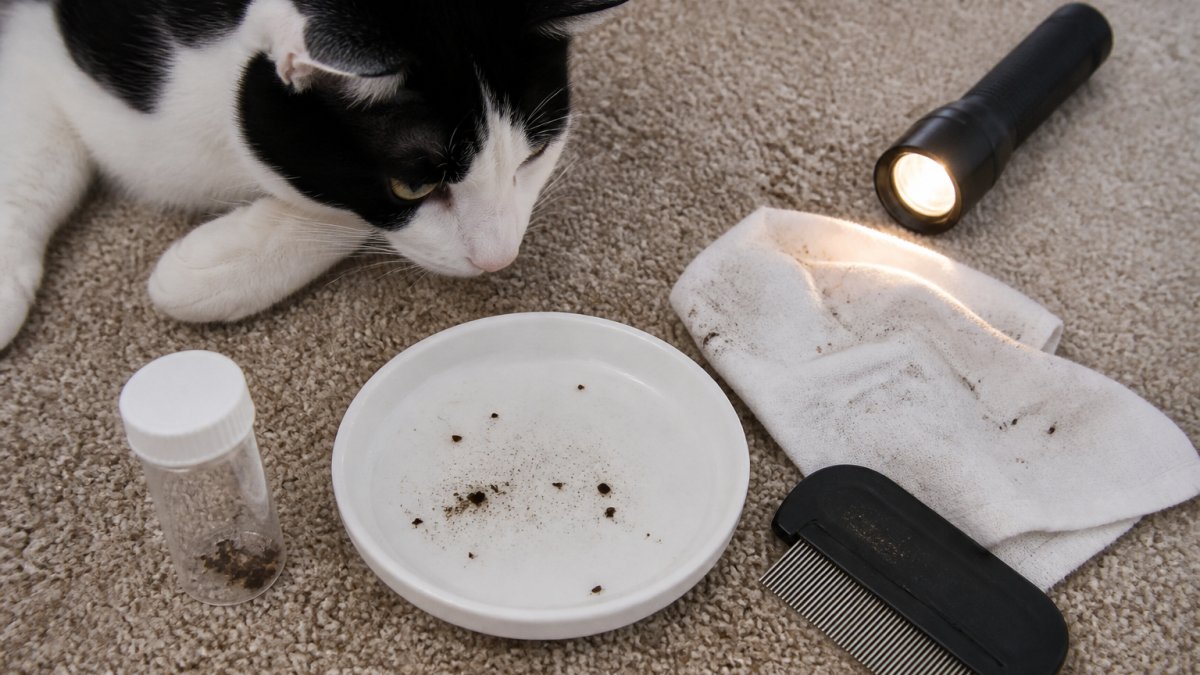
Flea dirt is the dried droppings of adult fleas, and it collects in carpet fibres near where pets rest. It looks like coarse black pepper or fine coffee grounds. You will find it along skirting boards, in carpet seams and under furniture.
To check, run a fine-toothed comb through the carpet and tap the debris onto a white sheet of paper. Dark specks that crumble easily are likely flea dirt. This is different from ordinary dust, which is lighter and more uniform.
Flea dirt in carpet is a strong warning. Where there is dirt, there are adult fleas feeding nearby. Finding it means the infestation has been active for a while.
Sign 4: Salt-and-Pepper Specks and Live Jumpers
Small salt-and-pepper specks in the carpet are a classic sign of fleas. The white specks are flea eggs and the dark specks are droppings. Together they look like a light dusting of salt and pepper.
Live fleas are the most obvious sign of all. They are reddish-brown, about 2 to 3 millimetres long, and they jump rather than fly. You may spot them when you vacuum, when they leap onto a white sock, or when your pet shakes.
If you see live fleas during the day, the population is already established. Adult fleas are only a small part of the total. The eggs, larvae and pupae hidden in the carpet make up the rest.
Sign 5: A Musty, Irritating Smell in Rooms
A musty smell in a carpeted room can point to fleas, especially alongside other signs. Heavy flea activity, combined with pet accidents and flea dirt, leaves an earthy, stale odour in the fibres. The smell tends to be strongest in rooms where pets sleep.
Flea bites can also cause an allergic reaction in some people and pets. This shows as extra itching, redness or small rashes. If the irritation is worse in one room, that room deserves a close check.
Smell alone is not proof. Treat it as a prompt to inspect the carpet, your pet and your pet's bedding together. When several signs line up, act quickly.
How to Check Carpet for Fleas in Ten Minutes
You can check your carpet for fleas in about ten minutes with a few household items. You need a torch, a fine-toothed comb, a white sheet of paper and a pair of white socks.
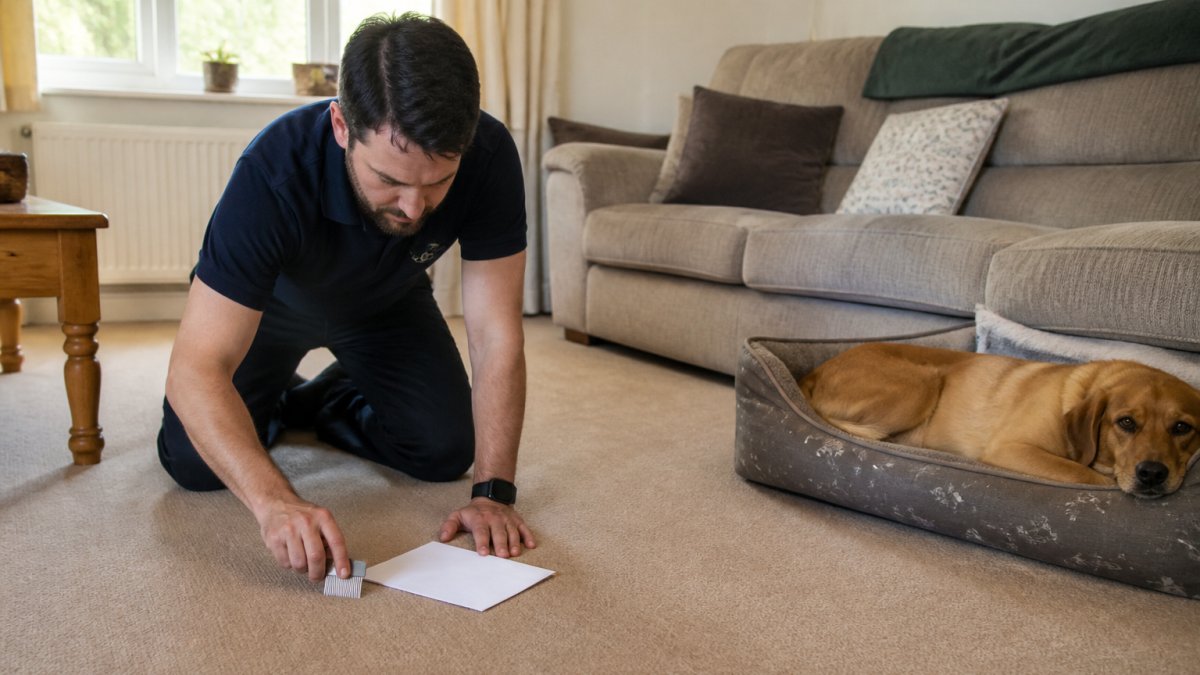
Follow these steps:
- Pull on white socks and walk slowly across the carpet. Fleas jump onto pale fabric, so you will see them.
- Shine the torch along skirting boards and carpet seams. Look for movement and dark specks.
- Comb the carpet near pet beds and sofas. Tap the debris onto white paper.
- Check your pet over a white surface. Look for live fleas and dark dirt.
- Note any bites, scratching or smells in each room.
Write down what you find and where. This record helps you track the problem and gives a professional useful detail if you call one in.
Flea Dirt in Carpet: The Wet Paper Test That Confirms It
The wet paper test confirms whether dark specks are flea dirt or just household grime. Flea dirt is digested blood, so it turns red-brown when wet.
Here is how to run it:
- Collect a few dark specks on a white sheet of paper or tissue.
- Add a drop of water to each speck.
- Wait a minute, then check the colour.
If the specks bleed a reddish-brown stain, it is flea dirt. If they stay black or grey and do not change, it is likely ordinary dirt. This simple test saves guesswork and tells you whether to treat the carpet.
How Long Can Fleas Live in Carpet?
Fleas can live in carpet for several months without a host. Adults survive for a few weeks, but pupae in their cocoons can wait far longer, emerging when they sense warmth and movement. That is why an empty room can still produce fleas when someone walks in.
The life cycle has four stages: egg, larva, pupa and adult. Warmth and humidity speed it up. Central heating keeps homes comfortable for fleas all year, so winter is no protection.
This is the part most people get wrong. Killing the adult fleas you can see does nothing to the eggs and pupae in the carpet. The cycle restarts within weeks unless the whole environment is treated.
How to Get Rid of Fleas in Carpet
Getting rid of fleas in carpet means treating the pet, the home and the garden at the same time. Skipping one leaves a reservoir that reinfests the rest.
A practical plan:
- Treat every pet in the home with a vet-recommended flea product, and keep it on schedule.
- Vacuum daily for at least two weeks, paying attention to edges, seams and under furniture.
- Wash pet bedding and throws at a hot temperature.
- Empty the vacuum canister or bag outside straight after each clean.
- Keep gardens and outbuildings tidy, since pets pick up fleas outdoors.
Vacuuming does more than remove dirt. It lifts eggs and larvae and triggers pupae to emerge, where treatment can reach them. Consistency matters more than any single deep clean.
When DIY Stops Working and You Need a Professional
DIY stops working when fleas keep returning after two or three weeks of thorough cleaning and pet treatment. At that point, the eggs and pupae in the carpet are outrunning your efforts, and repeat treatments waste time and money.
Call a professional when:
- You still see live fleas after two weeks of daily vacuuming
- Bites continue despite treating your pets
- The infestation covers several rooms or a large carpeted area
- You rent out the property and need a reliable, documented result
- You run a business and hygiene standards are at risk
ProPest Oxford Ltd identifies the source of an infestation rather than just the symptoms. Our technicians hold a minimum RSPH Level 2 qualification, and we are associated with the NPTA and BASIS PROMPT. We offer same-day or next-day appointments and work seven days a week.
You can read official guidance on flea control from the UK government's pest control guidance and pet health advice from the RSPCA's flea advice for pet owners. For product safety, always follow the Health and Safety Executive's guidance on using pesticides safely.
Frequently Asked Questions
Can fleas live in carpets without pets?
Yes. Adult fleas feed on pets or people, but the pupal stage can sit dormant in carpet fibres for months and emerge when warmth or vibration signals a host. If a previous occupant kept a cat or dog, or if foxes and rodents pass through a garden, newly hatched fleas can appear in a pet-free home. That is why the top five signs of fleas matter even without animals: bites around the ankles and flea dirt in the carpet are often the first clues.
What does flea dirt look like on carpet?
Flea dirt is adult flea faeces and looks like coarse black pepper scattered near skirting boards, under furniture and along the edges of carpet where pets sleep. To confirm it, place a few specks on damp white kitchen paper. Real flea dirt is digested blood, so it smears reddish-brown within about a minute. Grit and soil stay black or grey. If the smear is red, treat the carpet and your pet on the same day.
How long can fleas live in carpet before they die out?
Adults usually survive one to two weeks without a blood meal, but pupae inside their cocoons can wait months for a host to pass by. Central heating and a warm, occupied room shorten that wait considerably. Vacuuming every day for two weeks removes eggs, larvae and much of the dirt they feed on, but a heavy infestation often needs an insecticide treatment as well. Skipping either step is why problems return.
How do I get rid of fleas in carpet if treatments keep failing?
Reinfestation almost always comes from an untreated source: a pet without ongoing flea treatment, a cat that roams, or wildlife under a floorboard. Treat the pet with a vet-recommended product, wash bedding at 60°C, vacuum daily and dispose of the bag outside. If bites continue after two weeks, a qualified technician can identify the source and apply a residual treatment to the carpet, which is more reliable than repeated shop-bought foggers.
Fleas in carpet rarely clear on their own, and the longer you wait, the deeper the life cycle settles into the fibres. If you have spotted any of these signs of fleas in your home, ProPest Oxford Ltd can help. We offer same-day or next-day appointments, qualified technicians, and a focus on finding the source so the problem does not return. Book a service with ProPest Oxford Ltd and get your home back to feeling clean, safe and settled.