 how-to
Are Mice Dangerous to Babies? A Parent's Safety Guide
Table of Contents
- Are Mice Dangerous to Babies? What Parents Need to Know
- Mouse Droppings Health Risks Every Parent Should Understand
- Why Mice in a Baby's Room Demand Immediate Action
- How to Clean Mouse Droppings Safely Without Putting Your Family at Risk
- Keeping Mice Away from Babies: Prevention That Actually Works
- When to Call a Professional Pest Controller
- Conclusion
- Frequently Asked Questions
Last Updated: October 17, 2026
Are Mice Dangerous to Babies? What Parents Need to Know
If you are asking are mice dangerous to babies, yes, they can pose real health risks, and the danger is usually indirect rather than a bite. Mice in a home spread bacteria through their droppings, urine and saliva, and they can trigger allergic reactions and asthma in very young children. This guide from ProPest Oxford Ltd explains the specific risks, how to clean up safely, and how to keep mice away from your baby for good.
Here is the part most parents get wrong: the mouse itself is rarely the problem. The mess it leaves behind is.
Mouse droppings health risks are the main concern. A mouse can carry bacteria such as Salmonella and Listeria on its body and in its waste. Babies crawl on floors, put everything in their mouths, and have immune systems that are still developing. That combination makes them far more vulnerable than adults.
Below, we break down the real dangers, the safe way to clean, and the prevention steps that actually work.
Mouse Droppings Health Risks Every Parent Should Understand
Mouse droppings can spread harmful bacteria and viruses, and dried droppings are the worst offender. When mouse waste dries out, it turns to dust. Sweeping or vacuuming that dust sends it into the air, where a baby can breathe it in.
The main risks include:
- Bacterial infection from Salmonella and Listeria, which can cause sickness and diarrhoea
- Allergic reactions, especially in babies with existing sensitivities
- Asthma triggers, as mouse allergens in dust are a known irritant for young children
- Parasites such as fleas and mites that mice carry into the home
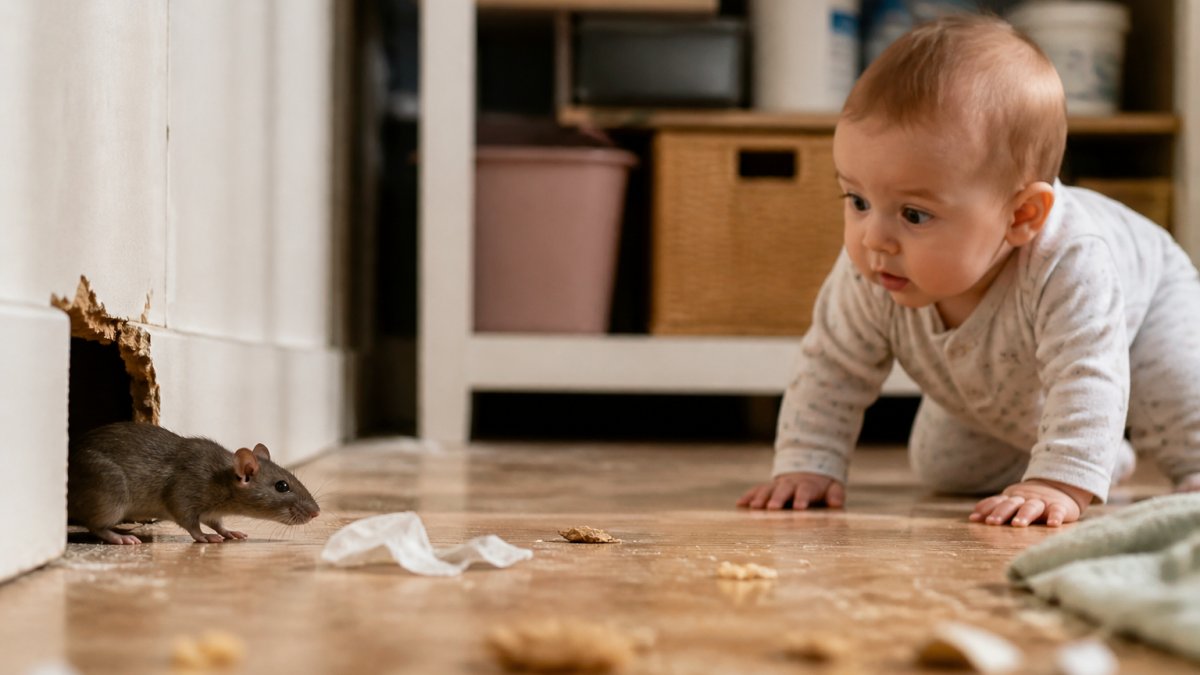
Babies are at higher risk because they spend time on the floor and explore with their mouths. A crawling baby is closer to the skirting boards, corners and cupboards where mice leave the most mess.
We treat droppings as a contamination issue, not just a cleaning job. That mindset change matters. If you would not let your baby play near raw food waste, treat mouse waste the same way.
The NHS guidance on preventing food poisoning is a useful reminder of how easily bacteria spread around a home. Good hygiene is your first line of defence.
Why Mice in a Baby's Room Demand Immediate Action
Mice in a baby's room need urgent attention because a nursery gives them everything they want: warmth, shelter, and quiet. A cot is soft, enclosed, and rarely disturbed during the day. That makes it an ideal nesting spot.
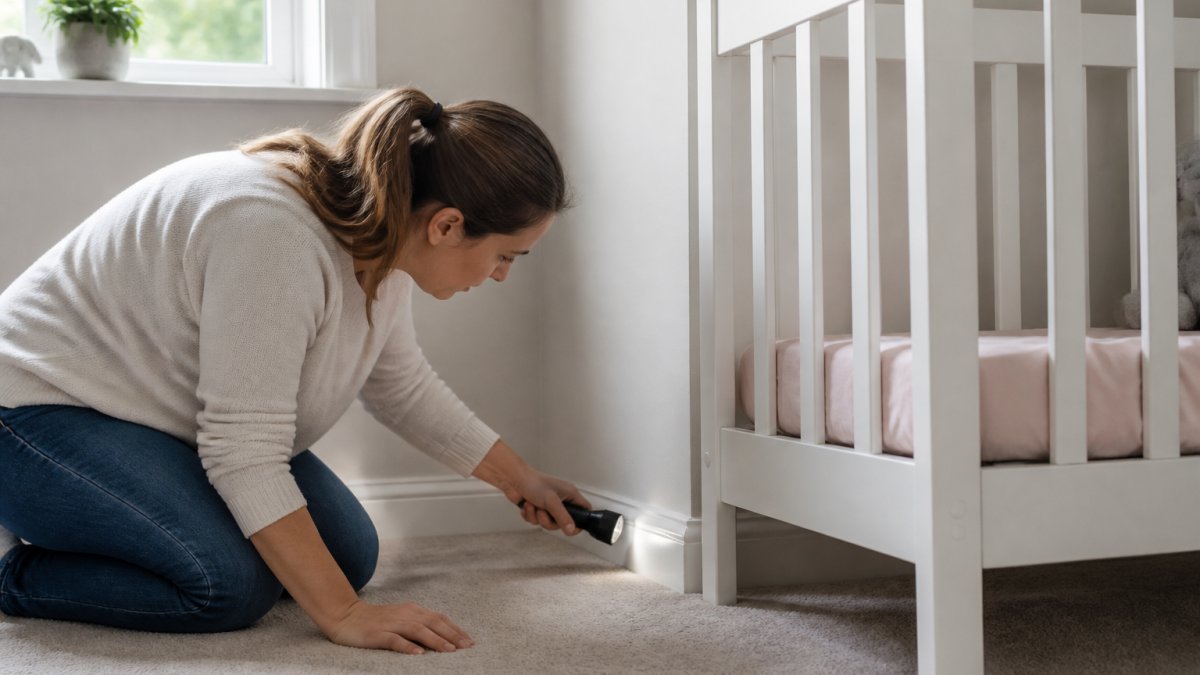
Signs to check for in a nursery:
- Small dark droppings along skirting boards and behind furniture
- Greasy smear marks where mice brush against walls
- Chewed corners of soft toys, blankets, or nappy packaging
- A musty, ammonia-like smell
- Nibbled food or crumbs in drawers
A baby's room is also where the risk is highest. Babies sleep for long stretches, and they touch their bedding, their toys, and their own faces constantly. Any contamination in that space reaches them quickly.
Do not wait to see a mouse before acting. If you find droppings, treat the room as contaminated and act the same day. Move the baby to another room while you deal with it.
How to Clean Mouse Droppings Safely Without Putting Your Family at Risk
Cleaning mouse droppings safely means never letting them dry out and become airborne. The safe method is to dampen the area first, then disinfect. Here is how we would do it.
What you'll need:
- Disposable gloves and a face mask
- Paper towels
- A disinfectant or a bleach and water solution
- A sealable plastic bag
- Rubber gloves for washing up afterwards
Step-by-step:
- Move the baby and any pets out of the room.
- Open a window for ventilation.
- Put on gloves and a mask.
- Spray the droppings with disinfectant until damp. Never sweep dry.
- Wipe up with paper towels and place them straight into a sealed bag.
- Clean the whole area with disinfectant, not just the visible spots.
- Wash your hands thoroughly afterwards, and wash any clothing or cloths used.
For hard surfaces, a household disinfectant works well. For soft furnishings or anything a baby touches, consider replacing the item rather than cleaning it. When in doubt, throw it out.
The UK Health Security Agency guidance on rodent control sets out how rodents spread disease and why clean-up hygiene matters. It is worth reading before you start.
A common mistake is cleaning only where you saw the mess. Mice travel along edges, so clean the full run of skirting board, not just the visible droppings.
Keeping Mice Away from Babies: Prevention That Actually Works
Keeping mice away from babies comes down to removing three things: food, water, and shelter. Do those and you cut the reasons a mouse has to come inside.
Prevention steps that work:
- Store food in sealed containers. Cardboard and thin plastic are easy for mice to chew.
- Fix leaks and drips. Mice need water, and a damp corner is a welcome sign.
- Seal gaps. Check around pipes, vents, and door frames. Mice squeeze through gaps far smaller than you would expect.
- Clear clutter. Piles of boxes and bags near a cot or in a nursery give mice somewhere to hide.
- Keep bins sealed and empty them regularly, especially food waste.
- Check deliveries and shopping bags before bringing them inside.
| Problem | Fix | Why it matters |
|---|---|---|
| Open food packets | Store in sealed tubs | Removes an easy food source |
| Leaky pipe under sink | Repair and dry the area | Removes a water source |
| Gaps around pipes | Seal with mesh or filler | Blocks entry points |
| Clutter in nursery | Clear and store in lidded boxes | Removes hiding spots |
| Unsealed bins | Use lidded bins, empty often | Cuts food and shelter |
Our advice is to focus on the source, not just the symptoms. Traps catch the mice you see. Sealing entry points stops the next lot coming in. Both matter, but prevention is what keeps a nursery safe long term.
When to Call a Professional Pest Controller
Call a professional pest controller when you find droppings in a baby's room, when the problem keeps coming back, or when you cannot find where the mice are getting in. DIY traps handle a single mouse. They rarely solve an established infestation.
Signs it is time to bring in help:
- Droppings in the nursery, kitchen, or multiple rooms
- A recurring problem that returns after DIY treatment
- Chewed wiring or damage to the structure
- You cannot locate the entry points
- You are pregnant, or you have a newborn at home
At ProPest Oxford Ltd, our technicians hold a minimum RSPH Level 2 qualification, and we are NPTA members and BASIS PROMPT registered. We focus on finding the source of the infestation, not just the symptoms, so the problem does not simply return. We offer same-day or next-day appointments and work seven days a week, which matters when a baby is in the house.
We also work discreetly with landlords and hospitality businesses who need the job handled without disruption. Pricing depends on the size of the property and the scale of the problem, so get in touch for a quote rather than guessing at a figure.
The Chartered Institute of Environmental Health is a good source for understanding how local authorities and pest professionals approach rodent control.
Conclusion
A mouse in the house is stressful enough. A mouse near your baby's cot is a different level of worry, and it deserves a proper response rather than a quick sweep and hope. The risks are real, but they are manageable with fast, careful action.
If you have found signs in a nursery or you are dealing with a problem that keeps returning, do not wait it out. ProPest Oxford Ltd offers same-day or next-day visits, RSPH Level 2 qualified technicians, and a focus on finding the source so the problem stays gone. book a service with ProPest Oxford Ltd and give your family the safe, clean home they deserve.
Frequently Asked Questions
Can mice make babies ill?
Yes, mice can make babies ill through indirect contact. Their droppings and urine can carry bacteria such as Salmonella and Leptospira, and dried droppings release particles that can be inhaled. Babies crawl on floors and put objects in their mouths, which raises the risk of exposure. The danger is not usually a direct bite but contaminated surfaces, bedding and food. If you suspect mice have been in your baby's room, clean thoroughly while wearing gloves and a mask, and speak to a GP if your baby develops unexplained fever, vomiting or diarrhoea.
Are mouse droppings dangerous to babies?
Mouse droppings carry real health risks for babies because their immune systems are still developing. Droppings and urine can spread bacteria and, when dried and disturbed, release particles that may be inhaled. Never sweep or vacuum droppings dry, as this pushes particles into the air. Instead, dampen the area with a disinfectant, wear gloves and a face mask, and dispose of everything in sealed bags. Keep babies and pets well away from the area until it has been fully cleaned and ventilated. For heavy infestations, professional removal is safer.
What should I do if I find a mouse in my baby's room?
Stay calm and move your baby to another room while you deal with the situation. Do not chase the mouse while holding your baby. Open a window, close the door and use a torch to check the cot and bedding for droppings or gnaw marks. Wash all bedding on a hot cycle and wipe down surfaces with a disinfectant. Set traps away from your baby's reach, and check entry points such as gaps under doors and around pipes. If you find droppings or the mouse returns, book a professional pest controller who can identify the source and treat it safely.
How can I keep mice away from a home with a baby?
Keeping mice away from babies starts with blocking entry and removing food sources. Seal gaps around pipes, under doors and along skirting boards with wire wool and sealant. Store food in airtight containers, wipe up crumbs promptly and empty bins daily. Keep the nursery clear of clutter and avoid leaving bottles or snacks out overnight. Check loft spaces and airing cupboards regularly for droppings. A qualified pest controller can carry out a proofing survey and set tamper-resistant bait stations safely out of reach of children and pets.