 how-to
Can Rats Damage Electrical Wiring in Your Loft?
Last Updated: October 23, 2026
Quick Summary
Yes, rats damage electrical wiring in loft spaces constantly, and it is one of the most underestimated risks of an untreated infestation. Rats gnaw to keep their teeth worn down, and cable insulation is soft, warm and easy to bite through. The damage often goes unseen for months until flickering lights or a burning smell appear.
- Rats follow the same routes every night, leaving droppings, gnaw marks and greasy smear marks along joists.
- Switch off the affected circuit at the consumer unit and call a qualified electrician to assess it.
- Seal gaps around pipes, cables and vents, and repair damaged roof tiles, fascia and soffits.
- An electrician restores the wiring while a pest controller identifies and seals the entry points.
- DIY traps rarely work because rats are neophobic and avoid new objects for days.
Table of Contents
- Can Rats Damage Electrical Wiring in Loft Spaces?
- Signs of Rats in the Loft You Should Never Ignore
- What to Do About Chewed Electrical Wires: Your First Steps
- How to Keep Rats Out of the Loft for Good
- Repairing Rodent-Damaged Wiring: Who Does What
- Why DIY Traps Rarely Solve Rats Damage Electrical Wiring Problems
- When to Call a Professional Pest Controller
- Conclusion
- Frequently Asked Questions
Can Rats Damage Electrical Wiring in Loft Spaces?
Yes. Rats damage electrical wiring in loft spaces constantly, and it is one of the most underestimated risks of an untreated infestation.
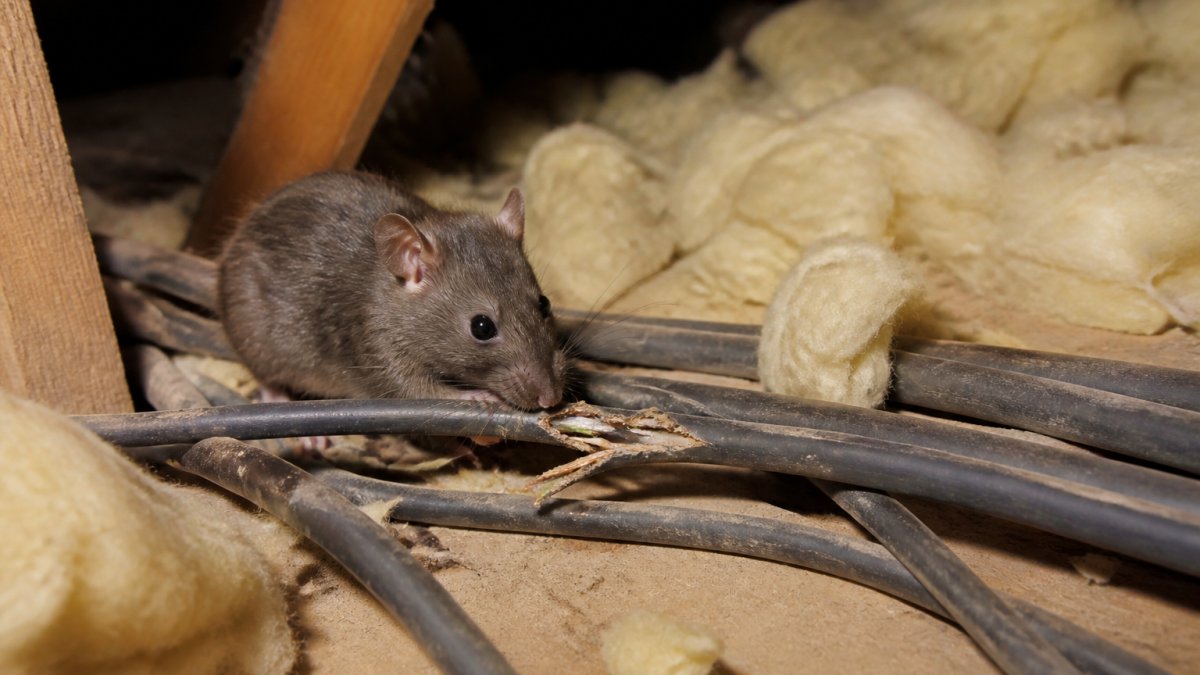
Rats gnaw to keep their teeth worn down (Rats and mice). Cable insulation is soft, warm and easy to bite through. In a loft, the wiring runs exactly where rats like to travel: along joists, inside insulation and behind plasterboard.
The damage often goes unseen for months. By the time a homeowner notices flickering lights or a burning smell, the wiring may already be exposed.
Below, we explain the warning signs, the first steps to take, and how to keep rats out for good.
Signs of Rats in the Loft You Should Never Ignore
The clearest signs of rats in the loft are droppings, gnaw marks on wood or cable, greasy smear marks along joists, and scratching sounds after dark. A musky smell and torn insulation are also strong indicators.
Look for these in a loft inspection:
- Dark, pellet-shaped droppings near insulation and eaves
- Stripped or chewed cable sheathing
- Greasy rub marks where rats squeeze along beams
- Shredded loft insulation used for nesting
- Scratching or scurrying noises at night
- A stale, ammonia-like smell
Rats follow the same routes every night. That habit leaves visible tracks, which makes a proper inspection far more reliable than guesswork.
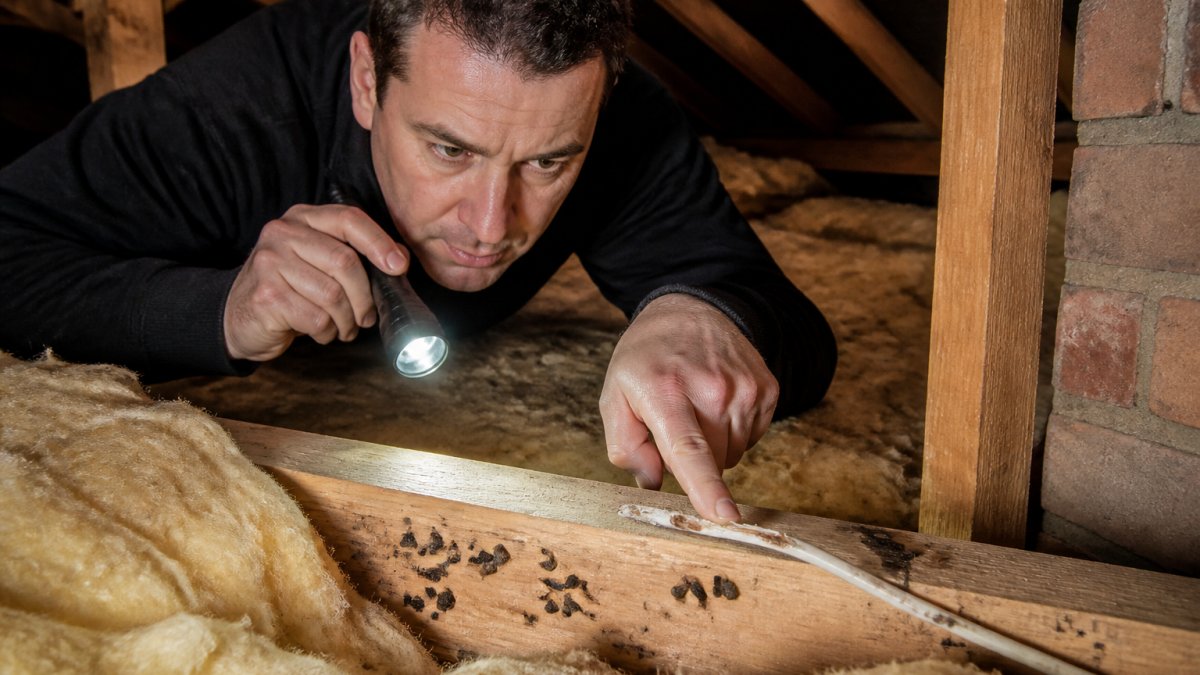
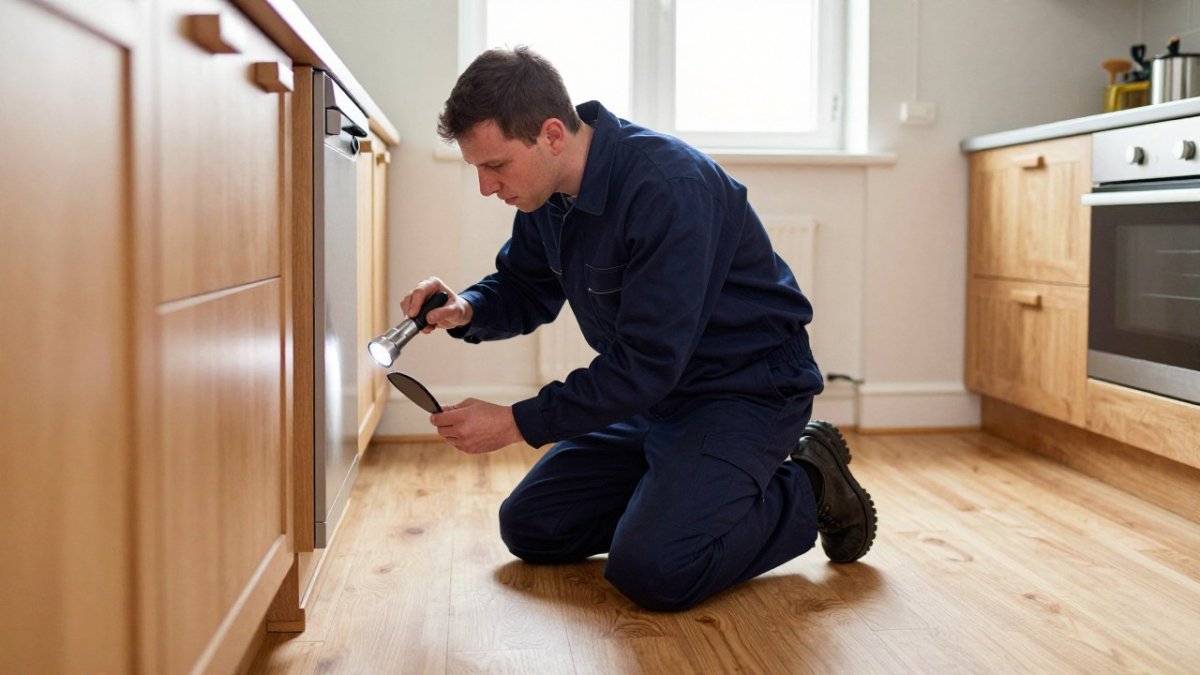
If you want certainty rather than a hunch, you can book a rodent investigation survey and have the loft checked properly before damage spreads.
What to Do About Chewed Electrical Wires: Your First Steps
The first step with chewed electrical wires is to stop using the affected circuit and get a qualified electrician to assess it. Do not touch exposed conductors or attempt a repair yourself.
Work through this order:
- Switch off the circuit at the consumer unit if you suspect live damage
- Keep people and pets out of the loft
- Photograph the damage for your insurer
- Call a qualified electrician to assess and isolate the risk
- Arrange pest control so the rats cannot return to the same cable
Chewed wiring is a job for two trades, not one. An electrician makes the wiring safe. A pest controller removes the reason it was damaged.
If droppings are present near the damaged cable, follow safe clean-up guidance before anyone works in the space. Our guide on how to clean mouse droppings safely sets out the step-by-step process.
How to Keep Rats Out of the Loft for Good
Keeping rats out of the loft means sealing every entry point and removing the food and shelter that brought them in. Traps alone do not achieve this.
Rats enter lofts through gaps around pipes, vents, roof edges and cavity walls. A young rat can pass through a gap far smaller than most homeowners expect, so the proofing has to be thorough.
A sensible prevention plan looks like this:
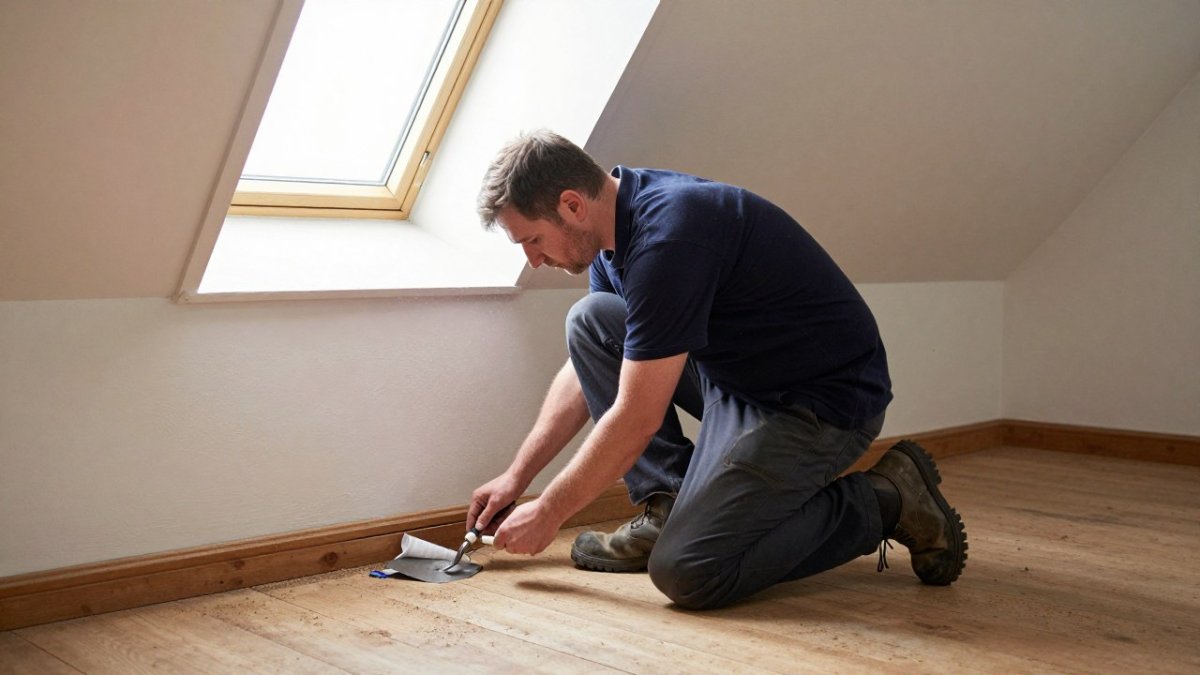
- Seal gaps around pipes, cables and vents with suitable rodent-proof material
- Repair damaged roof tiles, fascia and soffits
- Keep loft insulation tidy and stored items off the floor
- Clear bird seed, pet food and household waste that attracts rodents
- Trim branches that give rats a route onto the roof
- Book regular checks if the property has had rats before
Prevention is where most DIY efforts fall short. People kill the rats they can see, then leave the entry points wide open. The next colony moves straight back in.
Repairing Rodent-Damaged Wiring: Who Does What
Repairing rodent-damaged wiring is a two-part job: an electrician restores the wiring, and a pest controller stops the rats coming back. Skipping either part leaves the problem half-solved.
Here is how the responsibilities split:
| Task | Who does it | Why it matters |
|---|---|---|
| Isolate and test damaged circuits | Qualified electrician | Prevents shock and fire risk |
| Replace chewed cable and insulation | Qualified electrician | Restores safe, reliable power |
| Identify entry points and nesting sites | Pest controller | Finds the source, not just the symptoms |
| Seal entry points and proof the loft | Pest controller | Stops rats returning to the same cable |
| Follow-up inspection | Pest controller | Confirms the loft stays clear |
The order matters. Proofing before the wiring is repaired risks disturbing rats onto live cable. Repairing wiring before proofing leaves new cable exposed to the same teeth.
A common mistake is treating these as separate, unrelated jobs booked weeks apart. In practice, they should be coordinated so the loft is made safe and then kept that way.
Why DIY Traps Rarely Solve Rats Damage Electrical Wiring Problems
DIY traps rarely solve rat-damaged electrical wiring problems because they catch a few rats and leave the colony, the entry points and the nest untouched. The wiring stays exposed.
Store-bought traps fail for predictable reasons:
- Rats are neophobic and avoid new objects in their path for days
- Traps are placed where rats are seen, not where they travel
- A loft colony is larger than the handful of rats caught
- Entry points remain open, so new rats move in within weeks
- Poison bait used carelessly creates secondary risks to pets and wildlife
There is also a safety angle most guides skip. Climbing into a loft with exposed conductors, poor lighting and loose insulation is genuinely hazardous. Setting traps by torchlight near damaged cable is how people get hurt.
Professional-grade traps and a proper survey of the loft's travel routes do far more than a scatter of DIY traps. You can see the professional rat traps we use as a more reliable alternative.
When to Call a Professional Pest Controller
Call a professional pest controller as soon as you confirm rats in a loft with wiring, insulation or stored goods. The risk is not just noise and mess; it is fire and electrical safety.
We recommend professional help when:
- You have found chewed cable or droppings near wiring
- DIY traps have caught rats but the activity continues
- The property is a rental and you need documented, discreet treatment
- The building is large, with outbuildings or multiple roof spaces
- You need the source identified, not just the visible rats removed
Our technicians hold a minimum RSPH Level 2 qualification, and we are associated with NPTA and BASIS PROMPT. That matters when you are letting someone work near wiring and insulation in your home.
If you are unsure what professional pest control involves, our professional pest control services guide explains the process from survey to follow-up.
For a loft that needs sealing against rats for good, you can book rodent proofing and have the entry points closed properly.
Conclusion
Rats in a loft are a wiring problem waiting to happen, and the damage is easy to miss until it is serious. The fix is not a single trap or a quick spray. It is a proper survey, safe repair, and proofing that keeps the colony from returning.
ProPest Oxford Ltd handles the pest side from start to finish. We offer same-day or next-day appointments, work seven days a week, identify the source of the infestation rather than just the symptoms, and use safe treatment for families, pets and property.
Get started with ProPest Oxford Ltd and make your loft safe, sealed and rat-free.
Frequently Asked Questions
Can rats chew through electrical wires in a loft?
Yes. Rats gnaw constantly to wear down their incisors, and loft wiring is easy to reach along joists and inside insulation. They strip the outer sheathing, expose live conductors and can chew through whole cable runs. Because lofts are rarely visited, damage often goes unnoticed for months. If you suspect rats have damaged electrical wiring, treat it as urgent: contact a qualified pest controller to clear the infestation and a registered electrician to inspect the circuits before anything is switched back on.
Can chewed electrical wiring cause a fire?
It can. Exposed conductors can arc or short, and the resulting heat may ignite nearby insulation, dust or timber. Rodent nests are often built from shredded paper and loft insulation, which adds fuel right next to the damaged cable. This is why any signs of rats in the loft should be treated as a safety issue, not just a nuisance. Do not ignore flickering lights, a burning smell or a tripping consumer unit until the wiring has been inspected.
What should I do if I find rat-chewed wires in my loft?
Do not touch the wires and do not switch circuits back on if the power has tripped. Keep everyone out of the loft, including pets, and arrange for a registered electrician to make the wiring safe. Then book a pest controller to identify how rats are getting in and remove them. Repairing rodent-damaged wiring without clearing the infestation usually means the damage returns within weeks, so treat the two jobs as one combined problem.
Does home insurance cover rat damage to electrical wiring?
Often not, or only partly. Many household policies exclude damage caused by pests, or treat gradual chewing as wear and tear rather than a sudden event. Some buildings cover will pay for the resulting fire or water damage but not the rewiring itself. Check your policy wording before you claim, photograph the damage and keep any reports from your pest controller and electrician. Your insurer may ask for evidence that the infestation was treated professionally.
How can I stop rats getting into my loft?
Rats usually enter from the ground, climbing drainpipes, walls or climbing plants to reach gaps at the eaves and roofline. Seal openings larger than a pencil width with wire wool and mortar or metal flashing, trim vegetation back from the walls and keep external bins secure. Inside the loft, store items in sealed plastic crates rather than cardboard and avoid leaving loose insulation disturbed. A professional survey will find the entry points most homeowners miss.