 how-to
How to Get Free Wasp Nest Removal or Pay Less
Last Updated: October 30, 2026
Quick Summary
Free wasp nest removal is rarely available as a standard service, and most people who search for it will end up paying something. Where it exists, it usually comes through a council scheme, a housing provider or a charity partnership, so check your local authority's pest control page and eligibility rules first.
- Many councils now run pest control as a chargeable service, and some have stopped wasp treatment altogether.
- Councils have no statutory duty to treat wasps, so provision and pricing vary between local authorities.
- Typical concessions include households on means-tested benefits and tenants of social housing.
- If you rent privately, responsibility for a nest in the structure usually sits with your landlord.
- Ask any firm whether the price is fixed, whether VAT is included and whether a follow-up visit is covered.
Table of Contents
- Is Free Wasp Nest Removal Ever Actually Available?
- Does the Council Remove Wasp Nests?
- Who Qualifies for Free or Subsidised Treatment?
- Wasp Nest Removal Cost: What You Pay and Why
- How to Get Rid of a Wasp Nest Safely
- Dealing With a Wasp Nest in a Brick Wall
- Tenant, Landlord and Shared-Property Responsibilities
- Book a Wasp Nest Treatment With a Qualified Technician
- Frequently Asked Questions
Is Free Wasp Nest Removal Ever Actually Available?
Free wasp nest removal is rarely available as a standard service, and where it does exist it comes through specific channels rather than a general promise. Between April and September, when queen wasps are building nests in lofts, sheds and wall cavities, this is one of the most common questions people ask.
Here is the honest answer: most people who search for free wasp nest removal will end up paying something. The good news is that a few genuine routes exist, and knowing them can save you money.
What Free Usually Means in Practice
When a company advertises "free" wasp removal, read carefully. In most cases it means one of three things:
- Free inspection or survey, with the treatment itself chargeable
- Free call-out, with labour and materials billed separately
- Free removal for a limited period, usually as a promotional offer on domestic properties only
A genuinely free treatment, where no money changes hands at any stage, is uncommon. Before pursuing free options, it helps to know what to expect from local wasp nest removal services. Where it appears, it is usually tied to a council scheme, a housing provider, or a charity partnership. Below, we'll show you exactly how to check each of these before you pay anyone.
Does the Council Remove Wasp Nests?
Some local authorities do treat wasp nests, but the picture varies enormously from one council to the next. Many now run pest control as a chargeable service rather than a free one, and a number have stopped offering wasp treatment altogether.
The reason is straightforward: wasps are not a public health pest in the way rats or cockroaches are, so councils have no statutory duty to treat them. That leaves each local authority free to decide whether to offer the service, what to charge, and who qualifies for a reduction.
How to Check Your Local Authority's Provision
Follow this sequence and you will get a clear answer in about ten minutes:
- Search your council's website for "pest control" rather than "wasp removal", since pages are often filed under the broader service
- Look for a price list or fee schedule, which will tell you whether treatment is free, subsidised or full cost
- Check the eligibility section for concessions, which often cover residents on certain benefits
- Call the environmental health team directly if the website is unclear, and ask specifically whether wasp nests are treated and at what cost
- Ask what happens if the nest is inaccessible, since some councils will not treat inside wall cavities or high roof spaces
Watch out: a council that offers free rodent treatment does not necessarily offer free wasp treatment. The two are budgeted separately, and assuming otherwise wastes a week in peak season.
Who Qualifies for Free or Subsidised Treatment?
Certain groups are more likely to access reduced-cost or free treatment, though eligibility is set locally rather than nationally. Typical concessions include:
- Households receiving means-tested benefits
- Residents over a specified age
- Tenants of social housing, where the landlord arranges treatment
- Properties subject to a council enforcement notice
If you rent privately, the responsibility usually sits with your landlord, not the council. We cover that in more detail further down.
For anyone outside these groups, the realistic options are paying a professional or treating the nest yourself with proper precautions. GOV.UK guidance on dealing with pests is a sensible starting point for understanding what councils are and are not obliged to do.
Wasp Nest Removal Cost: What You Pay and Why
Pricing for professional wasp nest removal depends on access, nest size, and how the technician treats it. A nest under a shed roof is a quick job. A nest buried in a brick wall cavity is not, and the price reflects that difference.
Rather than quote a single figure that will not match your property, here is the transparent picture most reputable firms work to. For a concrete example of what professional treatment costs, see our professional wasp nest removal cost in East Sussex. Pricing depends on access, nest location, property type and timing, so ProPest Oxford Ltd's current prices are best confirmed on our website or through a quote. Always ask for a fixed price before booking.
What drives the price:
- Access: ground level versus ladder work or roof space
- Nest location: exposed versus concealed in a cavity or void
- Property type: domestic versus commercial premises
- Follow-up: whether a return visit is included
Always ask whether a quote includes VAT before you book. Ask three questions of any firm: is the price fixed or an estimate, is VAT included, and is a follow-up visit covered if activity continues after treatment.
Low-Cost Alternatives and Financial Support
If cost is the barrier, several options are worth trying before you give up:
-
Check your home insurance. A small number of policies include pest removal as an add-on; check your schedule or call your insurer before assuming you are covered.
-
Speak to your landlord or housing provider. If they own the building, the cost is often theirs.
-
Compare like for like. A cheap quote that excludes VAT or a follow-up visit is not cheaper than a slightly higher fixed price that includes both.
How to Get Rid of a Wasp Nest Safely
Safety comes before cost, every time. A wasp sting can trigger a severe reaction in people who have never reacted before, and disturbing a large nest in an enclosed space is genuinely risky.
The safest approach for most people is to leave the nest alone and to book a qualified technician. Our guide on how to handle wasp and bee nest removal safely walks through the precautions in detail.
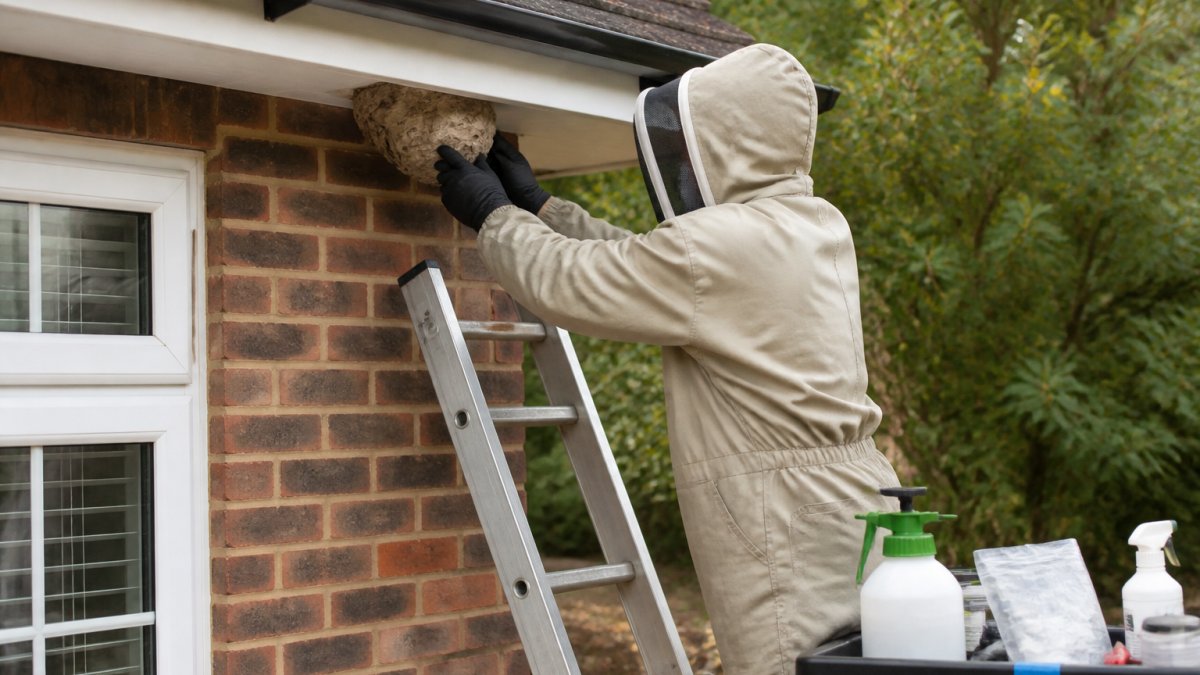
DIY Versus Professional: A Safety-Led Decision
Use this decision path:
| Situation | Best course | Why |
|---|---|---|
| Small nest, open shed, easy access | DIY possible with care | Low sting risk, quick retreat available |
| Nest in loft or roof space | Professional | Confined space, poor escape route |
| Nest in wall cavity | Professional | Requires specialist treatment method |
| Anyone in the household allergic | Professional | Risk of anaphylaxis |
| Nest larger than a dinner plate | Professional | High wasp population, aggressive defence |
| Commercial or hospitality premises | Professional | Hygiene and liability obligations |
Never block a nest entrance and never use a torch at night near a nest. Both provoke the colony.
Dealing With a Wasp Nest in a Brick Wall
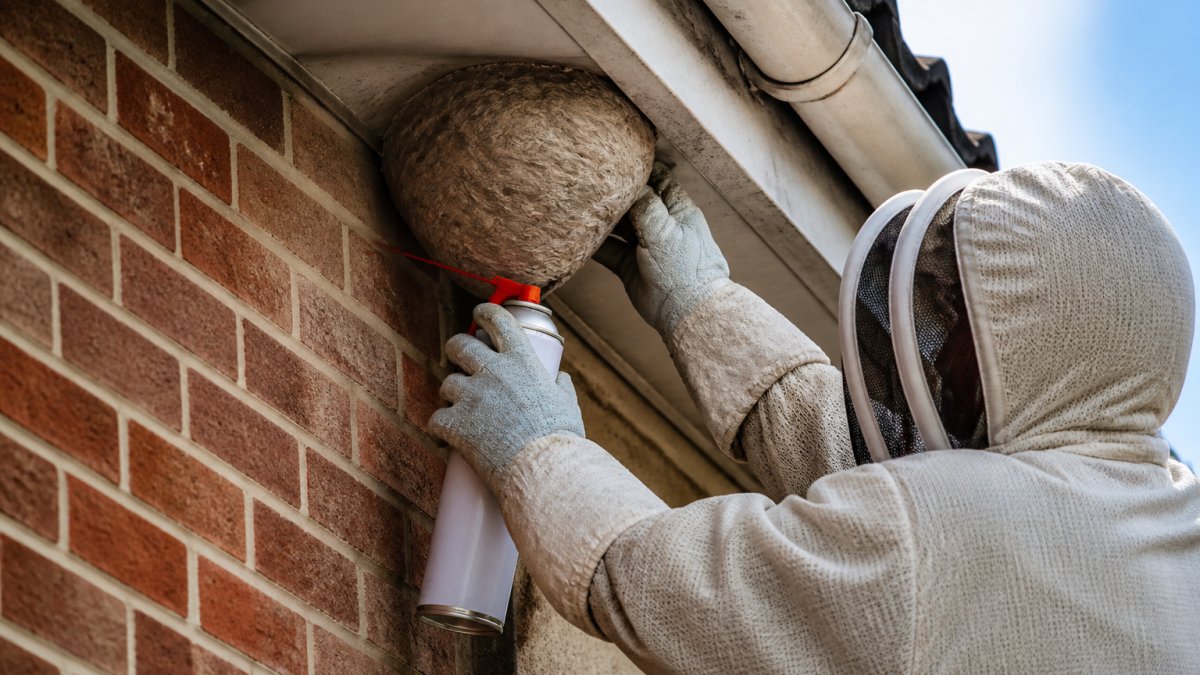
A wasp nest in a brick wall is one of the trickier jobs, because the nest itself is hidden inside the cavity and the entry point is often a small gap in mortar or a ventilation brick. You cannot see what you are treating, and sealing the wrong hole traps wasps inside the building.
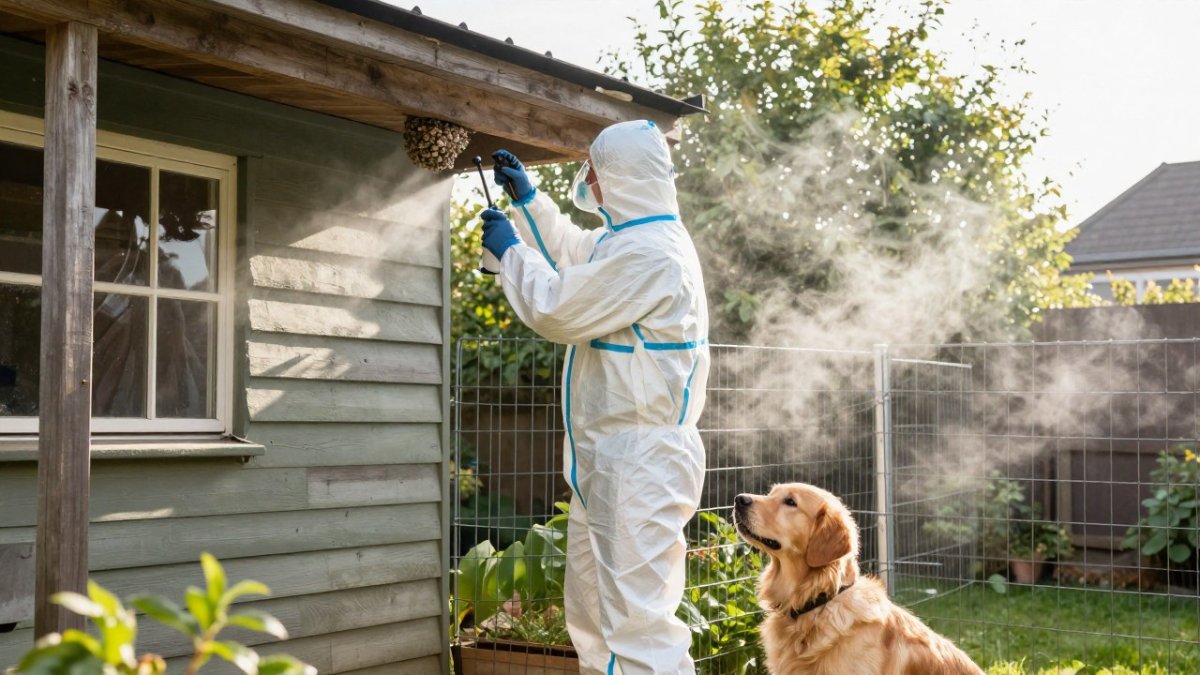
For a step-by-step look at nests in outbuildings and structural gaps, see our guide to removing a wasp nest from a garden shed, which covers the same access problems.
Tenant, Landlord and Shared-Property Responsibilities
In a rented home, the landlord is generally responsible for pest problems that arise from the structure of the building, while tenants are responsible for problems caused by their own living conditions. A nest in a wall cavity or roof void falls firmly on the landlord's side.
If you rent and discover a nest, report it in writing and keep a copy. If you own a rental property, budget for wasp treatment as part of seasonal maintenance: it is far cheaper than an emergency call-out in July, and it keeps tenants safe.
Shared buildings are murkier. In flats, the freeholder or managing agent usually owns the external structure, so the report should go to them rather than to individual leaseholders.
Book a Wasp Nest Treatment With a Qualified Technician
If free wasp nest removal is not available to you, the next best thing is a treatment that works first time. ProPest Oxford Ltd covers Oxfordshire and East Sussex with same-day or next-day appointments, seven days a week, and our technicians hold a minimum RSPH Level 2 qualification. We are NPTA associated and BASIS PROMPT registered, and our approach focuses on identifying the source of an infestation rather than just the symptoms.
You can book a wasp nest treatment in Oxford online or by phone, and we will confirm access requirements before we arrive.
Frequently Asked Questions
Do councils remove wasp nests for free?
Rarely. Most local authorities either no longer offer wasp nest removal or run it as a chargeable service, and free treatment is usually limited to specific cases such as council tenants or residents receiving certain benefits. Provision varies by council, so check your local authority's pest control page directly. If they do not cover wasps, ask them to confirm in writing so you can decide between a private contractor and a low-cost alternative.
How much does wasp nest removal cost?
Wasp nest removal cost depends on the nest's location, height and accessibility, plus any call-out fee and VAT. A nest high in a roof space or inside a cavity wall takes longer than one in a garden shed, and that is reflected in the quote. Ask for a fixed price before booking, confirm whether VAT is included, and check whether a follow-up visit is covered if activity continues after treatment.
How do I get rid of a wasp nest in a brick wall?
A wasp nest in a brick wall is one of the riskiest to tackle yourself because the entry point is narrow and wasps guard it closely. Never seal the hole while the nest is active, as trapped wasps will find their way into the property. A qualified pest control technician can advise on how to deal with the nest and when it is safe to block the entry point. Wait until activity has stopped completely before any repair work.
What should I do if I cannot get a wasp nest removed for free?
Compare a fixed-price quote from a qualified pest controller against the cost of DIY products and your own exposure to stings. For a nest in a loft, cavity or high eaves, professional treatment is usually the safer and quicker route. If cost is the barrier, ask whether the contractor offers a follow-up check or a guarantee, and confirm the price includes VAT so there are no surprises on the invoice.
The gap between a cheap job and a proper one shows up three weeks later, when wasps are still coming back to the same entry point. Get it treated once, by someone qualified, and the nest stays dead. Get started with ProPest Oxford Ltd and have your property checked, treated and confirmed wasp-free.