 how-to
7 Signs You Have a Mouse in the House and What to Do
Last Updated: November 3, 2026
Quick Summary
A mouse in house in the UK is a small rodent, usually the house mouse, that has entered a building for food, warmth and shelter. One sighting does not always mean a full infestation, but you should check for droppings, gnaw marks and scratching noises tonight. Act within 24 hours and never sweep dry droppings.
- Around a quarter of tenants (24%) say they have dealt with a rat or mouse infestation in a rented home.
- House mice are active all year round, not just in winter, so check lofts and wall cavities.
- Never sweep or vacuum dry droppings; dampen them with a detergent solution first.
- Mice get in through gaps as small as a pencil width, so seal every gap you find.
- Set traps close to walls with the bait side against the skirting and check them every morning.
Table of Contents
- Found a Mouse in the House? Start Here
- Signs of Mouse Infestation to Check Tonight
- House Mouse, Field Mouse or Wood Mouse? Identifying Your Intruder
- The Dangers of Rat Droppings in Wall Cavities and Mouse Contamination
- How to Mouse-Proof a House: An Entry-Point Inspection Checklist
- Traps, Bait and UK Rules: A Humane Step-by-Step Response
- Pest Control Costs UK: What a Professional Visit Involves
- Book a Same-Day Mouse Inspection with ProPest Oxford Ltd
- Frequently Asked Questions
Found a Mouse in the House? Start Here
Around a quarter of tenants (24%) say they have dealt with a rat or mouse infestation in a rented home, according to Aviva's rodent claims research. A mouse in the house in the UK is rarely a one-off visitor. It is usually a sign that something has already moved in.
So start with the calm version of the truth.
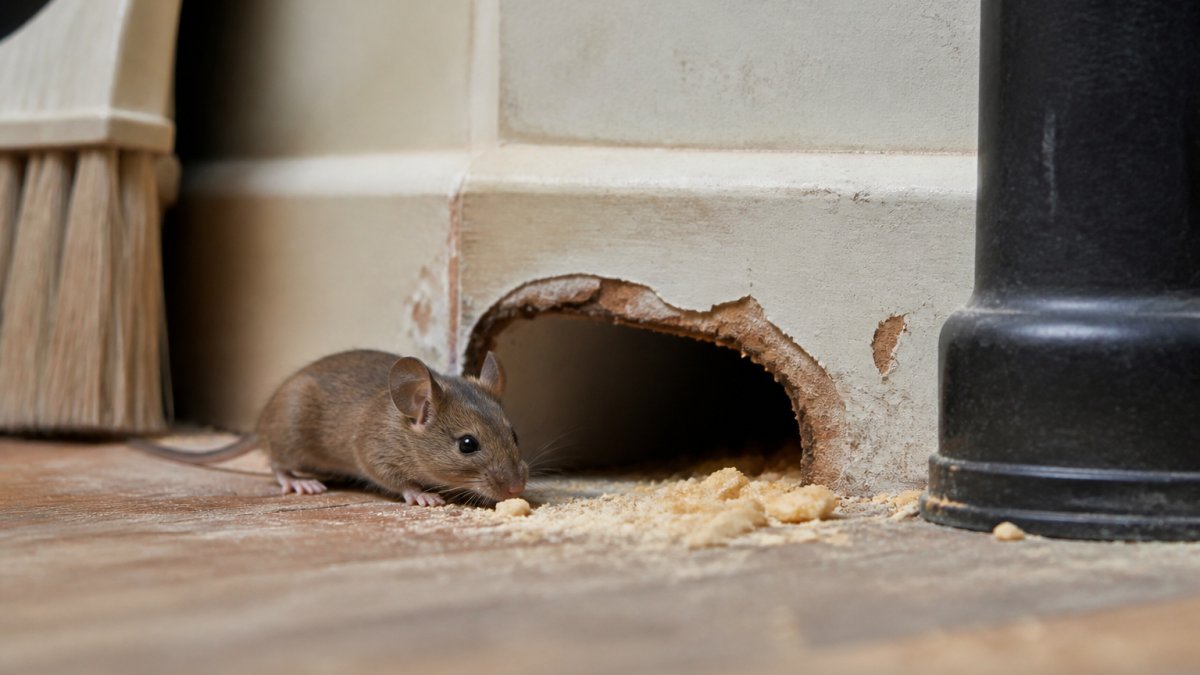
A mouse in the house in the UK is a small rodent, usually the house mouse, that has entered a building for food, warmth and shelter. One sighting does not always mean a full infestation. But it does mean you should check properly, tonight.
Below, we'll show you exactly how to identify the species, find the entry points, clean up safely and decide whether to trap or call in help. Most of it takes an evening.
- Do not panic or chase it
- Do not use bleach on droppings
- Check the kitchen and loft first
- Act within 24 hours
Signs of Mouse Infestation to Check Tonight
The clearest sign of a mouse infestation is fresh droppings, followed by gnaw marks and scratching noises after dark. Look along skirting boards, inside cupboards and behind appliances. Mice stay close to walls, so that is where the evidence sits.
Droppings, Gnaw Marks and Greasy Rub Marks
Mouse droppings look like small dark grains, roughly the size of a rice grain, pointed at both ends. Rat droppings are bigger and blunter. Fresh droppings are soft and dark; old ones go hard and grey.
Gnaw marks appear on food packaging, cable insulation and pipework. Greasy rub marks show where fur has brushed a wall edge over many nights. If you have found droppings, follow our guide on how to clean mouse droppings safely before you do anything else.
Scratching Noises and Nesting Material in the Loft
House mice are active all year round, not just in winter, as the British Pest Control Association's house mouse guidance confirms. Listen for light scratching in lofts, wall cavities and under floors, usually at dusk and dawn.
Nesting material is shredded paper, loft insulation, fabric and dried grass. A loft is warm, dry and rarely disturbed, which makes it close to ideal.
| Evidence | Where to Look | What It Means |
|---|---|---|
| Droppings | Behind appliances, under sinks | Active trail, recent visit |
| Gnaw marks | Packaging, cables, pipes | Feeding or nesting nearby |
| Scratching | Loft, walls, floor voids | Mice living in the building |
| Rub marks | Wall edges, pipe runs | Repeated nightly movement |
House Mouse, Field Mouse or Wood Mouse? Identifying Your Intruder
Not every mouse found indoors is a house mouse. Species matters, because it changes where you look, how you respond and whether you should be handling the animal at all.
A house mouse has grey-brown fur, a pointed snout and a tail roughly as long as its body. It stays close to buildings.
If you are unsure what you saw, our pest identification service can help.
Practical Field Marks You Can Actually Use
You will rarely get a long look at a live mouse, so work from what it leaves behind and how it behaves.
- Tail length relative to body: a house mouse tail is about as long as its head and body combined; a wood mouse tail is noticeably longer than its body, often 1.2 to 1.3 times.
- Ear size: wood and field mice have large, prominent ears; house mouse ears are smaller and rounder.
- Eye size: wood mice have large, dark eyes; house mouse eyes are small and bead-like.
- Movement: house mice run in short bursts close to walls and rarely stray far from cover; wood mice are more erratic and will cross open floor.
- Location: house mice are most often found in kitchens, larders, lofts and wall cavities; wood mice are more often caught in ground-floor rooms, conservatories and outbuildings near gardens.
- Droppings: house mouse droppings are typically 3-6 mm, pointed at both ends; wood mouse droppings are similar but often slightly larger and more barrel-shaped.
What Changes by Species
A house mouse is the one that colonises buildings and breeds indoors, so proofing and sustained control are the priority. A wood mouse or field mouse is usually an opportunist that has wandered in; the response is to remove it humanely, seal the route it used and reduce garden attractants.
Identifying from droppings alone is unreliable, so confirm the species before you set anything.
The Dangers of Rat Droppings in Wall Cavities and Mouse Contamination
Mouse and rat droppings can carry bacteria and viruses, and the risks of contaminated droppings in wall cavities are easy to underestimate. Droppings dry out and release dust when disturbed. That dust is the real risk, especially in enclosed spaces.
Never sweep or vacuum dry droppings. Wear gloves, ventilate the room, dampen the area with a detergent solution, then disinfect. Wash your hands thoroughly afterwards.
- Never use a brush on dry droppings
- Wear disposable gloves and a mask
- Ventilate before and after cleaning
- Disinfect surfaces, not just wipe them
Mice also contaminate food, worktops and utensils through urine and fur. In kitchens, that means discarding any open food near the trail.
A Safe Cleanup Sequence
- Ventilate first. Open windows and doors and leave the room for at least 30 minutes before starting, especially in cupboards and loft spaces.
- Protect yourself. Disposable gloves, a mask and eye protection if you are working overhead. Tie long hair back and avoid loose sleeves.
- Dampen, don't dry-dust. Spray droppings and nesting material with a detergent solution until damp, then wipe up with paper towels. Bag everything and seal it.
- Disinfect the surface. Use a disinfectant labelled for the surface, following the contact time on the label. Pay attention to skirting edges, pipe runs and shelf undersides.
- Handle nesting material as contaminated. Loft insulation, shredded paper and fabric should be bagged and removed, not shaken out.
- Wash up. Remove gloves last, wash hands with soap and water, and wash clothing separately at a high temperature.
When Contamination Needs More Than Cleaning
If droppings or urine have soaked into loft insulation, plasterboard or chipboard, surface cleaning is not enough. Contaminated insulation usually needs removing and replacing, and stained boarding may need cutting out.
Measuring Whether the Problem Is Ongoing
Cleaning tells you what happened; monitoring tells you what is still happening. After cleanup, set a simple check:
- Note the date and location of any fresh droppings you find.
- Place a few traps or non-toxic monitoring blocks along the trail and check them each morning.
- Record repeat sightings, scratching noises and new gnaw marks.
- If fresh evidence appears after seven to ten days, the source has not been found and proofing or treatment needs revisiting.
Watch out: cleaning without gloves and ventilation is the most common mistake, and it is the one most likely to make you ill. Treat every dropping as contaminated until it has been disinfected.
How to Mouse-Proof a House: An Entry-Point Inspection Checklist
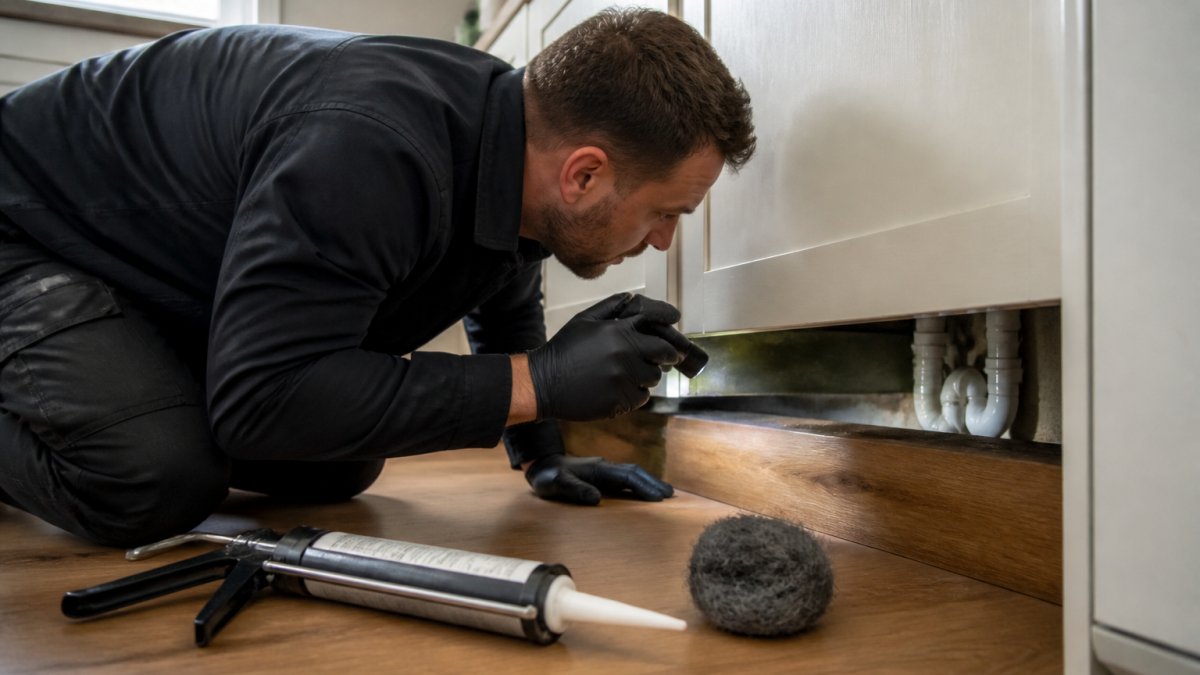
Mice get in through gaps as small as a pencil width, so proofing is about finding every gap, not the obvious one. Work around the outside of the building first, then repeat the check indoors.
- Check gaps under doors, including garage and shed doors
- Inspect pipe and cable entry points through walls
- Look at air bricks and vents for damage
- Check roof line, eaves and loft insulation for runs
- Inspect behind kitchen units and under the sink
- Seal gaps with steel wool and sealant, not foam alone
- Trim vegetation back from external walls
Seal small gaps with wire wool packed tight, then sealant over the top. Mice gnaw foam easily. Our guide on how to seal entry points for pests walks through each fix in detail.
Traps, Bait and UK Rules: A Humane Step-by-Step Response
Trapping is a humane response to a small number of mice. Rodenticides are restricted in the UK, so check current rules before using any product.
- Identify the trail using droppings and rub marks
- Place traps close to walls, bait side against the skirting
- Use a small amount of peanut butter or chocolate as bait
- Check traps every morning, never leave them unattended for days
- Wear gloves when handling and disposing of catches
- Seal entry points afterwards, or the cycle repeats
If you would rather not handle traps, our professional mouse traps cover the options. Setting traps without proofing the building may only clear the mice already inside.
Pest Control Costs UK: What a Professional Visit Involves
Pest control costs in the UK depend on the size of the property, the access needed and how many visits are required. Pricing varies with the job, so contact ProPest Oxford Ltd or visit the website for a current quote.
Book a Same-Day Mouse Inspection with ProPest Oxford Ltd
One mouse is a warning, not a disaster. The right response is quick, calm and thorough: identify, clean, proof and monitor. That is the difference between a one-night scare and a problem that returns every autumn.
At ProPest Oxford Ltd, our technicians hold a minimum RSPH Level 2 qualification, and we are NPTA members and BASIS PROMPT registered. We offer same-day or next-day appointments, seven days a week, and we focus on identifying the source of an infestation rather than just the symptoms.
Get started with ProPest Oxford Ltd and book a same-day mouse inspection today.
Frequently Asked Questions
How do I know if I have mice in my house?
The clearest signs of mouse infestation are droppings along skirting boards and inside cupboards, gnaw marks on food packaging and cables, and scratching noises in lofts or wall cavities after dark. House mice are active all year round, so sightings are not limited to winter. Check behind appliances and in the loft with a torch, wear gloves, and photograph anything you find so a technician can confirm the species and the scale of the problem.
Are mice in the house a health risk?
Yes. Mice urinate and defecate as they travel, and their droppings and nesting material can contaminate food surfaces, worktops and stored goods. The dangers of rat droppings in wall cavities are similar: dried droppings can become airborne dust when disturbed, so never vacuum or sweep them dry. Wear gloves, dampen the area with a detergent solution, clean thoroughly and disinfect. Wash your hands afterwards, and keep children and pets away until the area is clear.
What is the most effective way to get rid of mice?
A two-part approach works best: remove the mice already inside, then stop new ones entering. Traps placed along walls and behind appliances catch mice that follow established runs, while proofing gaps around pipes, vents and doors stops re-entry. Rodenticides are tightly restricted in the UK and should be a last resort handled by a qualified technician. Because mice breed quickly, acting fast matters more than any single product.
Should I call a professional for a mouse infestation?
Call a professional if you see mice by day, find droppings in several rooms, hear activity in wall cavities, or have already tried DIY traps without success. Pest control costs for UK households vary with property size, access and the number of visits needed, so ask for a quote rather than a fixed figure. A qualified technician focuses on identifying the source of an infestation rather than just the symptoms.