 how-to
7 Steps to Bed Bug Removal With Heat That Actually Work
Last Updated: October 29, 2026
Quick Summary
Bed bug removal with heat raises the temperature of an entire room until every bed bug, nymph and egg reaches a lethal level, so it is a whole-room process rather than a spot fix. Modern thermal treatment typically runs in the 47-60°C band, with monitoring throughout to confirm heat reaches every harbourage.
- Heat kills reliably only when it reaches the insect, so getting it into cracks, seams and skirting gaps is the real job.
- Wash bedding and curtains on the hottest cycle allowed, then tumble dry on high for at least 30 minutes.
- Pull the bed at least 30 cm from the wall so hot air can circulate behind the headboard.
- Remove heat-sensitive items such as aerosols, medicines, candles, vinyl records and houseplants before treatment.
- Never leave pets, including fish, reptiles and birds, in the property during treatment.
Table of Contents
- How Heat Kills Bed Bugs at Every Life Stage
- The Temperatures and Exposure Times That Decide Success
- How to Prepare for Bed Bug Treatment, Room by Room
- Bed Bug Heat Treatment Duration: What the Clock Actually Covers
- DIY Heaters Versus Professional Treatment: The Safety Gap
- How Treatment Temperature Is Verified Throughout a Property
- Bed Bug Treatment Cost: What Drives the Quote
- Bed Bug Treatment Aftercare and Confirming the Job Is Done
- Frequently Asked Questions
How Heat Kills Bed Bugs at Every Life Stage
Bed bug removal with heat works by raising the temperature of an entire room until every bed bug, nymph and egg reaches a lethal level, which is why bed bug removal is treated as a whole-room process.
The science is unforgiving. Research from Virginia Cooperative Extension's heat treatment guidance notes that three heat systems were tested in highly cluttered flats, and that survivors after heat treatment are common even when the method works overall.
That single finding shapes everything below. Heat kills reliably when it reaches the insect. Getting it there is the job.
Why Eggs and Harbourages Change the Calculation
Bed bug eggs sit in cracks, seams and skirting gaps where hot air struggles to reach. A nymph hidden behind a headboard can survive a treatment that looked perfect on the thermometer.
- Eggs and young nymphs hide in the tightest gaps
- Harbourages include bed frames, sockets and furniture joints
- Clutter blocks airflow and creates cold spots
- Heat must reach every harbourage, not just the open room
If you are unsure whether bites are from bed bugs at all, identifying bed bug bites versus mosquito bites is worth doing before you book anything.
The Temperatures and Exposure Times That Decide Success
Published research on bed bug heat treatment has reported benchmark figures for temperature and exposure time, but these are study results rather than a universal rule.
Those are study results, not a universal rule. In practice, rooms with heavy clutter or dense furniture need longer.
A 2026 finding reported by Entomology Today adds a wrinkle: humidity affects survival times, so temperature alone does not tell the whole story. Modern thermal treatment runs hotter, typically in the 47-60°C band, with monitoring throughout.
| Factor | Why It Matters | Practical Effect |
|---|---|---|
| Target temperature | Kills at all life stages | 50°C+ at every monitored site |
| Exposure time | Eggs need sustained heat | 71.5 minutes minimum in studies |
| Humidity | Shifts mortality rates | Slower kill in some conditions |
| Airflow | Moves heat into gaps | Fewer cold spots |
| Clutter | Blocks penetration | Longer treatment, more prep |
How to Prepare for Bed Bug Treatment, Room by Room
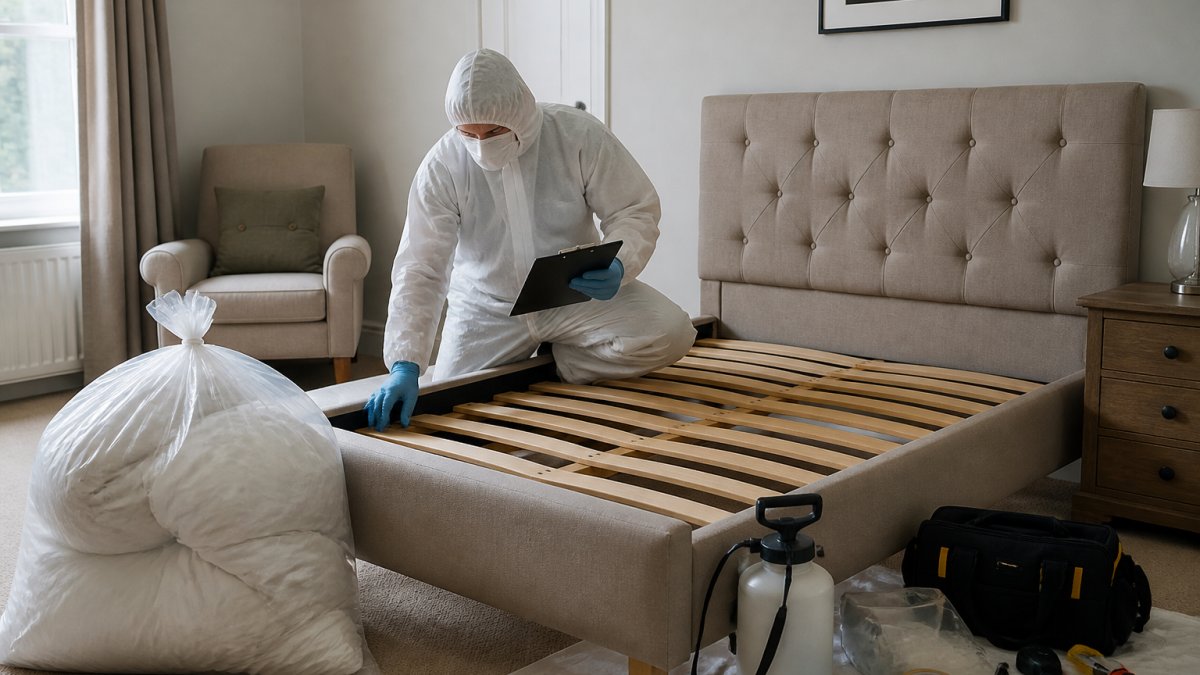
Preparation decides whether heat treatment works. Clear clutter, open up harbourages and let hot air move freely through every affected area. The checklist below covers the preparation steps that help heat reach every harbourage. For a step-by-step guide to preparing your home for pest exterminators, including practical checklists, see our dedicated page.
Before You Start: Laundry and Bagging
- Wash all bedding, pillowcases, throws and curtains on the hottest cycle the fabric care label allows, then tumble dry on high for at least 30 minutes. The sustained heat of a dryer is what kills eggs and nymphs, not the wash alone.
- Bag items you cannot wash immediately in sealed polythene bags and keep them sealed until the treatment is complete and your technician confirms clearance.
- Do not move bagged items into untreated rooms, because that spreads the infestation rather than containing it.
- Shoes, bags, soft toys and pet bedding should be treated the same way as laundry: hot wash where possible, otherwise sealed and left for the technician to advise on.
Bedroom
- Strip the bed completely, including the mattress protector, and bag the bedding.
- Dismantle the bed frame if your treatment team asks. Headboards, slats and divan bases are common harbourages and heat penetrates them far better when they are separated.
- Vacuum the mattress seams, bed frame joints and skirting boards, then seal and dispose of the vacuum bag outside the property.
- Pull the bed away from the wall by at least 30 cm so hot air can circulate behind the headboard.
- Empty bedside drawers and leave them open.
Wardrobes and Clothing Storage
- Remove clothes and store them sealed, or leave them hanging with wardrobe doors open so heat can reach the fabric. Your technician will confirm which approach applies to your treatment.
- Clear the floor of the wardrobe and remove shoe boxes, storage baskets and bags.
- Check folded items and drawer bases for live activity before bagging, and flag anything you find to the technician.
Kitchen
- Clear worktops and empty cupboards along walls shared with affected rooms.
- Remove aerosols, pressurised containers, alcohol-based cleaning products and anything with a flammable label. These must not be heated.
- Take out medicines and supplements, which can degrade at treatment temperatures.
- Empty and clean pet bowls and move pet food out of the treatment zone.
Living Rooms
- Move furniture away from walls to open airflow, and pull sofa and armchair cushions off where possible.
- Clear clutter from under furniture and from shelving, because dense stacks of books, magazines and boxes create cold spots.
- Remove electronics, vinyl records, candles, wax melts and houseplants. These are heat-sensitive and can be damaged or become a hazard.
- Dismantle flat-pack shelving only if your technician requests it; otherwise leave furniture in place, because moving items can spread bed bugs.
Loft, Cupboards and Hallways
- Clear stored items so heat can penetrate boxes, bags and suitcases.
- Empty airing cupboards and leave doors open.
- Remove anything from hallway cupboards that falls into the heat-sensitive category above.
What to Remove and What to Leave Behind
Take out heat-sensitive items: aerosols, medicines, candles, vinyl records, houseplants, pets and pet food. Leave furniture in place unless your treatment team says otherwise, because moving items can spread bed bugs. If in doubt, ask before you move anything.
Bed Bug Heat Treatment Duration: What the Clock Actually Covers
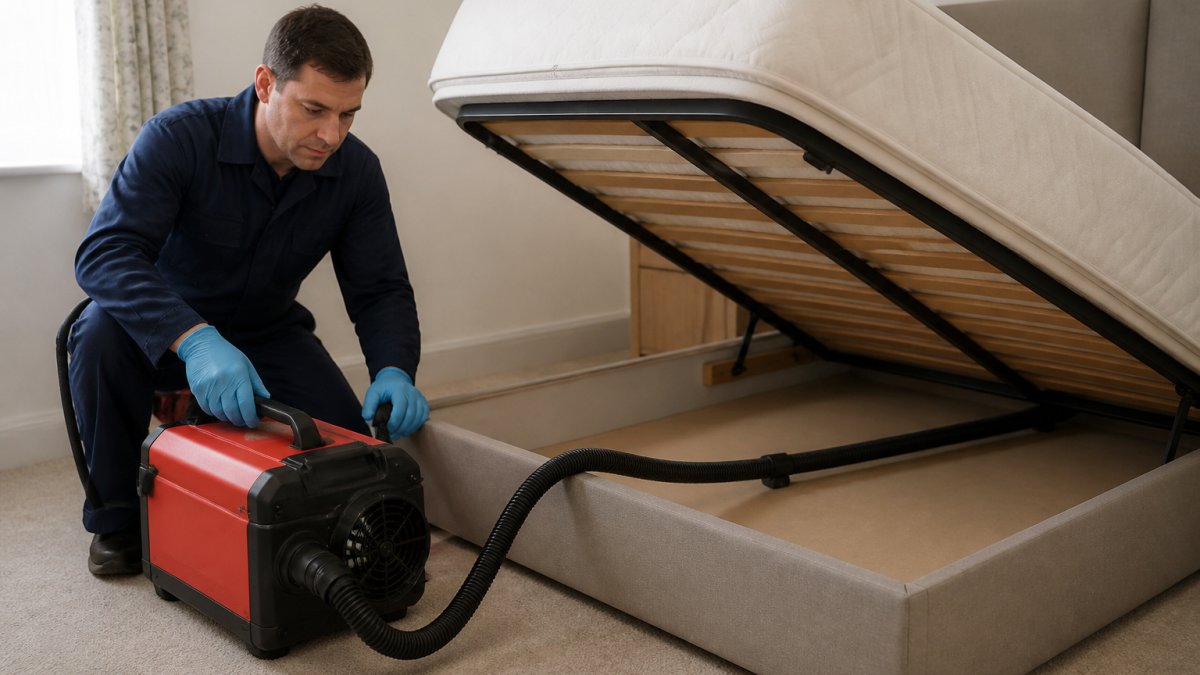
Bed bug heat treatment duration is longer than the heating phase alone. A typical visit runs several hours, and the clock covers three things: preheating, the sustained kill period, and cool-down.
- Preheating: heaters bring the property up to target temperature
- Kill period: every monitored site held at lethal heat
- Cool-down: safe return once temperatures drop
- Monitoring: checks throughout, not just at the end
Duration depends on infestation severity, property size and clutter. A single room is quicker than a multi-room or flat-wide job.
DIY Heaters Versus Professional Treatment: The Safety Gap
DIY heaters look tempting and carry real risk. Domestic heaters rarely produce even heat, and uneven heat means survivors. The gap between a room that feels hot and a room where every harbourage has reached a lethal temperature is the whole problem.
Why Consumer Heaters Fall Short
- No calibrated control. Domestic fan heaters and oil-filled radiators cycle on and off around a set point, so the air temperature swings and never holds a sustained lethal level across the room.
- Poor penetration. Hot air rises and pools near the ceiling. Without directed airflow, skirting gaps, bed frame joints, socket back boxes and the underside of mattresses stay cooler than the air at head height.
- Hidden cold spots. Furniture against walls, packed wardrobes and stacked boxes shield the very harbourages where bed bugs cluster. A thermometer in the middle of the room will not show this.
- No verification. Without sensors placed in the cold spots and logged over time, you cannot know whether the kill period was met.
The Safety Risks
Watch out: overheating a room can damage property and create a fire hazard, and under-heating wastes your money while the infestation continues.
- Fire risk. Heaters placed close to bedding, curtains or furniture can ignite fabrics, and daisy-chained extension leads add further risk.
- Property damage. Sustained high heat can warp laminate, crack plaster, damage electronics, melt adhesives and distort vinyl flooring.
- Carbon monoxide. Fuel-burning heaters must never be used indoors in an enclosed room.
- Personal injury. Rooms become unsafe to enter during treatment, and burns and heat exhaustion are real risks if you stay inside.
What Professional Treatment Adds
Technicians hold minimum RSPH Level 2 qualifications, and ProPest Oxford Ltd is associated with NPTA and BASIS PROMPT.
If you want the job done properly, bed bug heat treatment is the service to look at.
How Treatment Temperature Is Verified Throughout a Property
Verification is what separates a real heat treatment from guesswork. Sensors are placed across the property, including the hardest-to-heat harbourages, and readings are logged throughout.
- Sensors in each affected room
- Extra probes in cold spots and furniture
- Continuous logging, not a single spot check
- Adjustments made on site if a site runs cool
This is how we confirm heat penetration rather than assume it. Temperature monitoring is the evidence trail behind the result.
Bed Bug Treatment Cost: What Drives the Quote
Bed bug treatment cost depends on the size of the property, the number of affected rooms, infestation severity and how much preparation is needed.
Pricing depends on several factors and is best confirmed by requesting a quote from ProPest Oxford Ltd's website.
- Number of rooms treated
- Access and clutter levels
- Whether adjoining properties are involved
- Follow-up inspection and retreatment cover
For a clear breakdown of what shapes the figure, see our bed bug heat treatment cost guide, then request a free quote.
Bed Bug Treatment Aftercare and Confirming the Job Is Done
Aftercare is where infestations are either closed out or missed, so it is worth knowing what to watch for after treatment.
- Keep bedding and clothing sealed until cleared
- Report any new bites or sightings promptly
- Allow access for the follow-up inspection
- Do not reintroduce second-hand furniture unchecked
Survivors are possible after any heat treatment, so a follow-up inspection matters. For a realistic view of how long full eradication takes, see our timeline for getting rid of bed bugs.
Frequently Asked Questions
Can bed bugs survive a heat treatment?
They can. Heat kills bed bugs and eggs when the required temperature is reached and held at every harbourage, but the Virginia Cooperative Extension notes that survivors after heat treatment are common even though the method works overall. Verification matters because a single reading may miss cold spots.
How long does bed bug heat treatment take?
Bed bug heat treatment duration depends on infestation severity, property size and how cluttered the rooms are. Treatment duration depends on the infestation, the property and how cluttered the rooms are. Flats and multi-room infestations generally take longer.
Does heat treatment kill bed bug eggs as well as adults?
Yes, when the temperature is reached at the egg's location. Eggs sit in harbourages such as skirting board gaps, mattress seams and bed frame joints, so heat penetration and airflow decide whether they are exposed to lethal conditions. This is why arranging items and clearing clutter matter as much as heater settings.
What should I do after a bed bug heat treatment?
After treatment, launder bedding and clothing on a hot wash, keep items sealed, and do not move them back into treated rooms until you are told it is safe. Watch for signs of bed bugs over the following weeks, and report any fresh bites or spotting promptly.
Bed bugs test your patience, and a half-finished heat job tests it twice. If you want a treatment built around verified temperatures, proper preparation and a follow-up that confirms the result, ProPest Oxford Ltd can help. Our technicians are RSPH Level 2 qualified, we offer same-day or next-day appointments, and we work seven days a week. Get started with ProPest Oxford Ltd and book a service that targets the source, not just the symptoms.