 how-to
How to Identify Carpet Beetle Larvae in Wool Rugs
Last Updated: October 29, 2026
Quick Summary
Carpet beetle larvae are small, bristly, carrot-shaped grubs about 4 to 5 millimetres long, light brown to dark reddish-brown with faint bands across the back. They feed on wool fibres and leave irregular holes, thinning pile, gritty dust and shed skins along rug edges and under furniture.
- Adult beetles are 2 to 4 millimetres long, oval and mottled with white, brown and yellow scales.
- Shed skins look like small, hollow, crisp brown shells caught in the binding or fringe.
- Carpet beetle damage spreads along edges, unlike moth damage which clusters in one patch.
- Larvae prefer soiled wool, so spills and pet accidents get hit first.
- Call a professional when live larvae appear in more than one area or damage keeps returning.
Table of Contents
- What Carpet Beetle Larvae Look Like on a Wool Rug
- Signs of Carpet Beetles in Rugs: What to Look For First
- Carpet Beetles vs Clothes Moths: Telling the Damage Apart
- How to Inspect a Wool Rug for Pests, Step by Step
- Common Mistakes When Checking a Rug for Larvae
- When Professional Carpet Beetle Treatment Makes Sense
- Booking a Rug Inspection with ProPest Oxford Ltd
- Frequently Asked Questions
What Carpet Beetle Larvae Look Like on a Wool Rug
Carpet beetle larvae are small, bristly grubs that feed on wool fibres, and they are the real cause of the damage in your rug. Adult beetles do no harm. The larvae do all the eating.
Spotting them comes down to three things: size, shape, and colour. Get those right and you can tell a live larva from a shed skin in seconds.
Size, Shape and Colour at Each Stage
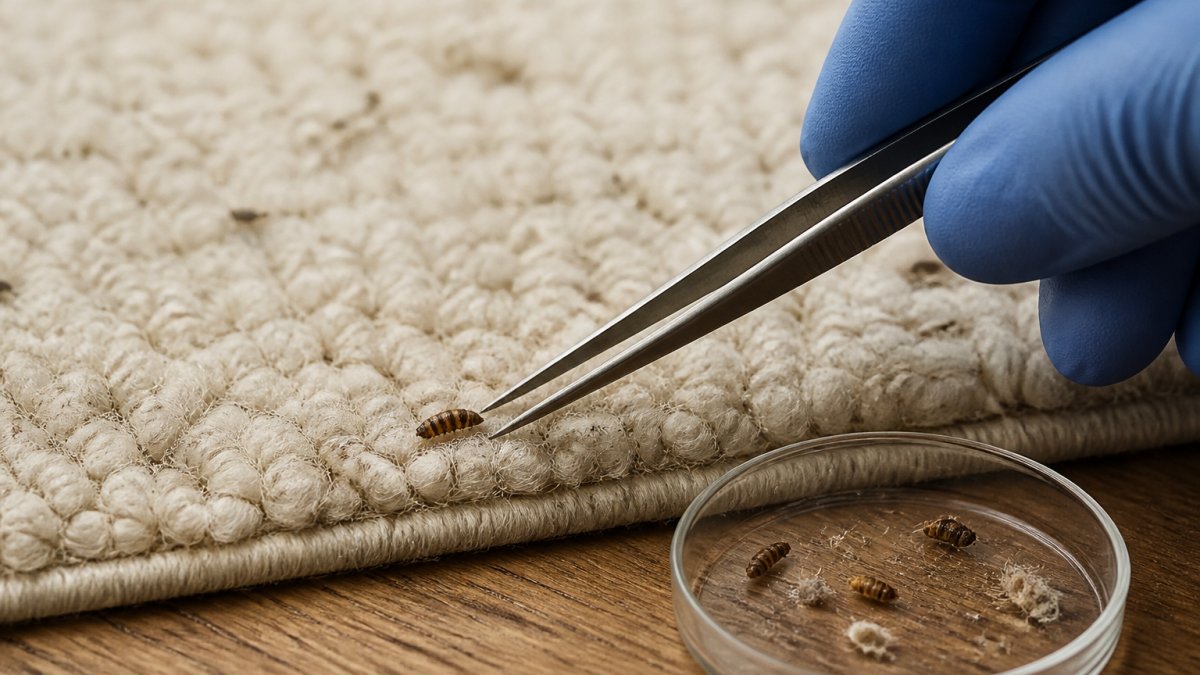
A full-grown larva is about 4 to 5 millimetres long, roughly the size of a grain of rice. It has a segmented, carrot-shaped body that tapers at the tail. Colour runs from light brown to dark reddish-brown, often with faint bands across the back.
The body is covered in short, stiff hairs called setae. Some species carry tufts of these hairs at the rear. Those tufts are what cause skin irritation in sensitive people.
Eggs are tiny and white, so you will rarely see them. Adults are 2 to 4 millimetres long, oval, and mottled with white, brown and yellow scales. They look almost like small ladybirds.
The Shed Skins That Give Them Away
Larvae moult as they grow, and each moult leaves an empty, bristly skin behind. These shed skins are often the first thing you notice. They collect along rug edges, under furniture legs, and in the pile itself.
A shed skin looks like a small, hollow, brown shell. It feels crisp.
Signs of Carpet Beetles in Rugs: What to Look For First
The clearest signs of carpet beetles in rugs are irregular holes, thinning pile, and gritty dust under the rug. Unlike moth damage, which tends to cluster in one patch, carpet beetle feeding spreads along edges and under furniture.
Here is what to check first:
- Bare patches where the pile has worn down to the backing
- Irregular holes with frayed, not clean-cut, edges
- Fine brown dust or frass beneath the rug
- Shed skins caught in the binding or fringe
- Live larvae when you lift the rug in dim light
- Adult beetles on windowsills, drawn to light
Damage tends to follow the fibre. Larvae prefer soiled wool, so spills, pet accidents, and sweat-stained areas get hit first. That is why a rug near a doorway or under a dining chair often shows the worst damage.
One more clue: adults fly. If you find small mottled beetles at the window in spring, check the rug beneath that window before you do anything else.
Carpet Beetles vs Clothes Moths: Telling the Damage Apart
Carpet beetles and clothes moths both eat wool, but their damage looks different. Carpet beetle larvae leave irregular holes and shed skins. Clothes moth larvae spin silken webbing and leave clean-cut holes, often in a single concentrated patch.
Here is the comparison in practice:
| Feature | Carpet Beetle Larvae | Clothes Moth Larvae |
|---|---|---|
| Body | Bristly, carrot-shaped grub | Smooth, cream caterpillar |
| Damage shape | Irregular, spread out | Clean-cut, clustered |
| Webbing | None | Silken threads and tubes |
| Traces left | Shed skins, gritty dust | Webbing, frass in a mat |
| Favourite spot | Edges, under furniture | Dark folds, stored wool |
Both pests target wool, silk, fur, and feathers. Neither eats synthetic fibres, though they will chew through blends to reach the natural content. If your rug is pure wool, it is at risk from either.
For a closer look at the tell-tale signs pests leave in carpeted rooms, our guide to the top five signs of fleas in a carpeted home covers the patterns that help you rule other insects in or out.
How to Inspect a Wool Rug for Pests, Step by Step
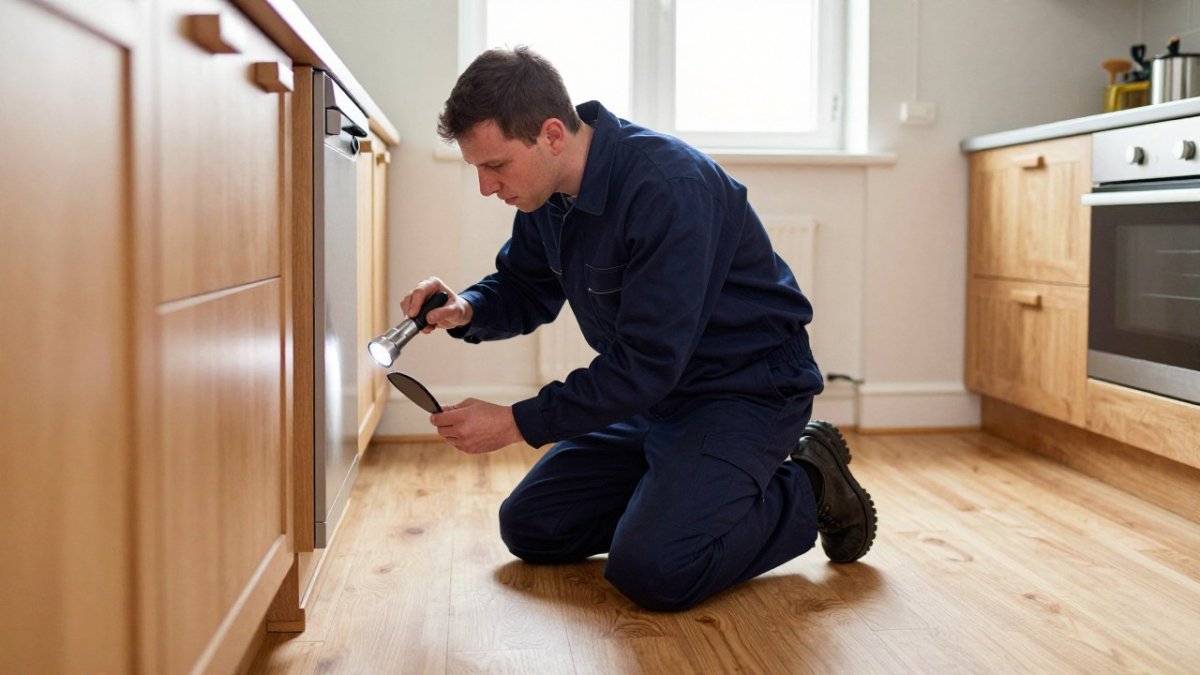
Start with a torch, a white sheet, and ten minutes of quiet. Work in daylight if you can. Larvae shrink from light, so you need to move slowly and check before they retreat.
Follow these steps:
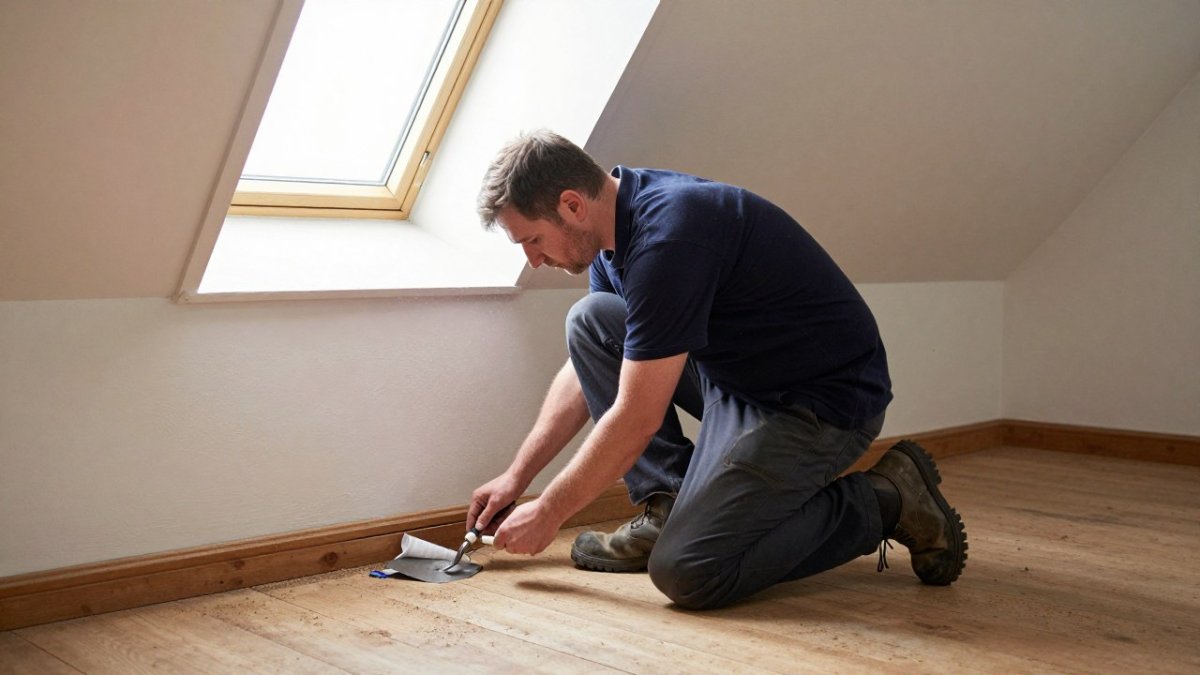
- Roll the rug back from one corner and lay a white sheet underneath. Any debris that falls will show up clearly.
- Vacuum the floor beneath first, then inspect the sheet for skins and dust.
- Check the underside of the rug with your torch at a low angle. Raking light shows thinning pile and surface trails.
- Lift the fringe and binding and look for skins caught in the knots.
- Probe the pile with a blunt pencil along edges and under furniture marks. Loose fibres and grit mean feeding.
- Repeat on the reverse side, then vacuum the rug itself and check the vacuum filter for larvae.
- Note every spot on a simple sketch so you can compare in two weeks.
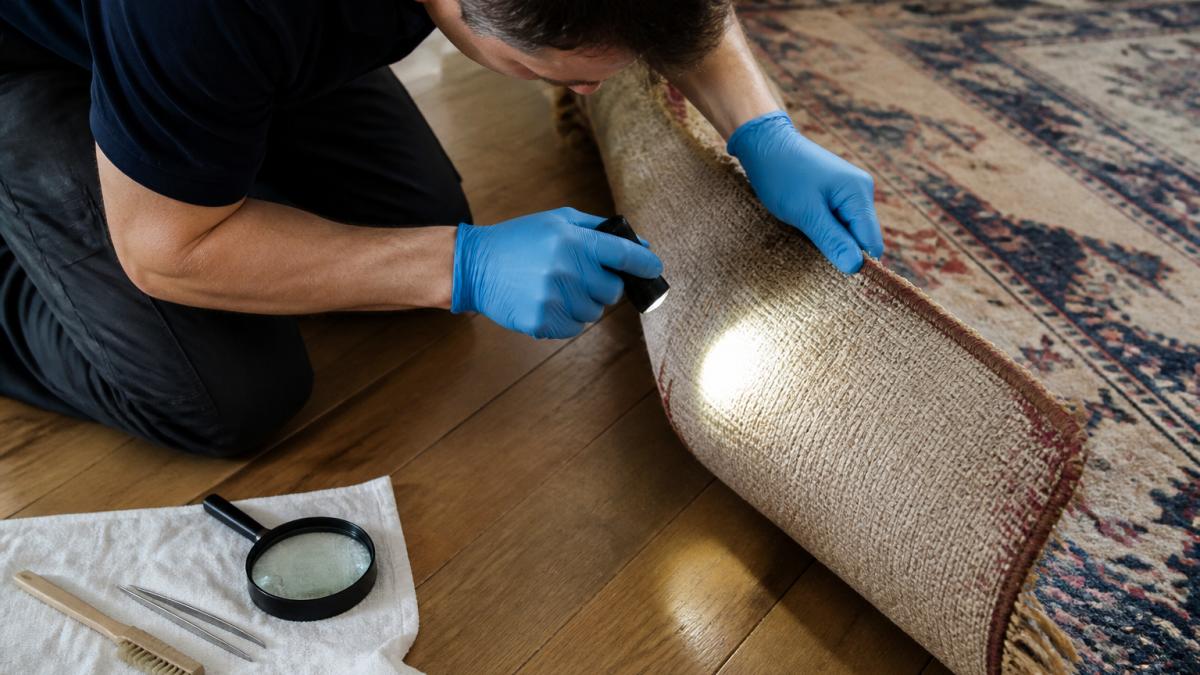
Where Larvae Hide on a Rug
Larvae avoid open light and prefer the dark, undisturbed parts of a rug. Focus your search on:
- Under heavy furniture legs and castors
- Along the binding and fringe
- In folds of a stored or rolled rug
- Beneath rugs on underlay
- In dark corners near skirting boards
- Around pet beds and feeding areas
A common mistake is checking only the top surface. The underside and the floor beneath tell you far more.
Common Mistakes When Checking a Rug for Larvae
The biggest mistake is assuming moths and treating for the wrong pest. Moth traps and moth treatments often miss carpet beetle larvae entirely, so the problem returns.
- Skipping the floor beneath. Larvae and skins fall through the pile and collect below.
- Ignoring the source. Wool rugs are rarely the only food. Check stored blankets, wardrobes, and loft insulation.
- Vacuuming once and stopping. Larvae hide deep in the pile. One pass will not clear them.
- Treating the rug but not the room. Adults fly and lay eggs elsewhere, so the cycle restarts.
- Missing the early signs. Shed skins and gritty dust appear long before visible holes.
- Assuming a clean home is safe. Carpet beetles thrive in tidy homes as long as wool and dark spaces exist.
When Professional Carpet Beetle Treatment Makes Sense
Professional carpet beetle treatment makes sense when you find live larvae in more than one area, when damage keeps returning after cleaning, or when the rug is valuable enough that a failed DIY attempt is not worth the risk.
Call in a professional when:
- You find larvae in several rooms
- Damage returns within weeks of cleaning
- The rug is an antique, hand-knotted, or high-value piece
- You have wool carpets, stored textiles, or loft insulation nearby
- You rent the property out and need a documented treatment
For guidance on vetting a firm before you book, read our guide to hiring professional pest control.
Booking a Rug Inspection with ProPest Oxford Ltd
Our technicians hold a minimum RSPH Level 2 qualification, and we are associated with NPTA and BASIS PROMPT.
We offer same-day or next-day appointments and work seven days a week. Every visit starts with identifying the source of the infestation rather than just the symptoms you can see.
If you are choosing a provider, our article on how to choose a pest control provider sets out what to check.
We are fully insured and have been established since 2017.
Frequently Asked Questions
What do carpet beetle larvae look like?
Carpet beetle larvae are small, bristly grubs, usually a few millimetres to around half a centimetre long. They are typically brown or ginger with pale banding across the body, and they have a distinctive tuft of hairs at the tail end. On a wool rug you are more likely to notice their cast skins, which look like hollow, papery husks in the same shape, caught along edges and under furniture.
How can I tell carpet beetle damage from clothes moth damage?
Clothes moth larvae spin silky webbing and leave small tubes or cases behind, and the holes they make tend to be scattered and irregular. Carpet beetle larvae do not spin webbing. They leave shed skins and gritty frass.
Can carpet beetle larvae damage wool rugs?
Yes. Wool is a natural protein fibre and the larvae feed on it, along with hair, feathers and other animal-derived material trapped in the pile. Damage often starts in shaded, undisturbed areas such as under a sofa or along the rug's edge, where fibres are thinned rather than eaten away in one patch.
When should I call a pest control professional about carpet beetles?
Call a professional if you find live larvae, repeated shed skins or fresh damage after cleaning, or if the problem returns within a few weeks of DIY treatment.
Carpet beetle larvae do not stop on their own, and every week of delay means more chewed fibre in a rug you cannot replace easily. ProPest Oxford Ltd brings qualified technicians, same-day or next-day appointments, and a focus on finding the source so the problem does not come back. Get started with ProPest Oxford Ltd and protect your wool rugs before the damage spreads.